Blood in the semen with ejaculation - causes, diagnosis, treatment
Blood with ejaculation is a symptom of a disease or injury and has many causes. Often the symptom speaks of a serious pathology from the male reproductive system.
Content
- 1 What gemospermiya
- 1.1 False gemospermiya
- 1.2 True gemospermiya
- 2 Symptoms and Diagnosis Treatment
- 3 haematospermia
What gemospermiya
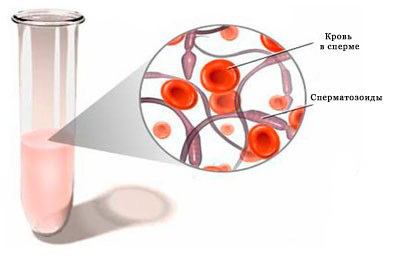
medical name of disease, when there is blood in the ejaculate, called gemospermiya or haemospermia .There is a pathology of dark and brown color of the sperm with ejaculation, which can be seen with the naked eye.
Hemospermia occurs in two forms: false and true. You can distinguish the form without special research methods:
- The true hemospermia of is characterized by a dark, evenly colored ejaculate color.
- False hemospermia manifests itself in the form of blood veins, i.e. the ejaculate is dyed with blood unevenly.
False hemospermia
Occurs in inflammatory diseases and injuries of the external part of the urethral canal of the penis. With false hemospermia, the blood looks like inclusions in the ejaculate and never mixes up to the end. Conducting the microscopy determines other components of the blood in the ejaculate, which indicates its freshness.
In addition to visual characteristics in the case of false hemospermia, accompanying symptoms characteristic of urethritis: itching, pain with ejaculation and urination, discomfort in the crotch area at rest. False hemospermia occurs in conditions:
- Injury of the penis and urethra;
- After surgical interventions on the external genitalia of men;
- Inflammatory diseases of the urethral tract and bladder.
True hemospermia
For the true form is characterized by a uniformly colored dark-brown color of the ejaculate. This suggests that the pathology is located in the deeper parts of the male urinary and reproductive system. True hemospermia occurs in diseases:
- Inflammation of the epididymis - epididymitis;
- Inflammation of the testis itself - orchitis;
- Inflammation of seminal vesicles - vesicles;
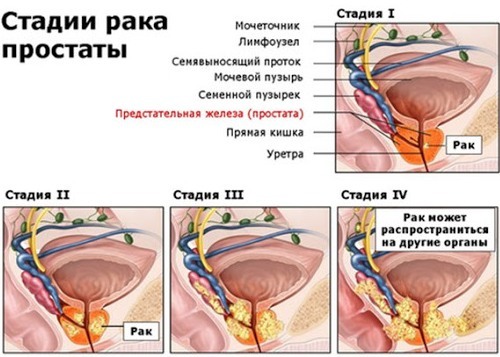
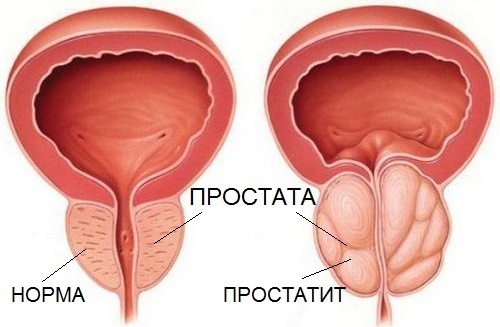
- Inflammation of the prostate gland - acute and chronic prostatitis;
- . Oncological diseases of internal genital organs.
With a high frequency, true hemospermia occurs in cancer diseases in the above mentioned organs. So, when blood is detected in the ejaculate, differential diagnostics with the exception of oncological diseases of the male reproductive system is mandatory.
Symptomatics and Diagnosis
The appearance of blood in the ejaculate can be:
- a single occurrence, which is typical for trauma;
- lasting up to several weeks - with inflammatory diseases;
- permanent - with oncological diseases.
In addition to the frequency of hemospermia, the accompanying symptoms have an important diagnostic value. With inflammation: fever, weakness and malaise. With cancer: aching in the groin, dysuria and erections.
For full-fledged diagnostics it is important to know the presence of characteristic symptoms and their confirmation with the use of instrumental research methods. To diagnose the causes of hemospermia apply:
- Spermogram analysis;
- General analysis of urine;
- Sowing on nutrient media of urine, sperm and mucus from the urethra;
- Ultrasound examination of the prostate and other small pelvic organs;
- Computer and magnetic resonance imaging of pelvic organs.
Usually such a diagnostic complex is sufficient to determine the cause of the blood in the ejaculate. If difficulties arise in differential diagnosis, additional methods of investigation are used. With oncology, oncomarkers are required to determine and perform a puncture biopsy of the affected organ.
Treatment of hemospermia
Hemospermia is a symptom of the pathology of the organ of the urinary and reproductive system of a man. Therefore, in the treatment it is important to directly influence the cause of the disease.
In inflammatory diseases, the pathogen is determined, followed by the detection of sensitivity to antibiotics. Pathogenetic treatment with antibiotics and symptomatic treatment are carried out, which is aimed at reducing edema, inflammation and elimination of common manifestations of the presence of an infectious agent in the body. Used analgesics, non-steroidal anti-inflammatory drugs and restorative - vitamins and immunomodulators.
In the case of oncological pathology, the patient goes to the oncologist with the formation of treatment tactics depending on whether the benign or malignant tumor, as well as the histological( tissue) nature of the cancer cells. Oncologists use radiotherapy, chemotherapy and surgical interventions in various combinations.
In the case of traumatizing the urethral canal, no special treatment is required. The resulting false hemospermia is a temporary phenomenon( occurs no more than 2-3 times) and passes by itself. To distinguish false hemospermia from the true is easy: with false hemospermia, the blood in the ejaculate looks like inclusions or veins and never stains the ejaculate completely.
See video on the causes and treatment of hemospermia
Recommended for viewing: