Causes and treatment of hemospermia( blood in the semen)
Hemospermia, or hematospermia - the appearance of blood in the ejaculate. To find out precisely the prevalence of this syndrome is impossible. Most of the episodes of hematospermia remain unnoticed, since unprotected sexual intercourse impurities in the sperm are usually not noticed.
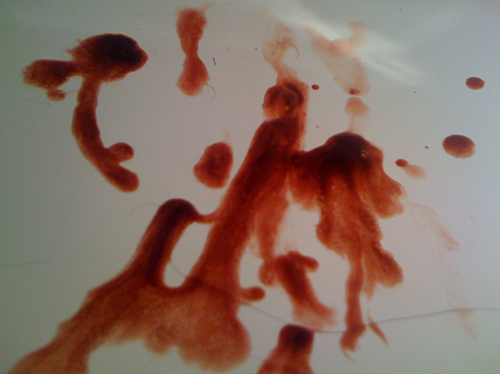
Fig.1 - Sperm sample with signs of hemospermia.
The first manifestations of hematospermia can appear in men of any age. Most often, the cause of hemospermia is a nonspecific inflammation of the prostate or seminal vesicles. But in rare cases, this condition can be the first manifestation of the malignant process of the genitourinary tract, in particular, prostate cancer( especially in men over 65 years of age).
Content
- 1 Classification
- 2 Causes and mechanisms of
- 2.1 Pathology prostate
- 2.2 Pathology urethra
- 2.3 Pathology seminal vesicles
- 2.4 Infections
- 2.5 Trauma
- 2.6 Systemic diseases
- 3 Diagnostics
- 4 Treatment
- 5 Conclusions
Classification
Hematospermia happensFalse and true:
- with true hemospermia, the blood is mixed with the ejaculate throughout the genital tract. Sperm often acquires a uniform brown color( see Figure 1);
- with false hemospermia, blood is mixed in the urethra, looks fresh, often in the form of veins.
If episodes of hematospermia were repeated more than 10 times, it is called chronic.
Causes and mechanisms of occurrence of
In about half the cases, the cause of this syndrome can not be identified( idiopathic hemospermia).If the source of blood in the semen is detected, most often it happens:
Pathology of the prostate
- chronic prostatitis( up to a third of cases of hemospermia);
- concrements( stones) in the prostate, the vas deferens, the urinary tract;
- enlargement of the prostatic martha( blind pocket in the prostate gland);
- telangiectasia and varicose veins of the periprostatic plexus;
- malignant prostate tumors( cause hematospermia on average in 2% of cases).
Pathology of the urethra
- urethritis, especially in young men( in 7% of men with urethritis);
- cyst;
- polyps( in 20% of patients with polyps);
- condyloma( 1.5%);
- stricture( narrowing) of the urethra( 1.5%).
Pathology of seminal vesicles
- cysts, both congenital and arising from chronic inflammation;
- of seminal vesicle carcinoma;
- amyloidosis of seminal vesicles.
Infections
- tuberculosis;
- HIV;
- cytomegalovirus;
- herpes simplex virus;
- chlamydia;
- ureaplasma;
- echinococcus.
Read more: "Sexually Transmitted Infections in Men".
Injury to
- injury of testicle and perineal region;
- foreign bodies in the genito-urinary tract;
- prostate biopsy - in this case, the blood admixture in the ejaculate can appear within a month after the study. According to statistics, this happens in 9-45% of cases;
- TOUR - transurethral resection of the prostate.
Systemic diseases
- chronic hepatic insufficiency;
- amyloidosis;
- lymphomas;
- leukemia;
- hemorrhagic diathesis;
- arterial hypertension, especially severe, uncontrolled, accompanied by a pathology of the kidney vessels;
- hyperuricemia( elevated levels of uric acid in the blood).
Diagnosis
The examination is conducted in order to identify the cause of hemospermia. The older the patient, the more thorough it must be. If relatively young men( up to 50 years old) usually get hemospermia as a cause of inflammation, and its detection is usually enough, then for men of older age, an analysis is required for the level of prostate-specific antigen( prostate cancer marker).The main goal of the survey is to eliminate life-threatening conditions as quickly as possible, such as leukemia, cancer, severe hypertension.
To confirm the fact of hemospermia use "contraceptive test": ejaculation is made into a condom.
For the detection of inflammatory processes in the genitourinary system, the following is used:
- complete urinalysis;
- urine culture on the microflora;
- sperm seeding on the microflora;
- analysis for STDs( sexually transmitted diseases);
- transrectal finger examination of the prostate.
A blood test and a coagulogram will help detect clotting disorders.
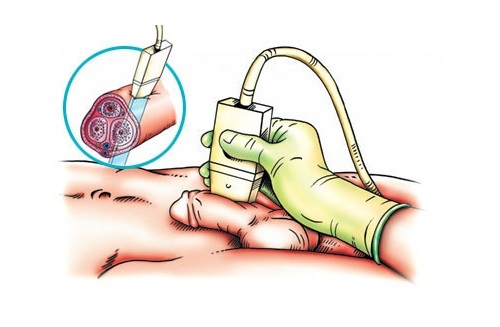
To accurately determine the condition of the prostate and seminal vesicles, transrectal ultrasound( TRUS) will help. If it proves to be of little informative, an MRI should be performed to obtain more complete data.
Treatment of
Treatment of hemospermia primarily involves the treatment of the disease that caused it. In the case of prostatitis or inflammation of other parts of the genitourinary system, a course of antibiotics is required( most often recommend fluoroquinolones course lasting at least 2 weeks).When identifying tuberculosis requires specific therapy.
Cysts most often aspirate( remove) during puncture.
When identifying systemic diseases, it is necessary to tackle their treatment.
Conclusions
Although hematospermia may be the first manifestation of such formidable conditions as cancer or leukemia, it most often does not pose a threat to the life and health of a man. Also hemospermia itself can not cause infertility, if there are no other disorders such as azoospermia, teratozoospermia, asthenozoospermia.
See video on hemospermia( hematospermia)
Recommended for viewing: