Details about the symptoms and treatment of chronic prostatitis
Chronic prostatitis is one of the most common diseases among men of mature age. Inflammation of the prostate significantly reduces the quality of life, causing psychosomatic and sexual disorders. Lack of sufficient information about the nature of this disease makes the treatment of chronic prostatitis a difficult task, requiring a large amount of patience from both the patient and his attending physician.

Prostatitis is an inflammatory and degenerative diseases of the prostate
Content
- 1 Classification
- 2 Causes and risk factors
- 2.1 Chronic bacterial prostatitis
- 2.2 Chronic nonbacterial prostatitis
- 3 Symptoms
- 4 Complications
- 5 Diagnostics
- 5.1 Survey urologist
- 5.2 Chetyrehstakannaya sample
- 5.3 Microbiological investigation of
- 5.4 Bacteriological seeding of prostate secret
- 5.5 USG
- 6 ntsipy treatment
- 6.1 Pharmacotherapy
- 6.2 Non-pharmacological therapy
- 6.3 Traditional medicine
- 7 Prevention
- 8 FAQ
- 8.1 possible to cure chronic prostatitis?
- 8.2 Can chronic prostatitis be asymptomatic?
- 8.3 Is chronic prostatitis in a partner for a woman dangerous?
- 8.4 Can I have sex with a chronic prostatitis?
- 8.5 Can I conceive a child with chronic prostatitis?
- 8.6 How does chronic prostatitis affect the potency?
- 8.7 Can I cure chronic prostatitis without antibiotics?
- 8.8 Is it possible to cure chronic prostatitis with folk remedies?
Classification of
The American National Health Institute( NIH USA) has developed and proposed the following classification of for chronic prostatitis:
- chronic bacterial prostatitis;
- chronic non-bacterial prostatitis( with signs of inflammation and without them);
- chronic asymptomatic prostatitis.
Modern andrologists adhere to this classification in the diagnosis and treatment of inflammatory diseases of the prostate. Isolated acute prostatitis. Knowing which category the pathology belongs to, the physician will be able to select the optimal therapy regimen and achieve significant success in the treatment of the disease.
Causes and Risk Factors
The division into bacterial and non-bacterial chronic prostatitis is not accidental. Different causes of the disease determine the tactics of treatment and largely affect the outcome of the disease.
Chronic bacterial prostatitis
Chronic bacterial prostatitis is detected in 10-15% of patients. Immediate cause of the disease is penetration into the prostate pathogenic and opportunistic flora. By definition, the prostate gland is free of bacteria. Infection of the prostate is possible through the urethra, as well as by hematogenous and lymphogenous pathways. During the examination, most often such microorganisms are detected:
- E. coli( up to 95%);
- protey;
- Klebsiella;
- pseudomonas.
Representatives of gram-positive flora( staphylococci, streptococci) are rare. In a number of cases, there is an increase in two or more microorganisms( mixed infection).Infection with pathogenic flora( chlamydia, Trichomonas, gonococci, etc.) is possible.
Microorganisms detected during examination are mostly representatives of normal microflora. Under normal conditions, they do not harm the body and peacefully exist on the mucous membranes of the urinary system and digestive tract. Under certain conditions, the conditional-pathogenic flora grows and multiplies, which leads to inflammation of the prostate tissue and the appearance of all the symptoms of the disease.
Risk factors for development of chronic bacterial prostatitis:
- non-compliance with personal hygiene;
- supercooling;
- genital tract injury;
- inflammatory diseases of the urinary system;
- presence of an STI.
All this leads to a decrease in local and general immunity and the regular reproduction of opportunistic flora in the prostate. It is not excluded the infection through the urethra in inflammatory diseases of the genital tract. The probability of prostatitis increases with existing urethritis, cystitis, colliculitis.
Chronic non-bacterial prostatitis
There are several theories of the occurrence of this form of the disease:
- Theory of chemical inflammation .Casting urine into the prostate when urinating leads to the deposition of urates and the development of inflammation. Urethro-prostatic reflux is assisted by narrowing of the urethra( stricture) and other abnormalities of development.
- The Immune Theory of .The version is based on an autoimmune lesion of the prostate tissue as a result of exposure to bacterial antigens. Hereditary predisposition to this form of pathology is considered.
- Neurogenic theory of .Violation of innervation in the pelvic region provokes stagnation of blood in the organs and leads to the development of prostatitis.
In the development of non-bacterial prostatitis, the following risk factors also deserve special attention:
- long sedentary work;
- sedentary lifestyle;
- bad habits;
- stresses and emotional overload;
- prolonged sexual abstinence( see Sexual abstinence - benefit or harm?).
These risk factors provoke the development of stagnant phenomena in the prostate, lead to a violation of microcirculation in the pelvic organs. The microbial factor plays a role only at the initial stages of the development of the disease. In the future, its value is reduced, and the autoimmune processes and trophic disorders in the tissues of the prostate gland come to the fore.
Symptoms of
Chronic prostatitis occurs mainly in men aged 25-40 years. With age, the likelihood of the disease is increasing. In the elderly, inflammation of the prostate gland is often combined with an adenoma - a benign prostate tumor.
Symptoms of chronic prostatitis:
- blunt aching pain in the lower abdomen;
- irradiation of pain in the groin, scrotum, perineum, waist, sacrum;
- increased discomfort during intercourse and during defecation.
Urinary disorders are very common:
- frequent urination;
- urine excretion in small portions;
- feeling of incomplete emptying of the bladder;
- appearance or pain intensification during urination;
- sluggish and intermittent urine stream.
The last symptom is characteristic for adenoma of the prostate, often arising against a background of chronic prostatitis.
In the long course of the disease there are disorders in the sexual sphere:
- decreased libido;
- erection worsening;
- shortening of the duration of sexual intercourse;
- premature ejaculation;
- drawing pains in the lower abdomen after ejaculation;
- absence of spontaneous morning erection.
Chronic asymptomatic prostatitis occurs without any clinical manifestations. The disease is detected by chance at a urologist examination. Despite the absence of symptoms, inflammation of the prostate gland can lead to serious complications, cause erectile dysfunction and other health problems.
Complications of
Prostate prostatitis provokes the development of such conditions:
- abscess of the prostate;
- cystitis and pyelonephritis( inflammation of the bladder and kidneys);
- vesiculitis( inflammation of seminal vesicles);
- erectile dysfunction;
- infertility.
The sooner the disease is discovered and the treatment is started, the more chances for a favorable outcome of the disease.
Diagnosis
For the detection of chronic prostatitis, the following methods are used:
Urological examination
On a personal visit, the doctor focuses on the patient's complaints. Mandatory examination of the external genitalia, and a digital rectal examination of the prostate. At palpation the doctor estimates the sizes and the form of a gland. In the case of chronic prostatitis, the organ will be slightly enlarged in size. The procedure is combined with taking a prostate secret for a microbiological study.
Four-glass sample
The main method that allows to identify the inflammatory process in the prostate and distinguish it from other diseases. The sampling of the material takes place in several stages. In the morning, after 5-6 hours of abstinence from going to the toilet, a man urinates in two jars - for the first( initial) and for the second( average) portion of urine. In the first portion, the contents of the urethra are washed off, in the second - of the bladder. The third portion of urine is collected after a massage of the prostate and allows you to assess the condition of the prostate gland. Separately, the secret of the prostate gland is collected for bacteriological inoculation.
In the analysis of urine, two parameters are evaluated: the number of leukocytes and red blood cells. In diseases of the prostate, the level of leukocytes rises in the third portion of urine. Normally, their number does not exceed 10 in the field of view.
Microbiological examination of
When carrying out a three-glassed test, not only the amount of white blood cells is estimated, but also the material for bacteriological inoculation is taken. If you suspect a chronic prostatitis the doctor is particularly interested in a third dose of urine. Based on the results of the examination, the doctor can identify the causative agent of the disease and choose the optimal antibiotic therapy.
Bacteriological seeding of the prostate
Bacterial culture of the prostate fluid makes it possible to evaluate the nature of the process( infectious or not) and determine the type of pathogen
. Before taking the third portion of urine during the massage of the prostate, the doctor takes a secret for bacteriological research. The result also allows you to determine the diagnosis and tactics of treatment.
Diagnostic criteria for chronic bacterial prostatitis:
- Detection of a conditional-pathogenic microorganism in a third dose of urine or secretion of the prostate in a titer above 103 cfu / ml.
- Detection in the third portion of urine or secretion of the prostate of opportunistic bacteria, the amount of which is significantly( 10 times) higher than in the second portion of urine.
- Detection of a third dose of urine or a secretion of the prostate of pathogenic microorganisms.
US
Main article: ASUS TRASI
Ultrasound examination allows estimating the size of an organ and revealing concomitant pathology. Often, chronic prostatitis is combined with prostate adenoma - a benign tumor.
Principles of treatment
The goal of therapy for chronic prostatitis is to eliminate the inflammatory process, to activate blood flow and improve the nutrition of the body. When pathogens or conditionally pathogenic microorganisms are detected in high titre, their elimination is carried out. Particular attention is paid to the correction of lifestyle and stimulation of the body's defenses.
Medical treatment
For the treatment of chronic prostatitis, the following medicines are used:
- Antibacterial drugs are selected taking into account the identified pathogen.
- Anti-inflammatory drugs for reducing inflammation and arresting pain syndrome.
- Means facilitating urination( alpha-adrenoblockers, relaxing urethral muscles and stimulating urinary outflow.).
- Means that increase blood flow in the pelvic organs.
The choice of antibiotic will depend on the identified pathogen. When choosing a medicine, one should take into account its ability to penetrate the hematoprostatic barrier and accumulate in the tissues of the prostate gland. These conditions correspond to agents from the group of fluoroquinolones. Macrolides and tetracyclines are also used to treat chronic prostatitis.
When receiving the results of bacteriological examination and confirming the bacterial nature of the disease, treatment lasts up to 4-6 weeks. This approach allows not only to get rid of the pathogen, but also to prevent the recurrence of prostatitis.
Unfortunately, antibacterial therapy is not always effective. Many microorganisms safely exist in the secretion of the prostate for a long time and acquire resistance to antibiotics. Bacteria form special biofilms and form colonies of microorganisms, covered with a complex polysaccharide structure. Antibacterial drugs are mostly unable to penetrate this biological barrier, which significantly reduces the effectiveness of the therapy. Avoid this problem allows the use of modern antibiotics that can not only penetrate into the prostate gland and become heated in it, but also pass through biofilms and infect bacteria that are under such serious protection.
Non-drug therapy
Among non-drug therapies, special attention is paid to prostate massage. The procedure stimulates the blood supply of the prostate gland, eliminates stagnation and facilitates secretion. The combination of massage and prolonged use of antibacterial drugs is the main way to relieve a man of the unpleasant symptoms of chronic prostatitis.
Physiotherapy methods of influence are used in the treatment of chronic prostatitis along with the drug effect. A good effect is seen from the application of ultrasound, laser beam, radio waves, with electromyostimulation. Very popular is shock wave massage of the prostate( UVM).Physioprocedures are especially indicated in the presence of erectile dysfunction as one of the complications of prostatitis.
Special attention in the treatment of prostatitis is given to the diet. From the diet should exclude such products:
- alcohol;
- spicy, spicy food;
- fried and fatty dishes( including dishes from meat and fish of fatty varieties).
The use of salt is limited to 5 grams per day. Priority is given to fresh vegetables and fruits, greens. It is recommended to prepare meals for a couple.
Traditional medicine
Not all men turn to a doctor for symptoms of prostatitis. Often men prefer to be treated with folk techniques, using the knowledge base from numerous forums, relying on the advice of friends, relatives and neighbors. Neglect of one's own health, rejection of rational antibacterial therapy and other traditional methods of exposure threatens the development of complications and worsening of the general condition. Unprotected prostatitis in time can cause erectile dysfunction. Is it worth it to risk if you can go to the doctor on time and solve the problem with minimal losses?
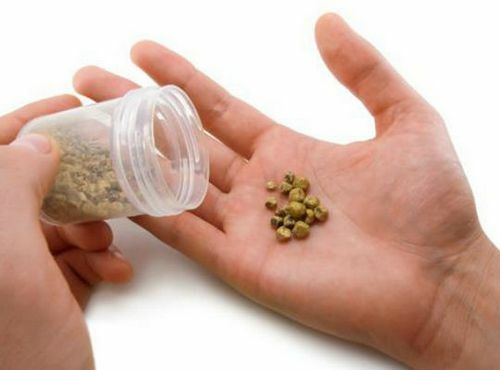
Of course, among the techniques of traditional medicine, there are some aspects that deserve special attention. Modern urology recognizes the effectiveness of many herbs in the treatment of chronic prostatitis. Specialists recommend herbal preparations based on such ingredients:
- pumpkin seed oil;
- globose;
- garden parsley;
- St. John's wort;
- goldenrod Canadian;
- licorice root;
- echinacea.
Separately or in combination, these components stimulate blood flow in the pelvic organs, eliminate stagnation and stimulate immunity.
In combination with antibacterial drugs and prostate massage, plant remedies significantly improve the general condition and accelerate recovery.
Prevention
To reduce the risk of developing chronic prostatitis, the following recommendations will help:
- Do not supercool the entire body and the genital area, pelvis and lower limbs. In the cold season it is necessary to wear thermal underwear.
- The rules of intimate hygiene should be observed and condoms used to protect against STIs. The best prevention of infection will be the rejection of casual sex.
- You should carefully treat your health and in time treat any diseases of the genital area.
- It is not superfluous to follow a diet( to refuse from sharp, fried and fatty food), and also to support your body in tonus( exercise, fitness, walks).
FAQ
Can I cure chronic prostatitis?
Contrary to popular belief, chronic prostatitis can be treated successfully. With all the recommendations of a doctor, you can get rid of the unpleasant symptoms of prostatitis and significantly improve the quality of life.
Can chronic prostatitis be asymptomatic?
Yes, this variant of the disease is detected only after examination by a urologist.
Is chronic prostatitis in a partner for a woman dangerous?
The cause of chronic prostatitis often becomes sexually transmitted infections. When a pathogen is identified, both partners must undergo treatment. Otherwise, there is a risk of infection, as well as reduced effectiveness of the therapy due to relapse of the disease.
Can I have sex with a chronic prostatitis?
Yes, if the general condition allows and there are no problems in the sexual sphere( erectile dysfunction).
Can I conceive a child with chronic prostatitis?
Yes, if the function of the prostate is preserved and its secret is fully developed. Before the conception of a child, it is recommended to undergo examination and treatment with a urologist. Infection, which caused the development of prostatitis, is easily transmitted to a woman. Intrauterine infection of the fetus can cause abnormalities of development and termination of pregnancy.
How does chronic prostatitis affect the potency?
Chronic inflammation of the prostate gland threatens the development of erectile dysfunction. With this pathology, there is a decrease in sexual desire, the frequency and strength of the erection decreases, and orgasms become painful. In neglected cases, sexual activity becomes impossible.
Is it possible to cure chronic prostatitis without antibiotics?
Antibiotic therapy is considered one of the key treatments for chronic prostatitis. In most cases, it is impossible to cope with the disease without antibiotics.
Can I treat chronic prostatitis with folk remedies?
Get rid of chronic prostatitis alone methods of traditional medicine will not work. To achieve the optimal effect, complex treatment with antibiotics, herbal preparations, anti-inflammatory drugs and physiotherapy methods is carried out.
Recommended for viewing: