Atrial fibrillation
 Atrial fibrillation is an asynchronous excitation and subsequent contraction of individual atrial sites, resulting from abnormal, disorganized electrical activity of the atrial myocardium, accompanied by a violation of the rhythm of ventricular contraction.
Depending on the length and type of flow arrhythmias, atrial fibrillation is divided into several forms: paroxysmal( accompanied by a complete self-leveling of symptoms within 48 hours), persistent( impossible to restore the normal rhythm of heart activity without drug correction) and constant( not amenable to pharmacological treatmentMeans).
This pathological condition takes a leading position among all possible forms of cardiac rhythm disturbance in incidence rates that progressively increase with the age of patients. The risk group for the incidence of some form of atrial fibrillation is the elderly with a history of the disease, burdened with chronic cardiovascular pathology. Reasons
atrial fibrillation
The main factors provoking atrial fibrillation varying severity include: hypertension, myocardial ischemic injury, acquired valvular rheumatic and non-rheumatic nature, as well as thyroid disease with accompanying hyperthyroidism.
Despite significant progress in therapeutic approaches to the treatment of rheumatic fever, yet the greatest number of recorded episodes of atrial fibrillation have a rheumatic origin. In a situation where the patient has a combination of acquired mitral malformation of rheumatic nature and hypertensive disease, the risk of cardiac rhythm disturbance in the type of atrial fibrillation increases several fold.
chronic ischemic damage to cardiac infarction is accompanied by atrial fibrillation only in the case of heart failure, as in the case of acute ischemic attack of myocardial infarction, permanent atrial fibrillation observed in 30% of cases.
In fact any pathology of the heart, accompanied by marked dilatation of the left atrium may be considered background disease, provokes the development of symptoms of atrial fibrillation. For this reason, aortic heart defects are rarely a background disease for atrial fibrillation.
A separate category of patients is a person with a congenital defect of the interatrial septum and an abnormality of Ebstein. Based on this fact, these patients need dynamic observation and echocardiographic monitoring throughout life.
When performing surgery on the structures of the heart and coronary arteries, it must be borne in mind that these manipulations often provoke paroxysm of atrial fibrillation. The appearance of signs of rhythm disturbance in this situation arises both in the postoperative period, and directly during the operative manual. The pathogenesis of fibrillation is based on increased activity of the sympathetic-adrenal system, acute myocardial hypoxia and pericardial damage.
Extracardiac causes of atrial fibrillation include chronic alcoholism and thyroid diseases with hyperthyroid syndrome. In the first situation, the occurrence of atrial fibrillation triggered by acute alcoholic intoxication or cardiomyopathy, since ethyl alcohol has an inhibitory effect on the conductivity of the atria. In hyperthyroidism, atrial fibrillation occurs as a result of potentiating the effects of catecholamines on the process of atrial excitability. Manifest hyperthyroidism, as a provoker of atrial fibrillation, is observed in the elderly and only 25% is accompanied by severe arrhythmia.
electrophysiological mechanism of atrial fibrillation is the formation of several waves rientri the atria, is fragile nature, as a result they are able to divide into daughter waves. Thus, the combination of an increase in the size of the atria with a short RI is an essential prerequisite for the development of atrial fibrillation.
Due to the fact that atrial fibrillation in most cases is accompanied by hypercoagulable changes in blood plasma and activation of platelet cells, this pathology is a provoker of the formation of intracardiac thrombi, which can subsequently provoke thromboembolic complications.
Symptoms of atrial fibrillation
A preliminary diagnosis of "atrial fibrillation" by an experienced cardiologist can be established by initial contact with a patient, based on the history and objective examination of the patient. But it should be borne in mind that in some situations atrial fibrillation is not accompanied by severe clinical symptoms and its detection occurs at the time of an electrocardiographic examination of a person. However, the severity of clinical manifestations in atrial fibrillation is not at all dependent on the rate of increase in heart rate and dysfunction of ventricular contraction caused by the underlying disease.
The debut of the disease is the appearance in the patient of a feeling of rapid heartbeat, dyspnea, dizziness, weakness, and their appearance is possible with any other pathologies that are not accompanied by a violation of the rhythm of cardiac activity. To the category of rare manifestations of atrial fibrillation is a short-term disorder of consciousness and typical attacks of stenocardic pain syndrome.
As a result of an increase in the synthesis of natriuretic hormone and an increase in the tone of the sympathetic-adrenal system, most patients note the appearance of a pathognomonic symptom, such as polyuria.
Most patients with atrial fibrillation report an acute sudden debut of clinical manifestations against a background of complete well-being and only rarely connect these changes with excessive consumption of alcohol, coffee, stress and excessive physical activity.
Clinical objective examination of the patient is accompanied by the detection of irregular heartbeats and a significant fluctuation in the figures of blood pressure. Pulse in atrial fibrillation in most cases is rapid and only with the weakness of the sinoatrial node there is a bradycardia. The auscultatory sign of atrial fibrillation is the appearance of a clapping first tone of uneven sonority.
Atrial fibrillation forms
The principle of the duration of its course and the disappearance of not only clinical but also electrocardiographic signs is based on the separation of atrial fibrillation into clinical forms. Cardiologists in the world practice use a single classification, according to which several forms of atrial fibrillation are distinguished. This division is important for determining the tactics of treating a patient and choosing an appropriate therapy.
The most favorable form of atrial fibrillation for the life of the patient is "paroxysmal", in which the existing clinical manifestations independently level out no later than 7 days. This variant of fibrillation is characterized by inconsistent clinical symptoms, which can appear and self-stop several times throughout the day.
In a situation where clinical and electrocardiographic parameters of atrial fibrillation persist for more than 7 days, cardiologists establish a diagnosis of a "persistent" form of atrial fibrillation, and resort to a medical method of correction of cardiac arrhythmias.
The most severe form of fibrillation is "persistent", the symptoms of which persist even if medications are used. In addition, atrial fibrillation is divided into 3 variants, depending on the concomitant frequency of contraction or reduction in heart rate.
Paroxysmal atrial fibrillation
Paroxysmal atrial fibrillation is one of the most common types of cardiac arrhythmias, and its occurrence depends on the disruption of the normal functioning of the sinus node, followed by a chaotic reduction in cardiomyocytes in the rapid regimen. These changes affect all structures of the circulatory system and lead to cardiohemodynamic disorders of varying severity. The most favorable variant of paroxysmal atrial fibrillation is normosystolic, in which there is no significant change in the frequency of cardiac contraction.
In a situation where paroxysm of atrial fibrillation is characterized by several episodes, it is a question of such a concept as "recurrence".At a young age, it is often impossible to reliably determine the time of an attack of fibrillation with any etiological factor, so in this situation, the conclusion is "idiopathic paroxysmal atrial fibrillation."In elderly people, in most cases it is possible to recognize the provoking factor of paroxysmal development( ischemic myocardial damage, increased intracavitary pressure in the left atrium, pathology of the valvular apparatus of the heart, various forms of cardiomyopathy).
Most cardiology specialists state that the severity of clinical manifestations in the paroxysm of atrial fibrillation has a clear dependence on changes in the frequency of cardiac contractions, and in a situation where this index does not change, the patient does not feel any changes in his state of health at all. If, however, the patient exhibits a significant increase in heart rate during paroxysm of atrial fibrillation, a classical clinical symptom complex develops, consisting of a sudden appearance of a palpitations, a feeling of heart failure, difficulty breathing, and an increase in dyspnea that increases pathognomically in the supine position, marked sweatingAnd internal anxiety.
The reverse situation, when paroxysm of atrial fibrillation arises against the background of a significant decrease in the heart rate, the patient exhibits all the signs of hypoxia( loss of consciousness, lack of pulse and respiratory activity).This condition for the patient is critical and requires immediate carrying out of a full range of resuscitation measures. With this variant of the course of paroxysmal atrial fibrillation, the risk of life-threatening conditions of the patient significantly increases( cardiogenic shock, acute respiratory failure, cardiac arrest).Long-term effects of paroxysm of atrial fibrillation include the activation of thrombus formation processes, which subsequently become sources for embolic complications.
Determining the optimal tactics for treating a patient with a paroxysmal form of atrial fibrillation depends primarily on the duration of the attack. So, if the duration of the attack at the time of its establishment does not exceed 48 hours, the main goal of the treatment is complete restoration of the sinus rhythm. In a situation where the duration of the attack of atrial fibrillation exceeds two days, the patient is recommended to perform transesophageal echocardioscopy, which allows to detect even minimal thrombotic layers and to establish the possibility of immediate restoration of the sinus rhythm.
It is recommended to use Cordarone in a dose of 5 mg / 1 kg of a patient's weight diluted in a 5% glucose solution in a volume of 250 ml intravenously-drip as a preparation of the first emergency aid with the first emerging paroxysm of atrial fibrillation, as this drug has a beneficial effect on the normalization of cardiac contractionsIn the shortest possible time in combination with minimal adverse reactions. At the pre-hospital stage, the most optimal drug for arresting an attack of paroxysmal atrial fibrillation is Propanorm in a daily dose of 600 mg orally.
Diagnostics of atrial fibrillation
The main diagnostic measures that allow in almost 100% of cases to establish a reliable diagnosis of "atrial fibrillation" are echocardioscopy and electrocardiography. However, in order to determine the tactics of management and the appropriate treatment regimen for a patient with this form of arrhythmia, it is necessary to find the cause of the arrhythmia, for which the patient is recommended to undergo full screening monitoring( coronary angiography, stress drug tests, laboratory diagnosis of thyroid status, and others).
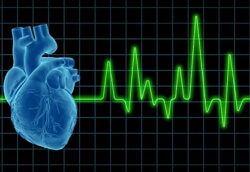
Atrial fibrillation on the ECG - film has characteristic pathognomonic features, which allow correctly to establish not only the fact of presence of fibrillation, but also to determine its clinical form. The main ECG criteria for atrial fibrillation include: the appearance of random fibrillation waves with a frequency of up to 600 per minute of varying amplitude and duration with no P wave in all leads, recording various RR intervals indicative of abnormal ventricular contraction, an electrical alternative consisting in the appearanceAmplitude fluctuations of the QRS complex and complete absence of changes in its shape.
When conducting an ECG study, it is possible to detect indirect signs of focal myocardial infringements of the ischemic nature that allow us to establish the cause of the development of atrial fibrillation.
Qualitatively conducted echocardiography should contain data on the contractility of myocardium of the left ventricle, the state of the valvular apparatus of the heart, the presence of thrombotic intraluminal layers.
Treatment of atrial fibrillation
At present, the universal association of cardiologists has developed and applies a single algorithm of therapeutic measures aimed at arresting atrial fibrillation. All methods of therapy of atrial fibrillation are used either to reduce clinical symptoms, or to prevent possible complications that threaten the life of the patient.
Not in all situations it is advisable to achieve full recovery of normal sinus rhythm, but it is enough only to ensure the optimal rate of heart rate. Restoring the sinus rhythm, you can achieve complete elimination of arrhythmia and hemodynamic disturbances caused by it, and significantly improve the patient's life.
With the optimization of heart rate with the preservation of signs of fibrillation, the risk of thromboembolic disorders increases significantly, therefore this category of patients needs the use of a long course of anticoagulant therapy. The optimal heart rate in the category of patients with a constant variant of atrial fibrillation is 90 beats per minute, and the average daily heart rate recorded during Holter monitoring should not exceed 80 beats per minute.
In a situation where the patient completely lacks clinical manifestations of fibrillation and hemodynamic disorders, one should resort to expectant management for 72 hours, since in almost 50% of patients spontaneous leveling of signs of cardiac arrhythmias is observed. If the patient is observed to retain signs of atrial fibrillation, the restoration of a constant sinus rhythm contributes to the appointment of antiarrhythmic therapy and electrical cardioversion. In addition, patients who have persistent atrial fibrillation need an optimal reduction in the heart rate before the use of antiarrhythmic drugs( Digoxin 0.25 mg intravenously every 2 hours until the maximum possible dose of 1.5 mg, Amiodarone orally in the dailyA dose of 800 mg, propranolol intravenously at a calculated dose of 0.15 mg / kg of weight of the patient, Verapamil intravenously at a dose of 0.15 mg / kg of weight of the patient).Thus, to complete stable recovery of sinus rhythm should proceed only after achieving an adequate reduction in heart rate.
The chances of a complete recovery of a stable sinus rhythm in a patient who has constant atrial fibrillation in combination with a severe form of mitral stenosis are minimal. At the same time, a large percentage of patients in the acute period of fibrillation can achieve complete restoration of sinus rhythm by a method of drug or electropulse cardioversion.
For patients who do not have significant structural damage to the myocardium and valvular heart apparatus, the drugs of choice for drug-induced cardioversion are quinidine( a daily loading dose of 300 mg) and Propafenone( intravenously sprayed at a dose of 1 mg / kg of patient weight), and if there is no positiveResult, these drugs should be replaced with Amiodarone( a daily loading dose of 800 mg) or Procainamide( intravenously-drip in a dose of 5 mg / 1 kg of the patient's weight).
Patients with atrial fibrillation on the background of congestive heart failure are advisable to carry out cardioversion Amiodarone, since this drug not only reduces the heart rate, but also has a minimum inotropic effect. Treatment of patients with a persistent variant of atrial fibrillation should be preferred to propafenone.
Electrical cardioversion in atrial fibrillation can be carried out in an urgent and planned manner. Indication for the urgent use of electropulse therapy is the fact of paroxysm of atrial fibrillation combined with acute coronary syndrome, hypertensive crisis, acute cardiovascular insufficiency. By the method of electrical cardioversion, several positive results can simultaneously be achieved: to improve the indices of cardiohemodynamics, to reduce the manifestations of heart failure. However, do not forget about possible complications of this technique, consisting in the appearance of signs of embolism, ventricular tachycardia, arterial hypotension and acute left ventricular failure.
Absolute indications for the use of electrical cardioversion routinely considered the following criteria: a complete lack of effectiveness of the application of drugs, individual intolerance or contraindications to the use of one or another component of antiarrhythmic therapy, sustained progression of heart failure, the availability of data on successful episodes of cardioversion historyThe patient. As
any therapeutic manipulation, electrical cardioversion method has a number of contraindications to the use of( chronic intoxication drugs group of cardiac glycosides, resistant hypokalemia, infectious diseases group in acute decompensated heart failure).Before applying electrical cardioversion procedure necessary to carry out the preparation of the patient, consisting in the complete abolition of diuretics and cardiac glycosides are not less than 5 days, the implementation of the existing correction of electrolyte abnormalities, the use of antiarrhythmic drugs in saturating doses holding anticoagulant therapy and sedation immediately before the procedure. As technology progresses
era in the field of cardiac surgery, the conditions for an effective surgical removal of atrial fibrillation is to create additional obstacles for rientri waves in the myocardium of atrial fibrillation and obstacles. This technique allows you to effectively restore and maintain a sinus rhythm, not only with a paroxysmal, but also a permanent version of atrial fibrillation. The disadvantage of surgical treatment is the need for carrying out electrocardiostimulation in a remote rehabilitation postoperative period. At present, surgical treatment of atrial fibrillation in an isolated form is extremely rare and in most cases is combined with surgical correction of valvular heart defects.
Prevention of atrial fibrillation
Once the patient will be observed all the signs of restoration of normal sinus rhythm, should be prescribed maintenance antiarrhythmic therapy, to a greater extent for the prevention of the next paroxysm of atrial fibrillation. For this purpose, the preparations of the Propaghenon group are excellent, allowing in 50% of cases to keep the sinus rhythm within one year. Absolute contraindications to the use of this drug are the post-infarction period and left ventricular dysfunction. However, recent randomized studies on the use of antiarrhythmic drugs and their positive effect on the prevention of recurrence of disease show the greatest efficacy of Amiodarone, which is devoid of most adverse reactions and can be used for a long period of time in a maintenance dosage.
Medication prophylaxis in atrial fibrillation is used only if there is an increased risk of relapse that worsens the patient's condition. After the first episode of idiopathic paroxysmal atrial fibrillation, there are no indications for prescribing drug antiarrhythmics as a prophylactic measure and it is sufficient to adhere to the regime of limiting provoking factors. In the case where the cause of fibrillation is any chronic pathology, the prevention of its recurrence will consist in the use of etiotropic therapy.
The main method of non-drug prophylaxis with proven positive efficacy is catheter-based linear ablation of the atrioventricular node, the mechanism of which is to create additional barriers that prevent the propagation of excitation waves. According to statistical data, this technique allows 40% of patients to do without the use of medication prophylaxis of recurrence of fibrillation.
Preventative measures for atrial fibrillation should be aimed not only at preventing recurrence of the disease, but also at reducing the risk of complications, among which the leading position is occupied by thromboembolization of cerebral vessels. As the main preventive regimen of treatment in this situation, adequate anticoagulant therapy, which must necessarily be used for patients with mitral defects, hypertensive disease, the presence of myocardial infarction and episodes of ischemic attack of the brain in an anamnesis. The drug of choice for the prevention of thromboembolic complications is Acetylsalicylic acid at an average daily dose of 365 mg orally.