How to classify craniocerebral trauma?
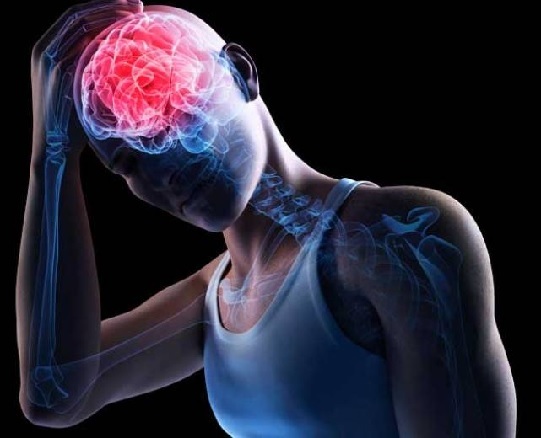 Craniocerebral trauma is one of the most dangerous types of injuries. Changes in the substance of the brain, even mild, always give some unfavorable chronic consequences. Classification of craniocerebral injuries, built on different signs, is necessary for a correct assessment of the condition of the victim and the appointment of adequate care. Classification of craniocereberal trauma allows us to cover all the subtleties of the problem.
What are the types of injuries?
Types of craniocerebral injuries differ in mechanism, severity, nature of injury, specific manifestations. The mechanism of injury:
- shock-shockproof;
- accelerating-slowing;
- mixed.
The first mechanism is based on the ability of the brain substance to move inside the cranium upon impact. It is this displacement that has a damaging effect. The second mechanism is the possibility of shifting the hemispheres around the brain stem. The third mechanism includes the signs of the first two. Type of injury:
- focal - with localized impact;
- diffuse brain injury - with massive damage;
- combined.
Gravity:
- is light;
- of medium gravity;The
- is heavy.
The severity is determined using a point system - the Glasgow scale. It is based on the definition of signs that give an opportunity to assess the state of the brain. For each attribute, a certain score is charged, which depends on its performance. The amount of all points is determined by the severity of the lesion.
Symptoms, Scale:
- Eye opening;
- speech impairment;
- ability to move.
A corresponding scale option has been created for children.
Nature of injury:
- is open, with a violation of the integrity of the skin;
- closed, without trauma to the skin;
- penetrating - with rupture of meninges;
- non-penetrating - the meninges are whole.
Damage type:
- concussion, which can be of different severity;
- injury - light, moderate, heavy;
- diffuse-axonal brain injury;
- compression of the brain structures.
Classification of head injury can be supplemented depending on the characteristics of the lesion.
More about each type of damage
Concussion is the slightest damage, however, and it can lead to adverse effects. The concussion differs from the stupor by loss of consciousness - the duration of this condition can be only a few seconds, but its presence is mandatory for diagnosing a concussion.
Important! Despite the light course, after concussion, it is necessary to urgently come to the examination to the doctor, since in some cases neurologic symptoms appear in a few days.
Neurologic changes are minimal, quickly regress and with compliance with bed rest, within a few days everything returns to normal. Long-term symptoms are most often chronic headaches.
The brain contusion differs from the concussion by a longer unconscious period. Consciousness can be lost for several tens of minutes to several days, depending on the severity of the damage. More specific symptomatology is expressed. In severe cases, epileptic seizures usually occur.
Consequences of intracranial head trauma with a brain injury can be a violation of the function performed by the affected area, motor or sensory function. In almost every case, there is a chronic headache or epileptic seizures.
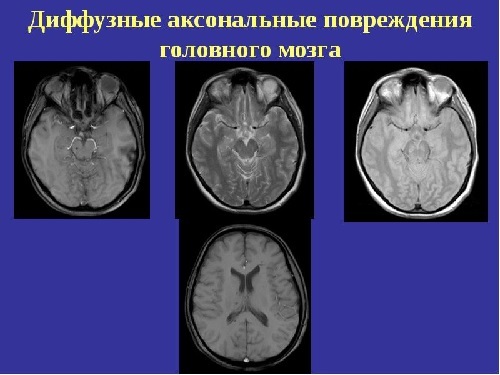 Diffuse-axonal damage. In this case, a coma develops - this is due to a violation of the transmission of a nerve impulse between the brain cells. Dissociation of them leads to a prolonged loss of consciousness. Since there is no connection between the brain regions, all the corresponding symptoms will be expressed:
- symptoms of trunk damage;
- signs of damage to the cerebral cortex;
- oppression of functions of all brain departments.
After restoration of consciousness the person long time can be in a vegetative condition. The connections between neurons are restored very slowly, so this trauma leads to such consequences.
Brain compression most often results in a fatal outcome. With compression, the irreversible destruction of the brain substance occurs very quickly. When the brain stem is squeezed, vital functions are broken - breathing and circulation. If the trauma does not lead to a lethal outcome, for a lifetime there are negative neurogenic consequences:
- paresis and paralysis;
- blindness, deafness, speech problems;
- emotional and behavioral disorders;epilepsy.
Damage to the frontal lobes of the brain leads to the destruction of the person's personality. Head trauma and brain damage are a condition that requires immediate medical attention. Depending on the type of damage, this or that amount of treatment turns out to be.
write the question in the form below: