More about prostatitis: causes, symptoms, treatment and prevention
Prostatitis is an inflammatory-degenerative lesion of the prostate( in some cases it is dystrophic, in others it is inflammatory, but it can also be a mixed origin).The disease affects mainly older men: in the risk group, the stronger sex is older than 40 years. Unfortunately, in recent years, the disease has become a tendency to rejuvenate, so you can say that it affects her in equal measure, both young people and older people.
Prostatitis is dangerous with a high probability of violations from the reproductive system: it is possible to develop a low mobility of spermatozoa and, as a result, relative infertility, which is difficult to treat. What you need to know about this disease, if there is a desire to maintain male sexual health?
Contents of
- 1 Summary of anatomical information about the prostate
- 2 What is prostatitis: the definition of the disease
- 3 Etiology / pathogenesis of prostatitis
- 4 Causes of pathology development( pathogenesis factors)
- 5 Classification of prostatitis
- 6 Clinical symptom
- 6.1 General symptoms
- 6.2 Local symptoms
- 7 Diagnosis
- 8 Treatment
- 8.1 Medication therapy
- 8.2 Phytotherapy( folk remedies treatment)
- 9 Prostatitis prevention
Shorte anatomical information about prostate Prostate
represents exocrine( secreting substances outside the body) musculo-gland glandular structure. The localization of the organ is the area of the bladder. Prostate( another name for the prostate gland) performs several important reproductive functions:
- The secret of the prostate( or prostate juice) is the primary non-sex component of sperm. Thanks to him, this biological fluid has a liquid structure.
- Prostate overlaps urine access to the urethral canal at the time of erection, preventing urination during intercourse.
There are less significant functions of this male organ( for more information on the structure and function of the prostate, see here).
What is prostatitis: the definition of the disease
Prostatitis in urology refers to the lesion of the prostate of various genesis: it can be either directly about the inflammation or the non-inflammatory process that entails the dystrophy of this organ. Depending on the etiology of the disease, appropriate treatment is selected, so it is so important not to engage in self-therapy, and at the first "malfunction" with the genitourinary system to go to the doctor.

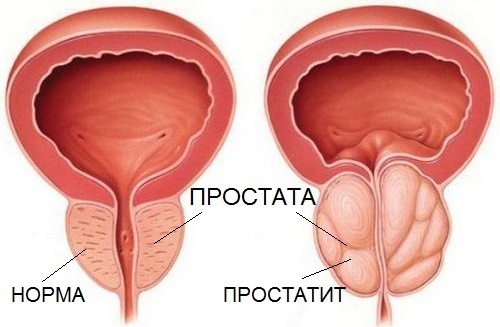
Normal and enlarged prostate is prostatitis.
Etiology / pathogenesis of prostatitis
Etiology and pathogenesis( origin and mechanism of disease formation) is one of the most controversial issues of modern urology. In domestic science and practice, there was a firm belief that prostatitis is an inflammatory lesion of the prostate of an infectious genesis. But this is true only in part and not always. Foreign scientists have found out that only 10% of all clinical cases fall on the so-called bacterial form of the disease. It is usually spoken about, meaning prostatitis. But not everything is so simple and obvious.
Prostatitis may not be accompanied by inflammation at all. In this case, they speak of non-inflammatory form of the disease. The non-bacterial form of prostatitis accounts for the order of the remaining 90% of cases of pathology. Context synonym for prostate injury of non-inflammatory and non-infectious genesis in European medical practice is the name "chronic pelvic pain syndrome".
According to the most advanced scientific views, the etiology of prostatitis is of a complex nature: the organ comes to complete hormonal, hematological and physical dissonance. Both muscles and glandular cells cease to function normally. This is the multifactorial origin of the disease.
There are three main theories about the etiology of prostatitis:
- Theory 1. The first states that the basis for the development of the disease is an acute viral / infectious disease. This, as it turned out, does not always correspond to reality.
- Theory 2. The second one talks about the vascular origin of the imbalance. It's about ischemia of the prostate. As a result of this or that factor, there is a development of insufficient blood supply to the body. As a result, it completely or partially loses its functions: in fact, nutrition and oxygen saturation in normal quantity are absent. Read on: Treatment of stagnation of blood in a small pelvis.
- Theory 3. The third theory presents a picture of the pathology of the prostate as a neurogenic disease. According to this approach - there are no organic causes of morbidity, we are talking about neurogenic pains.
Thus, both etiology and pathogenesis are multifactorial in nature.
Causes of pathology development( pathogenesis factors)
Prostatitis is a polyethiologic disease. In practice this means that it can be caused by a mass of causes. Among them:
-

Hypodinamy, sedentary lifestyle - these are predisposing factors to prostatitis.
Insufficiency of motor activity( hypodynamia).Movement is known to be life. In the absence of rational physical activity, stagnation occurs in the pelvic organs. As a result, dystrophy of the glandular organ develops.
- Obesity. Large body weight indirectly affects the development of prostatitis. It's all about the same stagnant processes. In addition, as you know, obesity is formed with malnutrition, or metabolic disorders( lipid metabolism).Metabolic disorders cause atherosclerosis. Vessels of the body, including the prostate, are subjected to the deposition of cholesterol. As a result, blood circulation in the pelvic organs significantly changes.
- Eating lots of spices, seasonings. Acute food leads to irritation of the prostate.
- Irregular sex life. Irregular sexual contacts lead to stasis of secretion in the structure of the prostate. Stagnation entails an inflammatory process and, as a result, the described disease is formed. Read on: Sexual abstinence men - when the benefits, and when the harm?
- Disorders from the pelvic organs, especially the intestines. Crohn's disease, colitis, hemorrhoids. All these diseases lead to a failure of the venous circulation. Blood can not normally circulate, as a result, stagnant phenomena develop in the genitals( pelvic organs).
-

Irregular sex life is also considered to provoke a prostatitis factor.
Subcooling. Subcooling causes inflammation in the structure of the prostate. As a rule, this is due to a decrease in immunity and activation of pathogenic microflora.
- Abuse of alcohol, smoking. Alcohol, like tobacco, causes stenosis( narrowing) of the lumen of large vessels that feed the prostate gland. The result is already known.
- The presence of an infectious agent in the structure of the prostate gland. It can penetrate there from a wide variety of sources. So, any focus of chronic infectious inflammation can lead to prostate cancer( more: How to recognize hidden sexual infections?).
- Hormonal disorders. Changes from the hormonal background can cause problems with microcirculation of the blood, due to excessive exposure to the receptors of prostate cells.
- Arterial hypertension.
- Resistance to insulin.
- Vitamin deficiency( vitamin deficiency)( see Vitamins for Prostate Health).
- Disturbances of frequency of emptying of the bladder. If a man does not visit the toilet room often enough, the pathological flora can penetrate the bladder into the prostate, causing septic damage to this important organ.
- Insufficiency of the muscles. Promotes insufficient reduction of muscles of the prostate. As a result, the secret of the body is not sufficiently ejected.
Classification of prostatitis
There are two reasons for the classification of prostatitis. The first base is a form of percolation. The second is the initial cause of the disease.
Due to the formation of pathology, prostatitis is divided into:
- Prostatitis bacterial. It is caused by pathogenic microorganisms.
- Prostatitis is viral. Its basis is not a bacterium, but a virus. The main difference between a bacterium and a virus is the absence of its own cellular apparatus.
- Neurogenic. If you believe the research data, non-inflammatory neurogenic prostatitis occurs frequently. It is caused by violations of the innervation of the gland or by psychogenic causes( a close "relative" of neurogenic pain is so-called phantom pain).
- Fungal prostatitis.
- The defeat of a calculous organ( in the presence of stones in the gland cavity).
- Herpetic prostatitis. Can be divided into a separate group. It is caused by the herpes virus.
Acute acute and chronic are isolated by the flow pattern:
- Acute prostatitis occurs with a pronounced symptomatology, when the clinical picture is manifested to the greatest extent. The duration of this form is about 6-18 weeks, after which( with proper treatment), the lesion of the prostate glands "to no effect".
- Chronic form develops when untimely treatment. Also, the propensity to chronicize has a non-infectious prostatitis( it can begin already with a chronic process).
Clinical picture( symptomatology)
Acute prostatitis of any origin has characteristic symptoms of two groups: general and focal( local).
Common symptoms of
Among common manifestations:
-
Elevated temperature, weakness manifested in acute form of the disease and absent from chronic.
body temperature rise to febrile or subfebrile digits( 37.5-39 degrees Celsius);
- headache;
- general malaise;
- weakness;
- drowsiness;
- feeling of "vitality" of the body.
Local symptoms
Local symptoms include:
- Pain syndrome in the groin area. The pains are localized in the perineal region, they are given to the scrotum, testicles, and the penis. The intensity of the syndrome is different: it varies from a weak aching sensation to an unbearable pain of a cutting, pulling character. The strength of pain increases at the time of urination, sexual intercourse, act of defecation.
- Violations from the direction of urination. The jet becomes weak( due to proliferation of prostate tissues acting as a valve).Possible complete disappearance of urination.
- Frequent false urge to urinate due to irritation of the walls of the bladder.
- Feeling of incomplete emptying of the bladder.
- Sexual dysfunction( erectile dysfunction)( see How much does prostatitis affect potency?).
- Decreased libido.
The chronic form of the disease is characterized by a complete absence of general symptoms, local signs are observed in an incomplete measure: usually one can speak about 2-3 symptoms. In some cases, the clinical picture may be absent completely.
Often, prostatitis is a secondary pathology of the genitourinary system. In this case, the local symptoms are mixed manifestations of the primary disease( nephritis, pyelonephritis, cystitis, etc.).
Diagnostics
Diagnostics begins with a trip to the specialized specialist. There are no major difficulties in the survey. The doctor you should visit is a urologist or urologist andrologist.
At the initial examination, the doctor interviews the patient for complaints, their duration, character. The duration of the course is extremely important: the true prostatitis lasts at least three months, otherwise a revision of the primary diagnosis is required. After the survey, the finger examination of the prostate( via the anus) comes. This technique allows the doctor to assess the size and structure of the prostate gland.
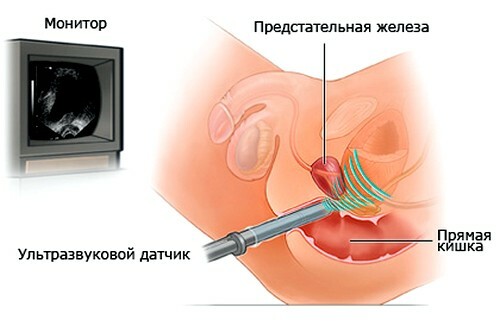
Transrectal ultrasound( TRUS) allows you to examine the prostate and its tissues.
Gold diagnostic standard recognized the following instrumental and laboratory methods:
- Radiography of the prostate. Carried through the rectum with a special sensor. Allows to estimate the sizes of a prostate, structure of an organ, presence of concrements.
- Ultrasound examination of the prostate. It is necessary for the same purposes. The most informative among ultrasound studies of the prostate is TRUS.
- General blood test. In case of infectious origin of the disease or inflammatory process, a characteristic clinical picture with leukocytosis, high level of ESR( ESR), etc. is revealed. Erythrocytes, on the contrary, are observed less than normal. Hemoglobin is normal. Specific figures depend on the reference( normal) values accepted by a particular clinic.
- Prostate secretion assay for bacteria( bacterial cultures). The normal amount of an infectious agent in the secretion of the prostate is 10,000 pathogenic units. All that is more is already pathology. So, in this case it is a classic infectious prostatitis. Also, bacteria, leukocytes in the prostate juice can be detected. The accuracy of this technique is high. Details of the analysis of prostate secretion can be found here.
In the complex of these diagnostic methods, it is sufficient to make a diagnosis.
Treatment of
The basis of treatment is medication( conservative) therapy. To surgical treatment resorted only in extreme cases.
Medication Therapy
Its basic ingredients are as follows:
-
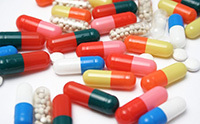
With prostatitis antibacterial drugs are prescribed.
Alpha-blockers. According to European studies have a pronounced effectiveness. This includes: alfuzozin, terazozin, tamsulosin, doxazosin. In some cases, these drugs are not able to reduce the pain syndrome, so they are required in combination with analgesics. For monotherapy they are not always suitable.
- Antibacterial drugs. They are antibiotics. The duration of treatment is selected individually. The minimum recommended by foreign doctors is six weeks. Specific names of drugs are determined on the basis of efficacy, but the selection is carried out empirically( experimentally), because the sap of the juice of the prostate does not allow a conclusion about the pathogen and its sensitivity to antibiotics. Interesting fact. In one of the studies, three drugs were evaluated: tetracycline, levofloxacin, ciprofloxacin. There were no significant differences in their effectiveness. Greater efficacy was observed with a combination of alpha-blockers and antibacterial drugs. Nevertheless, the efficacy of antibiotics has not been fully proven. It may well be that the control group did not have uropathogenic microorganisms( see Treatment of prostatitis with antibiotics).
- Inhibitors of 5-alpha-reductase. Data on the preparations of this group are contradictory. Apparently, these drugs can not be recommended to everyone. However, the efficacy of the pharmaceutical agents of this group in elderly patients has been proved. The first and main means - finasteride.
- Neuropathological drugs. This is Pregabalin( antiepileptic medicine).Substantially reduces pathological symptoms.
- Pentosan polysulphate. Well proven in the management of chronic pelvic pain.
- Muscle relaxants( medications for muscle relaxation).At the moment, their effectiveness is not sufficiently investigated. The combination of muscle relaxants with anti-inflammatory drugs and alpha-blockers is the most effective. Among the names: Baclofen, Diazepam.
- Botulinum toxin. Little is known in the treatment of prostatitis. Has a moderate effect.
- Antihistamines. Their effectiveness is different, but, as a whole, it is proved. It is important to know the original cause of prostatitis in a particular case.
- Antidepressants. They help with the psychogenic nature of the pain syndrome.
- Immunosuppressants( Azathioprine).Allow to reduce pain and frequency of urination.
- Anesthetics( with intravesical administration of drugs).
- Hyaluronic acid.
- Analgesics.
- Non-steroidal anti-inflammatory drugs. Have high efficiency. This includes Paracetamol, Ketorolac, etc.
- Neuromodulators( designed to relieve psychogenic pain).
See also: Candles for prostatitis - types, list of preparations
You can take anti-inflammatory drugs and analgesics yourself, up to several days at the minimum dosage. But it's by no means impossible to heal yourself. Strictly obligatory consultation of the urologist. Without a doctor, this problem can not be solved. Is it worth it to risk reproductive health for the sake of several hours saved?
Surgical treatment is indicated for severe disease. The nature and nature of the operation is determined by the doctor.
Phytotherapy( treatment with folk remedies)
It is permissible to use phytotherapeutic preparations independently. Cernilton , the drugs based on quercetin, have the most proven proven effectiveness. More controversial efficacy was noted in Serenoa repens .In all cases, pain and severity of the rest of the symptoms decreased.
Prevention of prostatitis
It is enough to adhere to simple recommendations.
-

A healthy lifestyle in all its manifestations is the prevention of prostatitis.
need to have a regular sex life( see Can I have sex with prostatitis?);
- it is important to adhere to the optimal mode of physical activity and keep the weight at a normal level;
- it is necessary to abandon the excess of spicy and fatty foods;
- great importance in the prevention of sanation plays a foci of infectious inflammation, whether caries teeth or E. coli;
- should abandon bad habits: smoking, alcohol abuse, etc.;
- must not be supercooled;
- should be treated in time for all diseases that can become a source of damage to the prostate;
- it is important to regularly undergo preventive examinations from a urologist andrologist.
So the risk will be minimal( for more details about the prevention of prostatitis read here).
Prostatitis is a complex and poorly understood disease. There are far more questions about it than answers. Independently to understand a lot of nuances, of course, it is difficult, even, rather, impossible. Consultation of a specialist is required. Do not risk sexual health. This is the most correct way.
Recommended for viewing: