Inclusion in the diet of sweet cherries with pancreatitis
Sweet cherries in pancreatitis are included in the ration for the patient, observing certain conditions.
Diseases affecting the digestive system should be taken seriously.
First of all, it is necessary to make a list of products that are allowed to eat and determine the allowable portion size.
Strictly following the instructions of a nutritionist, you can significantly ease the course of the disease.
Specificity of pancreatitis
Contents:
- Specificity of pancreatitis
- Diet for problems with pancreatic
- Cherry as an element of therapy
- Contraindications for
- disease How to use the sweet cherry?
To ensure protein, fat and carbohydrate metabolism, there is an appropriate mechanism in the body.
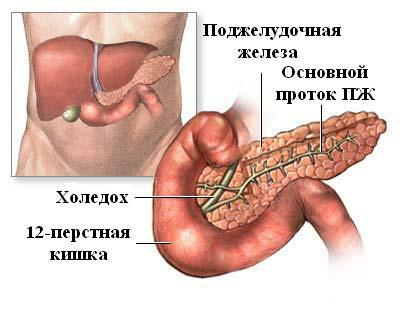
The pancreas synthesizes pancreatic juice and insulin hormones, which provide a metabolism in the process of digesting food.
If a person is in a healthy state, then he can eat any foods, including cherries, cherries, apricots and other stone fruits.
When the inflammation develops in the pancreas, this process is called pancreatitis.

The danger of pancreatitis is that the pancreas is destroyed under the influence of its own enzymes. The disease occurs in acute or chronic form. It is very important to diagnose this pathology in a timely manner.
Symptoms and signs in pancreatitis are very similar to those that occur with cholecystitis.
At the disposal of the attending physician there is a set of methods that allow differentiating pancreatitis from other diseases of the digestive system.
Diet for problems with pancreatic
The main task of dietary nutrition in pancreatitis is to normalize the function of the pancreas.
Simultaneously, it is necessary to exclude the possibility of damage to the gastric mucosa by both chemical and mechanical action.
Diet is made taking into account the following conditions:
- provide the necessary content of proteins and vitamins;
- to limit the content of spicy, salty, smoked and fatty foods;
- to reduce the content of foods that irritate the gastric mucosa.
Such a diet is prescribed to a patient with chronic pancreatitis and cholecystitis.
Cherry as an element of therapy
Gastroenterologists warn that when exacerbating pancreatitis, self-medication can not be done. In this message there is no exaggeration.
One should be aware that some products are capable of provoking an acute phase of the disease. At the same time, vegetables, fruits and berries are used as medicines.

Cherry serves as a vivid example.
It has the following properties:
- berries are delicate;
- fructose is easily digested and does not load the pancreas;
- in the cherry contains a minimum amount of organic acids.
There are certain restrictions on eating cherries.
In no case should you eat spoiled or unripe cherries. Practice shows that in such cases there is an exacerbation of pancreatitis.
The duration of the season in which this berry ripens and is used is not great. With chronic pancreatitis and cholecystitis, you can use it only during this period.
In the treatment of the disease, fresh cherries are used to relieve the load from the pancreas and to ensure that it is calm.
Diet is formed taking into account seasonal features. The berry ripens in the first month of summer. It is necessary to have time to nourish the body with vitamins.
Contraindications to
During the period of acute pancreatitis, it is not recommended to consume fresh berries. This condition extends to the cherry.
In chronic pancreatitis, nutritionists do not recommend eating fresh berries on an empty stomach. Moreover, even after the main meal it is advisable to wait half an hour and only after this time you can try the ripe cherry.
It is allowed to eat half a glass at a time and not more. When the disease is exacerbated, the sweet cherry in any form can not be consumed.

The reason for this restriction is explained by the fact that the dense shell of even ripe berries can injure the inflamed mucous membrane of the stomach and intestines.
An exacerbation of pancreatitis can occur at a time when there are no objective reasons for this.
There are enzymes in the cherry, which are called anthocyanins.
At a high concentration, these substances can cause inflammation in the gastrointestinal tract. Any inflammation has a negative effect on the pancreas.
To avoid such unpleasant consequences, it is desirable to abstain from the sweet cherry even at the slightest digestive system disorder.
How to use the sweet cherry?
The value of the sweet cherry is estimated by the composition of vitamins and microelements in it. When pancreatitis is very important to provide the body with all nutrients.
In a season when cherry ripens, it is best to eat it fresh, observing all the conditions specified above.
According to the recommendations of gastroenterologists, it is necessary to thoroughly chew berries. This is done to facilitate their digestion in the stomach and intestines.
Traditionally cherries are harvested for future use, canned and used in the manufacture of various dishes and culinary products. To conserve all nutrients, use gentle methods of preservation.
Video:
With chronic pancreatitis, there is nothing better than a fresh sweet cherry jelly. Before use, it must be filtered to separate the pulp from the liquid component.
A good compote of sweet cherry and dried apricots has a good dietary and nutritional properties. From sweet cherries it is possible to prepare jelly or puddings, which will diversify a strict diet in chronic pancreatitis.
By joint efforts of the patient and the attending physician it is necessary to form a diet of such quality that it harmoniously complements the intake of medications.