
The main causes of loose stools during pregnancy
Liquid stool during pregnancy is not a rare phenomenon, although less common than constipation, except for the last weeks before childbirth.
First, pregnant women are exposed to the same factors of liquid stool appearance as all other people.
Secondly, hormonal changes in the body cause malfunction of various systems during pregnancy.
Thirdly, the mechanical pressure of the fetus on the digestive organs changes the rate of their work.
The appearance of a loose stool during pregnancy can scare like any incomprehensible symptom, but in the vast majority of cases, this is not a cause for concern, but for close observation of your body.
Features of loose stools during pregnancy - Contents:
- Features of loose stools during pregnancy
- Effect of diarrhea on fetal development
- Diarrhea and third trimester of pregnancy
- Features of loose stools during pregnancy
- Effect of diarrhea on fetal development
- Diarrhea and third trimester of pregnancy
Diarrhea is commonly understood as frequent loose stools. For the most part, this is true, but this definition does not take into account another important characteristic of diarrhea: excess daily feces, which is 200 ml.
Nevertheless, the appearance of liquid stools in pregnant women is not unusual at all, but requires attention for several reasons:
- the choice of methods for drug treatment of diarrhea of pregnant women is limited, self-medication, fraught with negative consequences for any person, becomesCompletely unacceptable;
- diarrhea is often accompanied by spasms in the intestines, which can provoke the tone of the uterus and premature birth. If at the 31st week the fetus is already fully viable, then at earlier times it may die.
Pregnancy does not insure against intestinal infections, therefore, during this period it is important to be especially careful about the choice of foods and drinking water.
Torn off the garden greens should be thoroughly washed, allowing some time to lie in the water, it is desirable to pour boiling water. You should drink only purified water.
Video:
Noticing the liquid stool, the main thing that you should not do is panic. It is important to exclude intestinal infection by collecting a clinical picture of your condition.
In intestinal infections, in addition to diarrhea, vomiting, poor health, vomiting, and body temperature can often occur.
If, in addition to the liquid stool, there are no other symptoms, then intestinal infection, most likely, can be excluded.
Liquid feces of a greenish hint imply that diarrhea can cause increased bile secretion during digestion.
This is due to the effect of female hormones of estrogens, the amount of which during pregnancy increases dramatically.
Perhaps diarrhea is accompanied by a colicky pain in the right upper quadrant, which confirms the indicated cause of the loose stool. If the condition has not improved, with diarrhea, you can try to reduce the amount of choleretic products.
In late terms, for example, on the 38th week of bearing a child, the fetus is considered fully ripe and ready to be born, so liquid stools are one of the typical reactions to the approach of labor. Coupled with a fallen stomach, this may be a signal that it's time to gather in the maternity ward.
Influence of diarrhea on fetal development
Competent midwives repeat tirelessly that pregnancy is not a disease, and one can not treat the slightest changes in health as a symptom.
There are 12 dangerous signs of complications, in which you should immediately consult a doctor, but diarrhea is not included in this list.
Nevertheless, it is important to understand what is happening in the body and how the state of the mother and her future baby is interrelated.
Video:
Diarrhea can weaken the mother's dual-burden immune system, and her effect on the fetus varies depending on the month and even week of development.
15 week is the time when a tiny liver is already producing bile, and the pancreas can release insulin to get energy from glucose. Diarrhea of the mother at this time may affect the development of these organs.
Week 16 is the time at which it is important for the expectant mother to be protected from a loose stool, as the fetus and placenta are being formed at this time.
Dehydration and contact with unfriendly microorganisms for the future child at this stage of its development is fraught with serious consequences.
Until the end of 20 weeks, the baby's senses are laid, his reaction to the mother's condition becomes more active.
If at this time the mother will experience stress, which causes diarrhea, then this can affect the formation of sensory organs.
Since this age, dehydration of the maternal organism as a result of diarrhea can reduce the amount of amniotic fluid that protects the baby from trauma.
22nd week of pregnancy is the time of active growth of the muscles and bones of the fetus, so doctors recommend pregnant women to use calcium and iron-rich foods, supplementing the diet with special vitamins.
If these changes lead to diarrhea, the expectant mother should see a doctor to adjust the diet and revise the vitamin and mineral supplements.
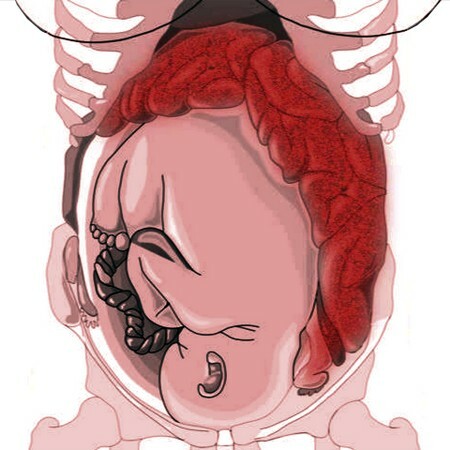
At the 24th week of pregnancy the baby's body weighs more than half a kilogram, all organs and systems are fully formed.
Moving, the kid can cause easy bouts, which are temporary. In this there is nothing dangerous - so the queen prepares for childbirth.
By this time, the weight of the fetus and amniotic fluid becomes significant enough to cause diarrhea.
Diarrhea and third trimester of pregnancy
Since 27 weeks, the child has been growing intensively. Viruses and bacteria can become not only the cause of mother's diarrhea, but also adversely affect the immune and respiratory systems of the fetus.
During the period from 28 to 31 weeks the probability of a viable child born as a result of premature birth is quite high and is 90%.
Formed fetal lungs allows doctors to prescribe more medications to their pregnant patients if necessary.
From 32 to 35 weeks the maternal organism is actively preparing for future labor, which is often accompanied by a number of symptoms, including liquid stools, nausea and vomiting, decreased appetite, false labor.
The possible appearance of diarrhea also contributes to disruption of the digestive system of the mother due to hormonal perturbations and stress.
There is a hypothesis that late diarrhea is a special mechanism for purifying the body of a future mother from toxins and pathogenic microorganisms.
Every week the fetus presses on the cervix more and more, which can also strengthen the motor activity of the intestine and dilute the stool.
No special treatment is required, but the stool can be sealed with rice decoction, pomegranate peel, blueberry jelly and other safe, but effective folk remedies.
Video:
The child is almost completely formed, and his mother's condition is practically incapable of harming him.
At 36 weeks of pregnancy, diarrhea is not to be feared, but it is important to stop it, in order to prevent dehydration and lack of water, which is fraught with starvation of the fetus.
In addition, the thickening of the blood due to dehydration can lead to thrombosis, which will significantly complicate childbirth.
At 36 weeks, as well as during the third trimester, a full-value diet is important, in which there are many valuable macro and microelements.
It is important to listen to the body's condition, assessing the symptoms in general, and not individually.
It is not worth dramatizing, but if you have really troubling symptoms, it's important not to delay the appointment of a doctor, in time to respond to such serious complications as, for example, pre-eclampsia.
Indigestion in the last weeks before childbirth is considered a normal physiological response by the physician, unless it is accompanied by other symptoms.
Any medications, including medicinal herbs, can be taken only after consultation with a specialist.


