
The causes of the appearance of a loose stool in a child
Liquid chair in a child is both a sign of the presence of some abnormalities in the body, and a normal phenomenon, when it comes to breast-feeding during breastfeeding.
Also diarrhea is the norm when a child consumes liquid baby purees and cereals, so parents rarely emphasize this phenomenon.
But it is important to understand how to distinguish between a "healthy" fluid stool from diarrhea associated with an infection. To do this, consider additional symptoms of possible diseases and their treatment.
Liquid chair in infants
Contents:
- Liquid chair in infants
- What should I look for?
- Treatment methods and prevention
Because of the feeding characteristics of a newborn baby, its feces have a liquid structure.
At the age of up to one year in a child with breastfeeding, a yellow liquid stool is quite natural and harmless.
The release of the intestine takes place over several approaches per day and has a uniform consistency.
If the infant consumes artificial or combination food, the feces come out with a brownish-yellow color, but they have a more dense structure than with one natural feeding.
Video:
That is, in the first months of life, light color and liquid consistency of stool are not signs of the appearance of disorders and illnesses.
This indicates normal development of the gastrointestinal tract and does not require medical intervention.
When breastfed without any artificial additives, small particles do not enter the small body, so a yellow liquid stool forms from the mother's milk.
Changes in density, color and odor appear after the introduction of complementary foods, fruit, vegetable purees and soups. The dependence of feces on nutrition has its own peculiarities.
Children have black or dark green color in the first days after the birth. Its structure is dense, and the smell is absent.
The first chair of a newborn is called meconium and consists of the epithelium, intestinal cells, prenatal hair, mucus, amniotic fluid, water and bile that have been recycled in the womb. The consistency of meconium resembles resin.
If, for some reason, the baby feeds in the first few months after birth with the purchased formula, you can expect a green loose stool in the baby, which will smell unpleasant.
On the other hand, depending on the duration of the breastfeeding only, the feces have a light brown color with a golden tinge or a bright yellow liquid appearance.
Intestine in the first months only learns to digest incoming components, so do not be afraid if there is a loose stool with mucus or with undigested lumps.
After overcoming the semi-annual boundary, having made the first lures, stool masses thicken and darken.
The child walks a lot up to six times a day, but with this you need to monitor the weight of the baby - it should be within reasonable limits.
Exercise can be less frequent - up to once a day. If the newborn feels well at the same time, then there is no need to be frightened of a rare stool.
What should I look for?
In a one-year-old baby, a loose stool may indicate various disorders. In cases of changes in consistency, color and odor of feces, you need to know what they are talking about.
The liquid stool for toddlers can be divided into several criteria. Fecal masses of a yellowish hue with mucus may signal the presence of an infection in the intestine.
White loose stools indicate possible problems with the liver or gallbladder. The use of certain medications can also affect the clarification of stool.
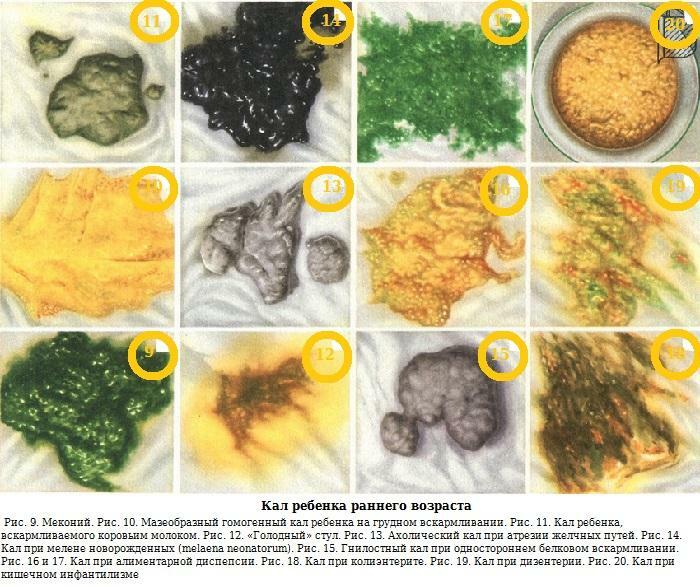
In a baby who is fed with a mixture, a light color can be quite natural. It should be noted that clarification of feces in children is possible because of an overabundance in the diet of calcium and carbohydrates.
When a naturally-fed baby is 2 months old, and a loose stool comes out with mucus, we can conclude that the nursing mother uses a large amount of fatty foods with which the baby's digestive system is not yet able to cope.
In a one-year-old child, with allocation of yellow stools and elevated temperature, infection in the gastrointestinal tract can be diagnosed.
A stool with foam from a child accompanied by a sour smell and flatulence can indicate that the child's digestive system is not able to digest milk sugar.
The parents of the newborn baby can hardly be surprised by the liquid structure of the child's chair. Breast children rarely walk in a large dense and this will be their own reasons.
Liquid chair in children who eat unreliable food is quite natural and on it it can be said that the child's digestive system works properly.
This will also be the frequency of emptying the intestines of the infant - a normal figure will be considered up to eight approaches a day.
The fact is that the same color of feces and the frequency of its release in a child up to a year can be and with the emerging pathology - diarrhea.
In this case, parents need to know what to do to distinguish the disease from a healthy liquid stool.
Diarrhea is a condition of the body, in which there are frequent urge in the toilet, incontinence and pain in the abdomen.
The fecal mass with diarrhea has a watery consistency. A liquid stool in a child under 1 year with diarrhea will change the smell - it will become sharp and disgusting.
The structure of feces will change to a more fluid one, and unusual elements - mucus and lumps may appear. Feces with blood in a child may also be a symptom.
The very process of excrement also changes - the baby will cry, as it can be overcome by pain and discomfort.
The feces will come out under pressure in the form of directed jets. Such symptoms can not be neglected, you need to immediately contact the pediatrician to prescribe a treatment.
Video:
Methods of treatment and prevention
Diarrhea can begin, as in a small month old child, and a child of 4 years.
Before taking any independent action, you need to call a doctor at the house, who will decide what to do next.
After the development of anxiety signals in infants, parents should show the child to the pediatrician. This can be done either at home or in a children's hospital.
The situation with babies is complicated by the fact that they almost can not tell about their condition.
To understand why the symptoms of diarrhea have appeared, the feces must first be analyzed.
Liquid chair in a child 2 years old and older, accompanied by a symptomatic diarrhea can begin to treat yourself. But if the condition does not improve, then you will have to seek treatment.
When an infant becomes disturbed by flatulence and colic, the mother should focus on her nutrition.
Video:
Probably, along with milk, the products of the breakdown of fatty and spicy food, which the nursing mother ate on the eve, got into the baby's body.
Inflammation and colic can also be affected by an overabundance of muffs eaten by mom. After such food, the stool of a one-year-old child is able to change its color.
When fed with mixtures, diarrhea can cause a change in the mixture used, or a switch to dairy and sour-milk products.
In such periods, a loose stool with foam may appear, which indicates that the baby's nutrition needs to be reconsidered.
If diarrhea is diagnosed, hospitalization may be necessary for ongoing supervision.
In 2 years the child may be prescribed antiviral and antibacterial medicines, may need the participation of an allergist.
Assigning sorbents and medications to reduce flatulence. To avoid irritation on the skin, the baby should be washed or wiped with antibacterial napkins two or more times a day.
For the duration of treatment, the child should avoid contact with other children.
To exclude the dehydration of the baby, it needs to be breastfed more often.
A kid, 3 years old or more, makes sweet tea with lemon and is forced to drink it every 20-30 minutes. In addition to tea, medicinal solutions can be used.
To strengthen the chair, children are fed porridge, potato and apple puree. The second feature is the exclusion from the consumed products for the period of recovery of the digestive system of drains, apricots, juices and unboiled milk.
To avoid frequent liquid stools in the child and not reach a critical condition, you must follow simple rules for the prevention of diarrhea.
Parents need to know what to do to prevent the manifestation of the disease. The introduction of complementary feeding into the ration of infants at an early age is better to exclude.
It is worthwhile to start prevention with washing hands before each meal. A child who is 3-4 years old, it's time to teach independent control over this process.
The dishes must be heat treated before consumption, the milk is boiled. It is forbidden to drink sweet liquids during meals.
It is necessary to control the shelf life of products and their quality, especially when summer comes. If there is a failure in the digestive system, a strict diet is observed.

The child has been administered antibiotic control for 3 years and more. With discomfort in the stomach and the appearance of diarrhea, a constant replenishment of the water-salt balance is necessary.
When diarrhea occurs, it is important to know what to do for a quick recovery of the baby.
Liquid chair in children will manifest more than once, and it is only to be afraid of it if additional negative symptoms are connected.
But if parents know and apply preventive norms of hygiene and nutrition, then complex consequences can be avoided.


