Veneers on teeth: what it is, photos before and after
For the restoration of damaged teeth, veneers have been widely used in dentistry, the wearing time of which depends on the material.They are plates - composite, porcelain, replacing damaged surfaces.They are also placed as a protective barrier from contact, for example, with a mouthpiece when playing on a pipe.
Varieties of veneers
To understand how veneers look, you need to analyze their classification list.Three key types are distinguished, being guided by the material used for their manufacture.
- Ceramic veneers with a thickness of 0.3 ÷ 0.5 mm are considered reliable due to their strength.They are made in the laboratory using zirconia, as well as medical porcelain.They completely match the shade with natural teeth for a long time.
- Composite plates give way to more modern and durable analogues.They are quickly installed, but do not differ aesthetically and quickly wear out.
- Porcelain luminaries of thickness ≥ 0.2 mm, coming from California, do not require preliminary teeth grinding, they are quickly installed and serve for a long time.

What are veneers?
Techniques for the manufacture of veneers
For many, the term veneers on teeth remains unclear, what is it - a universal remedy for problems or serious medical intervention.These are simple dental structures with an excellent effect of restoring the former beauty of a smile.
For the manufacture of ceramic devices, there are several ways:
- classical technique is the application of layers of ceramic powders, which are then fired;
- press ceramics or molding of durable micro prostheses under pressure;
- milling the required plates from blocks.
Creation of a plate from a zirconia block begins with the preparation of the tooth and the removal of the impression.Then, using a computer, a veneer model is created, which is automatically milled on the milling machine.It is fixed on the cement composition.

Teeth with veneers installed on them

They are made traditionally using two technologies:
- therapeutic method, implemented directly in the dental chair.After removing the enamel layer, the doctor applies a special composite material from a series of light-polymer compositions with thin layers, restoring the tooth surface to the former healthy state;
- technique of making a veneer by a dental technician on the impression of a dentured pre-tooth by a dentist.
Motivation of the ASD5ASASD
The question of what veneers are for teeth often occurs in an emergency situation when it is required to conduct a sparing restoration of lost tooth surfaces with its former beauty.There are a lot of reasons for this:
- enamel erosion;
- marked unaesthetic yellowness of the front planes;
- defects with significant damage to dental tissues;
- darkening after depulpation;
- significant interdental spaces;
- ugly form;
- chips;
- fluororescent stains;
- excessive crowding of incisors;
- unsuccessful restoration procedures;
- wrong tooth turn;
- the presence of other color seals.

Veneers - photos before and after treatment
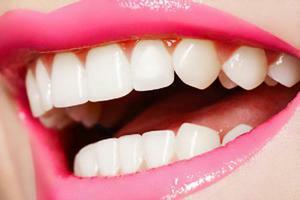
Single teeth are subject to restoration, but the result is more effective when the plate is applied to several adjacent surfaces.Increasingly, this technique is used to obtain a "Hollywood smile."
Contra-indications
Before placing the veneers, it must be understood that the restoration of teeth with the use of micro prostheses, like any medical technique, has certain contraindications, which the experienced dentist will certainly notify:
- incorrect bite;
- destruction of enamel from the wrong side;
- abnormal, progressive tendency to erase teeth;
- significant absence( more than six) of chewing teeth;
- pronounced involuntary gnashing of teeth;
- occupations( for example, boxing), leading to jaw injuries;
- habits that negatively affect the enamel: open bottles, gnaw seeds, crack nuts, bite nails;
- availability of large fillings.
Potential buyers of a dazzling smile are sure to be interested in the pros and cons of veneers to assess the degree of risk.
Advantages of
An excellent technique for obtaining an ideal evenness of teeth has many advantages:
- speed of production;
- durability of ceramics;
- excellent external aesthetics;
- approximates the natural shades of tooth enamel.

Installed veneers on the teeth
Disadvantages
When deciding to go to the dentist, it is advisable to thoroughly study the veneers, pros and cons of their installation.In addition to undoubted advantages, a modern erudite person will certainly pay attention to some shortcomings:
- insufficient strength of composite materials;
- the inability to completely disguise significant defects;
- high cost of ceramic plates;
- with each subsequent fixation of structures will need to grind the enamel.
Installation process
The algorithm for working with ceramic veneers involves a series of sequential operations.
- The shade of the future plate is selected.
- Depending on the degree of tooth damage, before the veneers are put, the tooth surface is processed.
- Using a special plastic mass, a mold is taken, which is sent to the technicians in the laboratory.
- A temporary plastic lining is fixed on the lost teeth.
- The plaster of the master first casts a plaster model, which serves as a prototype for the manufacture of the plate itself.
Visually demonstrates how to install veneers on teeth, photos before and after restoration.In the dental office they are fixed to a special glue with the subsequent control of the bite and cleaning the surfaces from excess glue composition.
A more gentle technique without turning into dentistry came with innovative dental designs - lumineers.Outwardly, they resemble thin petals, easily attached to the restored surface with dental glue.How does a similar installation of veneers on the teeth, the photo allows you to consider in detail.
Standardized lumineers are selected according to certain parameters from ready-made sets.Individual plates are specially made for a specific patient in the laboratory.

To maintain the installed veneer, you need to follow the doctor's recommendations.Usually, a control examination is performed in half a month, allowing to determine the degree of structural reliability and to evaluate the reaction of surrounding tissues and gums to the appearance of the plate.
Patients sometimes note an increased sensitivity to beverages, both excessively cold and hot.In cases of detection of the processes of destruction of the restored tooth, a decision is made to protect it with a crown.
Choosing a variant
When deciding which veneers to set, you should pay attention to several factors.
If you analyze the financial benefits, then composite veneers will cost less in installation.Considering that in about five years they will have to be changed again, the savings turn out to be rather doubtful.

Veneers - photos before and after
As far as ennobling durable and excellent on the resulting ceramic veneers teeth, the photo demonstrates clearly and impartially.Such plates practically do not lose their original whiteness, and composite materials have the property of changing color.But with the installation of more modern veneers, teeth are subjected to greater grinding.
The decision is made in conjunction with the doctor, as only an expert can give an exhaustive consultation.
 What are veneers?