Allergic rashes
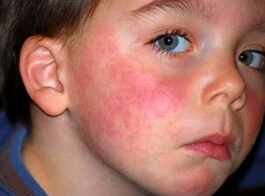 Various skin rashes are one of the most common symptoms of an allergic reaction in a person's body. Most often, allergic skin rashes are the response of the immune defense to food, contact and medicinal allergens, somewhat less often to aeroallergens( pollen, smells, dust, etc.).
According to the data of numerous epidemiological studies, millions of people daily face worldwide with various manifestations of skin allergy, each year their number is constantly growing.
Allergic skin rashes in children
For the timely prevention and elimination of possible, sometimes severe consequences, all parentsShould know what allergic skin rash may develop on the skin of their children and how to avoid it.
In part, the appearance of an allergic rash is due to a hereditary predisposition, when either or one of the parents suffers from any form of allergic reaction. In this case, the risk of developing allergies and, accordingly, skin rashes in a child increases by 50%.
Numerous modern food products, which mostly contain genetically modified components, dry substitutes for natural milk and other similar components, significantly increase the risk of a child having an allergic rash on the body. If such foods are fed by a breastfeeding mother, she will necessarily give a provoking allergen with her milk to a breastfeeding baby. In this regard, it is extremely important to strictly observe the recommended diet during the period of feeding and, if necessary, be able to correctly select the based on natural components of complementary foods.
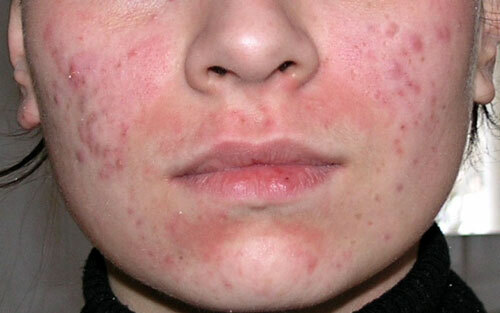
No less serious, provoking the development of a skin allergic reaction in children is a factor, is a modern aggressive environment. The air inhaled by children from the very birth is extremely saturated with various chemical compounds that get into the respiratory tract and poison the body and cause allergic rashes on the face, hands and other areas of the baby's body
Symptoms and signs of allergic rashes
Allergic skin rashes always appear after contactOrganism with a causative allergen, which in nature there is a truly huge amount. The most common types of allergic rash include neurodermatitis, atopic dermatitis, eczema and urticaria.
Atopic dermatitis is always accompanied by burning, itching, swelling of the skin. In severe cases, the appearance of blisters filled with transparent contents is observed. And in case of secondary infection, pyoderma can develop.
Read more → Atopic dermatitis
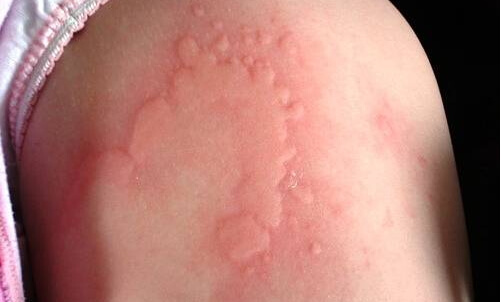
Urticaria is manifested by the sudden appearance on the mucous membranes and skin of a large number of differently-sized pinkish blisters, in appearance very similar to the blisters that appear when nettle burns. These formations unbearably itch and are prone to fusion, thereby forming large plaques. In the case of severe lesions of the mucous membranes, especially in the nasopharynx, Quincke's edema may develop, and as a consequence, a life-threatening asphyxiation.
More → Hives and → Edema Quincke
Eczema manifests itself on the appearance on the skin integument of often dense, rough, strongly itchy red spots. Usually eczema is observed on the back of the hands and face, but in some cases it can affect absolutely any areas of the human skin.
Allergic rashes from other types of rash differ in that they are almost always accompanied by a general rather strong deterioration of well-being. Simultaneously with a rash on the skin, there may be an increase in overall body temperature, a drop in appetite, development of edema of the eyelids, etc.
The child is allergic to the allergic rash. He is restless, constantly scratches the affected areas, resulting in the skin even more reddening and inflamed. Often, children in parallel with this complain of nasal congestion, they have difficulty breathing and there is a dry cough. Babies can have stomach aches, diarrhea and vomiting. In the case of the appearance of this symptomatology, the child should urgently be shown to a pediatrician or an allergist, tk. This can be a harbinger of such a dangerous condition as anaphylactic shock
Read more → Anaphylactic shock
Allergic rashes - treatment
Before the start of antiallergic therapy, it is necessary to correctly identify the causative allergen, which contributed to the development of allergic rashes. For this purpose, the allergist will appoint special blood tests for immunoglobulins and skin tests. After identifying the allergen-causing allergen, the primary task is to completely exclude any contact with it. The next step is to eliminate from the diet completely all potentially allergenic foods:. Fish, nuts, chocolate, citrus fruits, brightly colored sweets, carbonated drinks, etc.
in the treatment of allergic skin rashes proven itself a special cream "Drapolen".In addition, depending on the age( in children, the dosage is much less), you should take an anti-allergic drug Tavegil or Suprastin. In case the baby constantly complains of severe itching, you can apply cold compresses to the affected areas.
Allergic rashes on the skin of the hands and face quite well removes a medicinal preparation based on herbal ingredients( at the base of licorice naked) as Glytsiram, which is successfully used in the treatment of children.
As prevention of various allergic rashes, in addition to the mandatory elimination of contact with the causative allergen, it is necessary to analyze and, if necessary, normalize nutrition, strengthen immune protection, and lead a healthy lifestyle.