Intervertebral hernia: symptoms, treatment
Hernia is the exit of a part of an organ beyond its normal location, by protruding its walls.
Hernia is a variety of species, but perhaps the most dangerous of all is the intervertebral hernia. About how the intervertebral hernia manifests itself: symptoms, treatment we learn from this article.
Causes of a hernia occur:
Spina bifida;
- Age;
- Injuries;
- Disk rupture;
- Bulging disc;
- Separated fragments of the vertebral disk.
There may be other reasons related to the individual characteristics of a person and his way of life.
Symptoms of intervertebral hernia.
Symptoms of the disease depend on the place where the hernia was formed and on its size. If the hernia does not squeeze the nerve endings of the spinal cord, then its manifestation will be only pain in the back. And this is not necessary. This hernia may not have symptoms at all.
- If the hernia presses on the nerve endings of the spinal cord, then the manifestations will be pain in the back, weakness, numbness of the limb or its paralysis.
- If the hernia is formed between the discs in the lumbar spine, then the symptom is sciatica. This condition, in which the sciatic nerve is squeezed or irritated, this condition is accompanied by a piercing pain that extends to the area from the buttock to the foot. Sometimes the pain ends in the shin area.
- Hernia in the upper lumbar region is characterized by pain on the inner side of the thigh.
- Hernia or cervical hernia, usually characterized by weakness or numbness of the shoulder, arm or chest.
If as a result of the hernia appeared spinal nerves were affected, then the symptomatology of such a hernia would be:
- Tingling or "creepy";
- Weakness in the muscles of the limbs;
- Numbness of limb from buttock to lower leg, and sometimes below;
- Pain of the anterior, inner thigh;
- Violation of urination and evacuation of the intestine( manifestation of the "horse tail");
- Weakness in the lower limbs.
- Severe pain in the muscles and spasms.
Having discovered some symptoms - treatment should be started immediately. This is the case when delays are very expensive in the literal and figurative sense of the word.
Treatment of intervertebral hernia .
Treatment of intervertebral hernia, as well as its symptoms depend largely on its size and location. There are several types of traditional treatment for vertebral hernia, we'll talk in more detail about each. The most effective is, of course, complex treatment, when a doctor chooses a set of activities individually. That is, the main thing that should be noted before the beginning of the narrative about the methods of treatment is that there is no universal method of treatment.
Medicamentous blockade( anesthesia of the affected hernia site).
Carrying out anesthesia, and in this case, this action of analgesic drugs on the irritated area of the nerve root, it is necessary to exercise special care and circumspection.
These drugs have a momentary effect, but at the same time they create an additional edema, largely making the rehabilitation period of the patient longer. Since the focus of inflammation with the introduction of 5 to 20 ml of the drug in it even more.
In addition, anesthesia is fraught with the fact that in the absence of pain a person forgets about the illness and ceases to restrict himself in movements. And this further exacerbates the already unenviable position of the patient. The thing is that pain is the only way the body can give a person to understand that it is not worth while doing some motions that cause unpleasant sensations while it passes the disease.
Thus, putting the blockade must immediately begin to eliminate the cause of pain. And to limit the patient in the movements Since otherwise the pain will become even worse after the end of the action of the drug.
The following blockages with hernias are applied:
- Myofoscial blockades;
- blockade in Popelyansky - Paravertebral;
- Epidural blockades;
- blockade on Bobrov - inside the joint;
- blockade on Yankovsky - Osteoreflexotherapy;
- Blockade of the natural channels.
Treatment blockades are classified by type of action:
- Analgesic;
- Destructive;
- Combined;
- Anti-inflammatory;
- Trophic.
Acupuncture .
Acupuncture is an effect by inserting needles into points located throughout the body of a person. These points affect the work of the organs. Acupuncture is also used in the treatment of a hernia.
Depending on the size and location, however, the required number of procedures varies.
The optimal course of treatment consists of 5 to 10 sessions.
For special indications, this procedure is combined with:
- Accupuncture massage;
- Warm up the points;
- Can massage.
Manual therapy .
Referring to the help of manual therapists for the treatment of intervertebral hernias is not particularly effective. But in the case when the hernia is burdened by the displacement of one or several vertebrae, such treatment in combination with other methods gives its positive results. Such treatment should be used with great care, so as not to aggravate the situation even more pinching the nerve.
Massage .
Massage - this is perhaps one of the most common methods used in the treatment of diseases of the spine. The most important thing in this procedure is an experienced professional masseur. As manual therapy requires caution, since there is a risk of damage to the vertebrae of the affected hernia.
Extension .
Extension is a method of treating an intervertebral hernia in the acute stage. It has been used for a long time and is highly efficient. Allocate manual, hardware and aqua-extension techniques.
Physiotherapy.
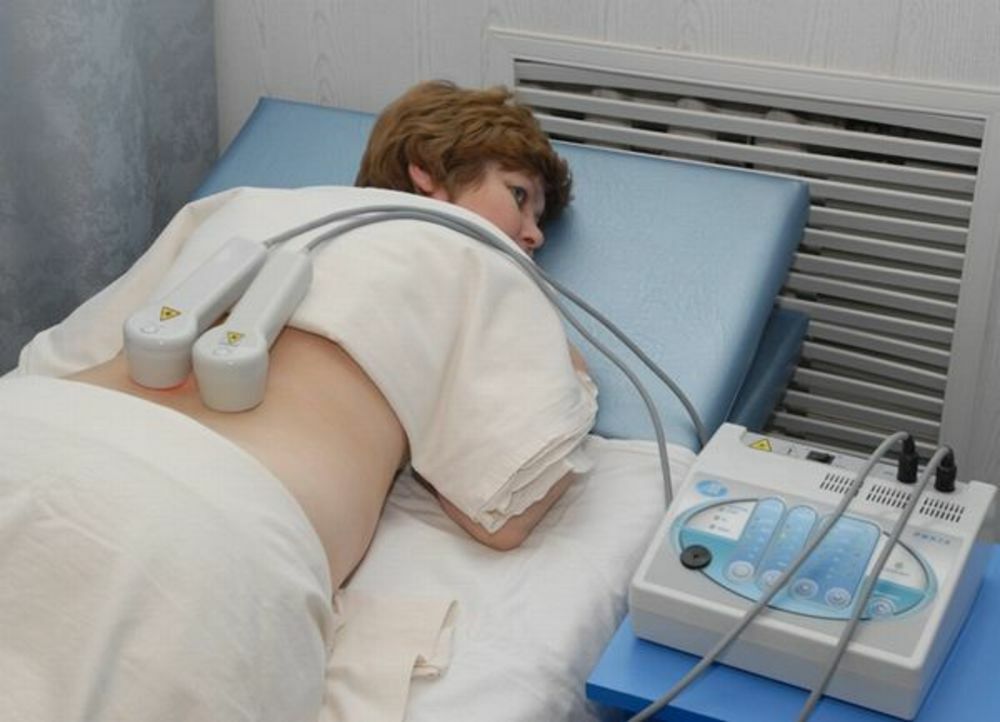
Physiotherapy methods of hernia treatment have several basic directions: field, reflex, oscillatory and mechanical. The effectiveness of treatment depends on the specifics of each case. It is particularly advisable to use these techniques in conjunction with drug treatment of intervertebral hernia.
Operative treatment .
It is used in the most severe cases. There are several ways of surgical intervention:
- Microdiscaecomy;
- Laminectomy;
- Discectomy;
- Endoscopic Discectomy.
This type of treatment is used only if there are certain indications such as incontinence in the lumbar hernia. In addition, it is justified when other methods and methods of treatment are ineffective and do not bring relief.