Anticonvulsant and antiepileptic drugs
- Anticonvulsants
- Anticonvulsants
- Classification of antiepileptic drugs
- Barbiturates
- Drugs affecting the amino acid transfer
- Inhibitors of glutamate and aspartate
- Other drugs
- Side effects
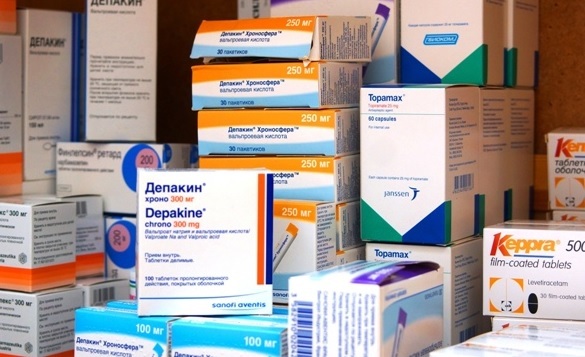 Anticonvulsants are prescribed to eliminate muscle cramps and spasms, as well as to stop, prevent other signs of epilepticOf an attack. There are several types of seizures: generalized, focal, large seizures and small( absences, pseudoabsances).At each type of attack different means are used. Anticonvulsants
 means anticonvulsants The group list includes:
- barbiturates( phenobarbital, Benzonalum, hexamidine, benzobamil);
- valproate( acetiprol);
- hydantoin derivatives( diphenine);
- iminostilbenes( carbamazepine);
- oxazolidinedione derivatives( trimethine);
- succinimides( ethosuximide, puffemide);
- muscle relaxants( midokalm);
- benzodiazepines( clonazepam).
The task of anticonvulsant drugs is to prevent seizures while maintaining the activity of the nervous system. Treatment with medicines lasts until full recovery, or all life( in case of chronic form and genetically determined diseases).Anticonvulsants, whose classification is based on a chemical structure, have different mechanisms of action. Action
different groups of drugs based on the following effects:
- effects on receptors for GABA, the benzodiazepine receptors;
- inhibition of the action of excitatory acids( glutamate, aspartate);
- blocking pulses by acting on potassium and sodium channels;
- antispastic action.
Classification of antiepileptic drugs
Antiepileptic agents, classification:
- Barbiturates.
- drugs with advantageous effect on amino acid neurotransmitters-: GABA stimulators( atsediprol, vigabaktrin, valpromid, tiagabine), inhibitors of excitatory amino acids( lamotrigine, topiramate), a hybrid formulations action( felbamate, carbamazepine, oxcarbazepine, phenytoin).
- Benzodiazepine derivatives( clonazepam).
- Other medications( succinimides and gabapentin).
Antiepileptic drugs: their classification is carried out both by chemical structure and by the action being performed. A list and description of antiepileptic drugs are given below. Barbiturates
From Phenobarbital barbiturates group is used, effective in clonic, tonic, mixed seizures, generalized, focal seizures, spastic paralysis. It is used for chorea, eclampsia. It also has hypnotic and sedative effect. Assigned in conjunction with drugs that enhance its effect.
Important! Side effects associated with Phenobarbital its depressing effect on central nervous system( drowsiness, pressure drop), allergic reactions( urticaria eruption).
Benzonal, in comparison with phenobarbital, has less pronounced inhibitory effect on the central nervous system. It is used in generalized seizures. It is also used to treat polymorphic, non-convulsive seizures with other drugs.
Benzobamyl is less toxic than the previous drug. It is used to suppress epileptogenic foci localized in the subcortex. Hexamidine is used to treat generalized seizures. It breaks the metabolism of folic acid, which can manifest itself in anemia, depression.
Agents acting on the amino acid transfer
 This anticonvulsant drugs, the mechanism of action of which is to stimulate the processes induced by GABA or inhibition of glutamate, aspartate transmission.
 GABA suppresses excitation processes, thereby reducing convulsive brain readiness for epilepsy. Stimulation of receptors for GABA is carried out by drugs from the valproate group.
Acidiprol is used primarily for small seizures, temporal pseudoabsorption. Effective also with large seizures, focal motor, psychomotor attacks. Eliminates mental equivalents, becauseHas a tranquilizing effect, increases ketogenesis.
Valpromid is used as an additional remedy for epilepsy to eliminate mental symptoms. Tiaagabin is used for partial epileptic seizures.
Inhibitors of glutamate and aspartate
Lamotrigine is used both as part of complex therapy, and separately. Effective in generalized, partial seizures. It is indicated for epilepsy with resistance to the action of other drugs.
When combined with Acediprol, its action is enhanced, prolonged, so dosage should be reduced. With the appointment of the same with barbiturates, carbamazepine, the effect is reduced, becauseThe drug is more quickly inactivated by liver enzymes.
Topiramate is a fructose derivative. It is used in the treatment of both generalized and partial seizures, the Lennox-Gastaut syndrome. Can cause a taste distortion, a tendency to urolithiasis.
The drugs of hydride action include carbamazepine, felbamate, diphenin, oxcarbazepine. These drugs support the processes of inhibition( stimulating receptors for glycine or GABA), suppress excitation of the cortex and subcortical formations.
Benzodiazepines( clonazepam) due to their tranquilizing effect are used to arrest the psychic equivalents of epilepsy and small seizures.
Other drugs
- Succinamides are effective for absences and myoclonus-epilepsy.
- Gabapentin is used for partial epilepsy.
- Chlorakon is used for large seizures, as well as for the reduction of psychomotor reactions.
- Methindione treats large tonic-clonic seizures, mental equivalents.
- Baclofen and Midokalm have antispastic action.
Anticonvulsants for children should have less pronounced side effects, relatively low toxicity: acetiprol, benzobamyl.
Side effects of
The main side effects of anticonvulsants: a change in the pattern of blood( anemia), drowsiness, a decrease in pressure, allergic reactions. Diphenin can cause disruption of the hormonal background, gingival hyperplasia. Epilepsy and diseases with convulsive syndrome require regular intake of anticonvulsants, Are dangerous states.
Warning!An Israeli clinic specialist can advise you -
write the question in the form below: