Oligoasthenoteratospermia in men: what is it and how is it treated

There are many diseases as a result of which a man is unable to conceive a child. One of these diseases is oligoasthenoteratozoospermia, what is it, consider in more detail.
What it is
Consider what is oligoastenoteratozoospermia in men. This pathology is a disorder characterized by difficulties in the fertilization of an egg. That is, with its development, the chance of conceiving a child is significantly reduced.
If a man plans to have children in the future, he must undergo a course of treatment. This usually takes a long period, but the prognosis is predominantly positive.
Disease types
By the nature of its course, oligoasthenoteratozoospermia is divided into the following varieties:
- Immunological. It occurs as a result of mechanical damage to the testicles, they begin to produce antibodies that stick together the sperm.
- Idiopathic. Various external and internal factors influence the quality and quantity of sperm.
- Obturation. The semen is too thick, as a result of which the movement of the sperm is significantly slowed down.
- Secretory. At the time of ejaculation, an insufficient amount of semen is released or it is completely absent.
Regardless of the type oligoasthenoteratozoospermia, natural pregnancy with such a disease, it is significantly reduced or absent altogether.
Causes of the disease
In order to begin the appropriate treatment of oligoasthenoteratozoospermia, it is imperative to identify the exact cause of this disease. The main prerequisites for impaired reproductive function in this case are:
- pathologies of the genitourinary system, inherited;
- varicose veins of the spermatic cord - varicocele;
- insufficient development of the testes;
- congenital pathologies of the pelvic organs;
- sexually transmitted infections;
- uncontrolled use of alcoholic beverages and drugs;
- mumps or tuberculosis give complications in the form of oligoasthenoteratozoospermia;
- harmful working conditions, regular contact with toxic substances;
- prolonged use of potent medications of such groups: antidepressants or antibacterial agents;
- insufficient amount of such useful substances in the male body: vitamins, zinc, selenium, fatty acids.
Also, long-term living in places with poor ecology, increased radiation or electromagnetic radiation can negatively affect the reproductive function in men.
Diagnosis of pathology
In order for the doctor to prescribe the correct treatment for oligoasthenoteratozoospermia, during the diagnosis it is necessary to find out the exact cause of this pathology. To establish the correct diagnosis, the patient is sent to the following studies:
- general and biochemical blood test;
- Ultrasound diagnostics of the pelvic organs;
- hormonal examination.
And also one of the most important studies for suspected oligoasthenoteratozoospermia is spermogram. This analysis requires accuracy, so you need to prepare for it in advance. To do this, you should adhere to these rules for 3 days:
- Do not smoke;
- do not drink alcoholic beverages;
- moderate physical activity.
Also during this period, you should try to avoid stressful situations, lack of sleep, etc. It is better to take a spermogram several times. This will help create the most accurate clinical picture possible.
An accurate spermogram result will help determine the degree neglect of oligoasthenoteratozoospermia.
Treatment of the disease
In order for it to come pregnancy with oligoasthenoteratozoospermia, the man needs to be patient, since the treatment takes a long period. At a minimum, therapy lasts about six months. During the period of treatment, a young man must adhere to the following rules:
- limit visits to the bath or sauna, as they can contribute to overheating of the testicles;
- avoid being in a hot bath for a long time;
- give up addictions;
- Healthy food;
- give enough rest;
- periodically monitor the sperm count by regularly taking a spermogram.
Source: https://mzdorov.com/andrologia/fertilnost/oligoastenoteratozoospermiya-chto-eto.html
Oligoasthenoteratozoospermia - causes and treatment
Oligoastenoteratozoospermia is a number of disorders that cause a decrease in sperm concentration (oligozoospermia), a decrease in less than 50% of full-fledged sperm (teratozoospermia), reduced to less than 50% of sperm moving forward (asthenozoospermia).
Male infertility can be caused by various factors and is divided into mixed, secretory, immunological, excretory, idiopathic forms. Approximately one third of all causes of infertility in men are caused by idiopathic oligoasthenoteratozoospermia.
Causes of oligoasthenoteratozoospermia
The emergence of oligoasthenoteratozoospermia is caused by internal disturbances in the body, provoking infertility. So, not the last role here is played by abnormalities in the development of the reproductive system, including hypoplasia or aplasia of the testicles and their appendages.
Often, the cause of oligoasthenoteratozoospermia is cryptorchidism, abnormalities in the adrenal glands, thyroid gland, diabetes mellitus, liver and kidney disease, dropsy of the testicular membranes.
If varicose veins are noted in the mixed cord, then this can provoke disturbances in the normal functioning of the reproductive system in men.
An important role in the development of oligoasthenoteratozoospermia is played by past infectious diseases of a viral or bacterial nature (mumps, tuberculosis, syphilis, typhoid). Ecology in the place of residence and safe conditions for professional activity play an important role.
For example, work in conditions of electromagnetic fields with high intensity and frequency of ionizing radiation, work in a high external temperature, etc. has a negative effect on the body.
Great harm is done when men work with mercury, pesticides, lead, herbicides, alkalis, acids, arsenic, cadmium, zinc.
Another common cause of oligoasthenoteratozoospermia is an unhealthy lifestyle that has an extremely negative effect on men's health. So, taking drugs, smoking, excessive consumption of alcoholic beverages, antidepressants, tranquilizers has a destructive effect on the body.
Diagnostics of the oligoasthenoteratozoospermia
It should be noted that oligoasthenoteratozoospermia does not have external clinical manifestations, therefore, the diagnosis of the disease presents certain difficulties.
Diagnosis of oligoasthenoteratozoospermia is carried out on the basis of data from the results of sperm analysis. Actually, the spermogram is the main source by which deviations from the norm can be determined. According to the recommendations of the World Health Organization, there are certain criteria for normal sperm, which are used in clinical practice in all countries of the world.
Carrying out this analysis is a very responsible procedure, and is carried out only in specialized clinics in compliance with all the necessary conditions. Spermogram - the analysis is very complex, it requires high professionalism of laboratory doctors. It should be done very carefully.
For the result to be as accurate as possible, it is recommended to take a spermogram several times, since a large number of factors can influence the analysis results.
Treatment of oligoasthenoteratozoospermia
To date, world medicine has made significant progress in the treatment of oligoasthenoteratozoospermia. This success is largely due to the introduction of intracytoplasmic sperm injection (ICSI) into practice.
This advanced method allows men to have offspring even with such disappointing diagnoses as teratozoospermia, oligozoospermia and asthenozoospermia, and, as you know, oligoastenoteratozoospermia is a combination of all three indicators violations.
The ICSI method implies that one spermatozoon, previously designated by morphological characteristics, will enter the ooplasm. Today, the ICSI technique is based on IVF and PE programs and is considered one of the most effective methods of fertilization, therefore it is widely used throughout the world.
In contrast to IVF, where successful fertilization depends on the presence of a large number of sperm, with the ICSI method only one sperm is injected. This proves that sperm count is not important for successful fertilization. However, when choosing a sperm, attention is paid to its motility and normal morphology, which is assessed by the Kruger criterion.
The parameters for the successful treatment of oligoasthenoteratozoospermia in men using the ICSI method are the presence in his testicle or ejaculate of motile and healthy sperm, and in women - high-quality oocytes.
Source: https://www.neboleem.net/oligoastenoteratozoospermija.php
Teratospermia: what is it, causes and treatment of teratospermia

Teretospermia is a condition in which the number of pathologically formed sperm exceeds the permissible norm.
Due to the fact that spermatozoa have a pathological structure, they are not capable of fertilization.
If, nevertheless, fertilization with a defective sperm occurs, as a rule, a frozen pregnancy develops, or an early miscarriage occurs.
Possible sperm deviations:
- Incorrect head shape. Its size may be too large, or, on the contrary, too small. Have a round, awl-like shape. Normally, the head resembles an elongated smoothed triangle, 2-3 microns in size. It is also considered a pathology if there are two heads on one tail.
- Ponytail pathology. Too short or very long, spiral, broken, curled flagellum is defective. A head with two or three tails is also a pathology.
- Atypical structure of the neck. Thinning or thickening of the neck, attachment at a right angle, irregular curvature - these are all structural pathologies.
- Cytoplasmic drops on the head, neck, flagellar seals.
The reasons for the development of teratospermia
It has been proven that in half of the cases it is this pathology that is the cause of infertility and premature termination of pregnancy.
Factors that lead to the development of defects:
- Viral infections. Such as: flu, chickenpox, mumps, colds that affect the entire human body. Herpes is the most dangerous of them. If these diseases are the cause of teraterspermia, treatment begins with antiviral drugs.
- Genetic predisposition. The reason is hereditary diseases, in which metabolism, spermatogenesis are disturbed and pathologies develop in the structure of the genitourinary system.
- Hormonal disbalance. Occurs while taking steroids and anabolic steroids.
- Diseases of the genitourinary system. Kidney pathologies, orchitis, epididymitis, prostatitis lead to complications.
- Fermentopathy. A pathology in which the enzymes necessary for the production of quality sperm are not produced in sufficient quantities.
- Varicocele. Pathological convolution of veins and stagnation in the venous bed lead to impaired blood circulation in the testicles.
- Negative environmental impact. Working in heavy production, a person is constantly stressed and exposed to toxic substances. This can lead to complete infertility.
Read also:Phimosis in men: treatment of the disease with medicines
The cause of teratospermia can be alcohol abuse, smoking and an inactive lifestyle.
Signs of teratospermia
The man does not observe any external signs of the disease. He can live for many years without even knowing about the presence of pathology.
The absence of pregnancy with regular unprotected intercourse is the main symptom of teratospermia.
Indirect signs of pathology:
- pregnancies are terminated early;
- fertilization does not occur for more than a year;
- pathological processes occurring in the ovum;
- pregnancies freeze.
It is possible to establish the exact cause of the development of the disease only with the help of diagnostics. To restore normal spermatogenesis, it is necessary to eliminate the cause.
Diagnostics
The first thing a man should do is to pass a spermogram. The analysis is carried out twice, with an interval of two weeks. It is recommended to take them in different laboratories.
Indicators of the norm:
- volume - from 2 to 6 ml;
- the number of sperm is from 40 to 500 million;
- in 1 ml of semen - from 20 to 120 million sperm;
- more than 25% - active sperm;
- less than 50% are inactive;
- more than 50% - sperm with correct morphology;
- leukocytes - 1-2;
- erythrocytes are absent.
WHO standards:
If, according to the results of the spermogram, the patient is diagnosed with teratospermia, treatment with drugs is prescribed only after additional examination in order to establish the cause of the development of the pathology.
The following studies are recommended:
- a blood test for hormones;
- Ultrasound of the scrotum and prostate gland;
- genetic tests;
- MAR test to determine the concentration of antisperm antibodies;
- HBA test for assessing sperm maturity.
If you suspect the presence of sexually transmitted diseases, the doctor may prescribe the delivery of appropriate tests.
Features of the treatment of teratospermia
The main goal of treatment is to eliminate the cause of the appearance of defective sperm. In case of inflammation, antibacterial and anti-inflammatory drugs are prescribed. For varicocele in adult men, surgery may be necessary.
Drug treatment
To increase the number of normal sperm, a man is prescribed vitamin therapy.
Accepted courses:
To improve the quality of sperm, biological additives are prescribed:
- Gerimax with ginseng;
- L-carnitine;
- Tribestan;
- Verona;
- Spermactin.
Folk remedies
Traditional medicine can help improve sperm quality. However, they can be used only after prior agreement with the doctor:
- A decoction of currant leaves. Brewed like tea. Pour two tablespoons of leaves with a glass of boiling water. They drink in the morning and in the evening for three months. Currant leaves contain vitamin C, which enhances immunity and helps to normalize regeneration processes.
- Infusion of nettle leaves, plantain and birch buds. Pour a teaspoon of each component into a glass and pour boiling water over it. Strain and take the infusion three times a day before meals. The course lasts two weeks.
- Pumpkin. The pulp of a vegetable, freshly squeezed juice, seeds have healing properties.
- Immune Blend: Lemon, Honey, and Nuts. The components are taken in equal parts and twisted through a meat grinder. The mixture is infused throughout the day in a cold place. It is necessary to eat a teaspoon daily in the morning on an empty stomach.
Folk remedies are used only as an adjunct to traditional treatment, and in no case replaces it completely.
In addition, a man's diet is of great importance. It should be adjusted to include foods that contain vitamins that stimulate sperm development.
Possible consequences
Without treatment, a man's general health will not worsen. He will not experience discomfort or pain. Libido and erectile function are not affected.
Infertility is the only consequence. However, it is worth remembering that every year it will be more difficult to cure the pathology.
Source: https://okeydoc.ru/teratospermiya-prichiny-razvitiya-simptomy-diagnostika-lechenie/
Diagnosis of oligoasthenoteratozoospermia: causes and treatment
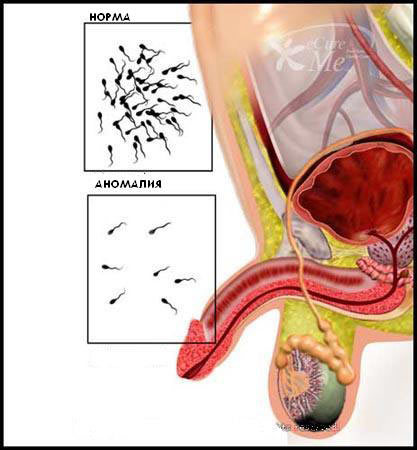
A large number of married couples increasingly began to face such a serious problem as the impossibility of conceiving a child. In 45% of all cases, men are to blame for this, or rather, the presence of such a disease as oligoasthenoteratospermia, abbreviated as OAT syndrome.
However, such a seemingly terrible diagnosis as oligoasthenoteratozoospermia is not a sentence at all, but just a deviation, which, if detected early, lends itself to effective treatment. Therefore, if a married couple cannot conceive a child for a long time, the first thing a man should do is to undergo diagnostics to identify abnormalities in reproductive function.
The main characteristics of the disease
Such a pathological condition as oligoasthenospermia is a combination of deviations in the quality characteristics of a man's sperm, which lead to impaired reproductive functions. As a result of the development of oligoasthenoteratozoospermia, the probability of conceiving a child is significantly reduced, and in exceptional cases, it is reduced to zero.
The number of sperm in the ejaculate directly affects the likelihood of fertilization. Moreover, the higher this indicator, the higher the chance of successful conception. Conversely, an insufficient sperm count leads to a decrease in the number of male germ cells and to a decrease in the chance of fertilization.
Oligoasthenoteratospermia includes three major abnormalities in semen quality:
- Reduced sperm motility called asthenozoospermia. The normal indicator is the content in the ejaculate, which was received no more than an hour ago, more than fifty percent of the mobile spermatozoa, which is typical for categories A and B, and at least twenty-five percent of sperm at a speed of movement of 25 microns for Category A. In the event that the speed of movement is below normal, then this indicates the presence of a serious deviation.
- If there is a decrease in sperm concentration by one unit of ejaculate volume less than the established norm, this indicates the development of oligozoospermia. If we take the indicators of a healthy man, then the norm will be the content of more than 20 million sperm per milliliter of semen. If a deviation is revealed in the process of diagnosing infertility, it means that the man is in the process of developing oligozoospermia.
- The presence of a large number of spermatozoa with morphological disorders and structural dysfunctions indicates the presence of such a pathological process as teratozoospermia. Normally, a healthy man should have more than fifty percent of sperm with good morphology, or more than thirty percent of sperm with a normal head structure.
When a man is diagnosed simultaneously with all three of the above deviations with indicators below the norm, he is diagnosed with oligoasthenoteratozoospermia. In order to get rid of the pathology, it is required to eliminate the causes that provoked its appearance, as well as high-quality diagnosis and determination of the stage of the disease.
Four stages of pathology
The general classification of oligoasthenospermia, depending on the stage of development, is carried out by determining the number of germ cells per millimeter of sperm. Pathology, depending on this parameter, includes several main stages of development:
- The first stage is characterized by the presence of less than 15 million sex cells per milliliter of semen.
- The second stage of development is characterized by the content in one milliliter of sperm from 10 to 12 million sperm.
- The third stage of deviation is characterized by the presence of five to ten million sperm in one milliliter of semen.
- During the development of the fourth degree of oligozoospermia, the content in one milliliter of ejaculate is less than five million germ cells. It is considered the most difficult stage of the disease, since an operation is most often required to treat it.
The normal indicator for a healthy man is the presence of 15 to 40 million seminal cells in one milliliter of ejaculate. A lower sperm count indicates the onset of the development of abnormalities.
Depending on the identified stage of development of the pathology, an experienced specialist can prescribe adequate treatment, which will be reduced to drug therapy or surgical intervention.
The main forms of the disease
There are several main forms of pathology, which differ among themselves by the factors that provoked their development:
- Secretory form pathology implies a lack or complete absence of seminal fluid, which should be released at the time of ejaculation. This form of deviation can be caused by defects or abnormal sperm structure, as well as low sperm production.
- Immunological form deviation appears during testicular injury. Even after the slightest mechanical damage, the testicles begin to produce antibodies that stick together the sperm, which leads to a deterioration in their quality.
- In the process of development obturation form deviation, the sperm acquires a very dense and thick consistency, which leads to a significant slowdown in the movement of sperm along the vas deferens.
- If a man is diagnosed with idiopathic form diseases, this indicates that the pathology began to develop as a result of exposure to unfavorable external factors or due to the presence of serious chronic diseases in the body.
Read also:Modern stimulants for erectile dysfunction
Poor quality of semen is one of the main reasons for the development of infertility in men of reproductive age.
Causes of oligoasthenoteratozoospermia
In modern medicine, there are more than two hundred different reasons that can lead a man to the onset of the development of OAT syndrome. Some reasons can be eliminated very simply: it is enough to change the usual way of life and give up bad habits. Severe cases require medical attention.
The main reasons for the development of the deviation are:
- Testicular pathology.
- Diseases of the genitourinary system.
- Disease of varicocele, during the development of which the patient has an increase in the veins of the spermatic cord.
- Deficiency of useful microelements and vitamins in the body.
- Wrong lifestyle and abuse of bad habits.
- Congenital abnormalities of the pelvic organs.
- Frequent infectious and inflammatory diseases in the appendages.
- Venereal diseases.
- Hypothermia or severe overheating.
- Kidney disorders such as renal failure.
- Deviations in the work of the endocrine system.
- Long-term use of medications of a certain group, for example, antibiotics or tranquilizers.
- Harmful working conditions and systematic contact with toxic substances.
- Lack of regular sex life.
- Wearing underwear.
- Disruptions in the daily routine, constant stress and lack of sleep.
- Hormonal disruptions, obesity.
- Decrease in the level of testosterone in the blood.
- Psychosomatic abnormalities, for example, as a result of the development of vascular dystonia.
- Strong intoxication of the body.
- Congenital factors such as absence of testes, cryptorchidism or Leydig cell deficiency.
It is possible to cure the ailment, but for this you should undergo a diagnosis in time, establish the cause of its appearance and receive qualified treatment. In advanced stages, the disease does not respond to conservative therapy.
Methods for diagnosing pathology
To understand how to treat oligoasthenoteratospermia, it will be necessary to determine which particular cause could provoke the development of the pathological process. To do this, you need to contact the embryologist and undergo diagnostics, which includes several mandatory steps:
- The main diagnostic measure is a spermogram - the most effective and efficient method of examining a patient. With the help of a spermogram, the slightest deviations from the norm in the semen can be detected: movement speed sperm, semen acidity, semen density, the number of germ cells and other similar parameters. If the spermogram reveals abnormalities, the doctor will prescribe a number of other necessary procedures to the patient to confirm the diagnosis.
- An ultrasound of the pelvic organs is mandatory.
- Blood is donated for laboratory research: biochemical and general analysis.
- Hormonal diagnostics are performed.
- A laboratory examination of the smear is performed.
- The MAR test is done.
The abnormality is not easy to identify because it is completely asymptomatic. The only reason that makes a man go to a specialist is the impossibility of conceiving a child. Otherwise, there are no signs of oligoasthenoteratospermia.
Disease treatment methods
Therapy can take a long time. To get rid of pathology, a man will need to be patient and completely reconsider his lifestyle. Therefore, treatment begins with lifestyle adjustments and requires a man compliance with the following rules:
- You need to get rid of bad habits: alcohol, alcohol, smoking.
- Establish sleep and rest patterns.
- Avoid hypothermia or prolonged exposure to a hot bath, sauna or steam bath.
- Start eating healthily by including more vegetables and fruits in your daily diet.
- You will have to give up the constant use of fatty, fried or spicy foods.
- Try to avoid constant stressful situations, conflicts, quarrels.
- Start doing sports, such as jogging, swimming, morning exercises.
- Try to have sex regularly.
- Refuse promiscuous sexual intercourse.
- Completely recover from chronic, sexually transmitted or infectious diseases.
- Systematically be examined by a urologist.
- Use barrier contraceptives if necessary.
- Lead an active lifestyle, be outdoors more often, take walks.
- Monitor body weight, if necessary, follow a diet.
In addition, additional therapy with medication may be needed. For this purpose, the patient can be prescribed hormonal agents to normalize the activity of the reproductive system.
In the case of the development of oligozoospermia against the background of infectious diseases, a course of treatment with antibacterial drugs is prescribed.
Duration of taking medications, prescribing a group of drugs for treatment and a therapy regimen is always selected on a personal basis, depending on the reasons that led to the development sterility.
In exceptional cases, when conservative methods of treatment and prevention have not brought the expected results, the patient may be prescribed surgical treatment or stimulation of spermatogenesis.
The very last option a man can use if therapy is unsuccessful and it was not possible to eliminate the cause of infertility - artificial insemination, for example, IVF, ICSI or insemination.
In any case, the treatment of the disease always comes down primarily to eliminating the causes that caused its development. The main thing is to be patient, try to improve your lifestyle and tune in to a positive result. At the same time, it is always worth remembering that the sooner the deviation is detected and the treatment is prescribed, the greater the likelihood of a successful cure.
Source: http://nebolel.com/zabolevaniya/oligoastenoteratozoospermiya
Oligoasthenoteratozoospermia: causes, treatment, prevention

Oligoasthenoteratozoospermia significantly reduces the reproductive functions of a man, but the presence of this pathology does not mean infertility. Comprehensive treatment and preventive measures will improve the quality of sperm and successful fertilization.
Oligoasthenoteratozoospermia: how to treat pathology?
Oligoasthenoteratozoospermia is a male disease in which there is a significant decrease in reproductive function. This pathology is a combination of such diseases:
- Asthenozoospermia - a decrease in the number of active sperm;
- Oligozoospermia - the number of male germ cells in sperm is below the permissible limit;
- Teratozoospermia - a small number of healthy germ cells in the semen.
Oligoasthenoteratozoospermia is not a death sentence, and this diagnosis is not synonymous with infertility. With a competent approach to treatment, improving the quality of sperm and restoring reproductive function is quite feasible, but for this it is necessary, first of all, to establish the causes of the pathology.
Causes of oligoasthenoteratozoospermia
The European Association of Urology has identified the main causes of the appearance of oligoasthenoteratozoospermia.
In 17% of cases, the pathology is caused by varicocele, in 11% - hypodynamism, which becomes a consequence of the low functionality of the gonads.
In another 9% of cases, pathology becomes a consequence of infections of the organs of the genitourinary system. In 36% of cases, the causes of the appearance of oligoasthenoteratozoospermia cannot be established.
The factors influencing the onset of the disease include:
- congenital defects in the development of the genitals;
- pathology of the kidneys and liver;
- diabetes mellitus, thyroid problems;
- cryptorchidism;
- dropsy of the testicles;
- bad habits.
In addition, the disease often appears during long-term residence in areas with poor ecology, high radiation and electromagnetic radiation. The most dangerous for the stronger sex is regular contact with zinc, pesticides, mercury, etc.
Classification
Oligoasthenoteratozoospermia can be expressed in the following forms:
- Idiopathic - low quality of semen, caused by the negative impact of external and internal factors;
- Immunological - damage to the testicle, after which antibodies to their own germ cells begin to be produced;
- Obstructive - difficulties in the passage of sperm through the vas deferens;
- Secretory - disturbances in the process of spermatogenesis (low production, defects in the structure and activity of spermatozoa).
Diagnosis of the disease
The diagnosis and treatment of oligoasthenoteratozoospermia is carried out by an embryologist. The main diagnostic method is spermogram. With its help, deviations of the seminal fluid from the accepted norms are revealed.
Normal semen has the following characteristics:
- the number of male germ cells should be no less than 20 million per 1 ml;
- normal mobility is at least 50%;
- at least 30% of the total number of sperm must be of normal form;
- the natural number of leukocytes should not be lower than 1 million per 1 ml.
If, during the spermogram, deviations from the indicated indicators are detected, it means that the presence of a disease can be assumed. To confirm the diagnosis, the following studies are used:
- general and bacterial blood test;
- smear examination;
- ultrasound examination of the testicles;
- determination of the level of hormones in the blood;
- MAR test.
It is impossible to diagnose pathology by symptomatology, since in most cases, oligoasthenoteratozoospermia is asymptomatic.
Pregnancy and oligoastenoteratozoospermia
The presence of the disease significantly complicates fertilization and pregnancy, since the low quality of sperm does not allow this process to be carried out.
A common abnormality in the development of sperm is the pathology of its tail. This phenomenon significantly reduces the mobility of the sperm and prevents it from entering the egg.
Considering that the main cause of defects in the development of male germ cells is an unhealthy lifestyle, treat the disease is needed by changing habits and eliminating negative factors affecting the quality of the seed liquids.
If pregnancy does not occur due to a pathological process, the treatment of which is impossible, the most correct solution would be the use of IVF and ICSI technologies. In all other cases, fertilization is quite possible, but for this it is necessary to treat the pathology in a comprehensive manner.
If oligoastenoteratozoospermia is caused by varicocele, surgery may be required.
Read also:Falloprosthetics: advantages and disadvantages
It is important to understand that modern medicine can offer many ways to overcome infertility, therefore, do not give up, you need to take all possible measures to ensure that pregnancy came.
Treatment of oligoasthenoteratozoospermia
Treatment of the disease is a long-term process that takes at least 6 months. When implementing it, you should adhere to the following recommendations:
- limit visits to the bath to avoid overheating of the testicles;
- refuse to stay in a hot water bath for a long time;
- reconsider the lifestyle and give up bad habits;
- treatment should be accompanied by periodic diagnostics to determine its effectiveness.
Therapy of oligoasthenoteratozoospermia should be started with the elimination of the concomitant infectious disease, since the infection can be one of the causes of the pathology.
In order to improve the quality of semen, special drugs are prescribed. After a comprehensive examination and approval of the diagnosis, the embryologist prescribes a number of medicines. The most common drugs that are recommended for use in this case are:
- Tocopherol;
- Klostilbegit;
- Speman.
If there are disturbances in the work of the endocrine system, drugs are prescribed that adjust the patient's hormonal background.
As a rule, the treatment of oligoasthenoteratozoospermia by operation is prescribed only if it is required by the disease that caused the decrease in the quality of the semen.
Most often, surgery is performed with varicose veins located in the seminal ducts.
Prevention of oligoasthenoteratozoospermia
When planning a pregnancy, special attention should be paid to improving the quality of sperm, which is quite you can influence by adhering to certain dietary rules and excluding unfavorable external factors. The main preventive measures that are used for oligoasthenoteratozoospermia include:
- exclusion of bad habits (alcohol abuse, tobacco smoking, drug addiction);
- balanced diet;
- active lifestyle, moderate physical activity;
- the use of barrier contraceptives;
- visiting a urologist at least once a year;
- timely therapy of pathologies of the organs of the genitourinary system.
Proper nutrition for oligoastenoteratozoospermia
Treatment of this pathology requires an integrated approach, including a review of your diet.
Including healthy foods and drinks for men can significantly improve the quality of semen.
In addition, as mentioned above, it is necessary to exclude the use of alcohol, since this habit slows down blood circulation and contributes to the formation of congestion in the pelvic organs.
With oligoasthenoteratozoospermia, the following foods should be avoided:
- soy (this product destroys male reproductive cells, which significantly impairs the quality of sperm);
- store sauces, including mayonnaise and ketchup, since they contain chemical components that negatively affect the reproductive function of the stronger sex;
- margarine (contains carcinogens that are hazardous to health);
- sweet carbonated drinks (they contain many chemical components that remove vitamins and minerals from the body).
The diet should include natural foods rich in proteins and polyunsaturated fatty acids. Men's health requires daily consumption of lean meat, different types of nuts, dried fruits and greens.
The diet should contain sea fish, seafood, fresh vegetables and fruits, extra virgin olive oil, cottage cheese and dairy products. Cooking should be done mainly by steaming or baking.
Fatty, smoked and fried foods should be limited as much as possible.
Oligoasthenoteratozoospermia is a disease that in most cases can be successfully treated, therefore, with such a diagnosis, you should not give up and consider it a sentence to infertility.
For those men in whom this pathology cannot be treated, modern medicine can offer many ways to fertilize in an alternative way and thus get the long-awaited opportunity to become father.
Source: https://AnnaHelp.ru/zabolevaniya/oligoastenoteratozoospermiya.html
How Oligoasthenoteratospermia Is Treated - Home Treatment

Currently, a huge number of men suffer from diseases of the reproductive system. One of the most common diseases is sperm activity disorder. Few people know what oligoastenoteratospermia is. This is a multiple abnormality of spermatogenesis. It includes several types of violations:
- oligozoospermia;
- teratozoospermia;
- asthenozoospermia.
Oligozoospermia is a decreased sperm concentration. There are two degrees of the disease. At a sperm concentration of less than 5 million, it is pronounced, and at a concentration of 15 million, it is not expressed. The ability of a sperm to fertilize an egg depends on the concentration of the sperm.
This means that the normal sperm count is less than 50%. There are many pathological forms in the ejaculate, but their number should be less than half of the total sperm count.
Usually, sperm pathology is associated with a violation of the shape of the head or tail. Asthenozoospermia is a form of the disease associated with low sperm motility. It is the cause of male infertility in 40% of cases.
There are 3 degrees of the disease, depending on the number of immotile sperm:
- Grade 1 is when the sperm count is 40-50%;
- 2nd degree - 30-40%;
- 3 is less than 30%.
Causes that cause oligoastenoteratozoospermia
Male infertility is caused by various factors that have several types (secretory, immunological, excretory and idiopathic oligoasthenoteratozoospermia). About 1 to 3 causes of infertility are attributed to idiopathic oligoasthenoteratozoospermia.
Its manifestation is associated with an abnormal function of the body. These reasons, for example, include hypoplasia and aplasia of the testicles and their appendages.
Sometimes it can be caused by cryptorchidism, malfunctioning of the adrenal glands, thyroid gland, diabetes mellitus, liver and kidney problems, dropsy of the testicular membranes.
Varicose veins in the mixed cord can also cause disruptions in the normal function of the reproductive system.
Influence on the development of oligoasthenoteratozoospermia can be provided by such infectious diseases as tuberculosis, syphilis, typhoid. Poor ecology in the place of residence can also affect.
Work in the field of radiation of electromagnetic fields with increased intensity or at high temperatures has a negative impact on health.
But more often than not, the reason is simply an unhealthy lifestyle, which not only adversely affects health, but can be the cause of infertility.
It is the harmful effect of the use of drugs, the use of alcoholic beverages, as well as various antidepressants and tranquilizers. It should be noted that almost every 10 couples are infertile. In 40% of cases, the reason is in the woman and in 45% in the man.
The remaining 15% were associated with the incompatibility of the spouses' organisms, that is, immunological infertility. There are other very rare forms of infertility.
Usually oligoasthenoteratozoospermia does not show external clinical symptoms, so its diagnosis is difficult. Its diagnosis is usually based on the results of a semen analysis.
Spermogram is actually the main indicator on the basis of which deviations from the norm are detected. According to the materials of the World Health Organization, there is certain data on healthy sperm, which are included in the clinical methods of all countries of the world.
Therefore, these tests are carried out only in specialized hospitals in compliance with the regime.
Today, a spermogram is considered a complex analysis and is performed only by professional doctors. Its implementation requires great care and precision.
This is due to the fact that the readings of the analysis can be influenced by many factors, so it seems to be several times and requires great accuracy. Today, world medicine has made significant progress in the treatment of oligoasthenoteratozoospermia.
The main achievement is associated with the introduction of introcytaplasmic sperm injection (ICSI) into medical practice. Today ICSI has two programs - IVF.
After completing the tests and identifying the causes of the disease, appropriate treatment is prescribed. Depending on the test results, surgical, alternative and conservative treatment is chosen.
The first task of therapy is to neutralize the factors that caused the disease. These can be industrial, family, social and household. At the same time, the patient is provided with the conditions under which he rests and eats normally.
Sometimes it is enough to carry out such treatment in order to normalize the sex cells of a man without special treatment.
But if simple therapy is not enough and analyzes have shown a pathological condition, then oligoasthenoteratospermia is treated by surgical intervention. Pathologies include narrowing of the vas deferens, varicocele, etc. With conservative treatment or medication, the patient is given different medications. The drugs are divided into two groups:
- Hormonal (androgens, antiestrogens, gonadotropin inhibitors).
- Non-hormonal (immunomodulators, enzyme preparations, vasoprotective).
If the first two methods of treatment do not help, then they resort to an alternative type of treatment. This treatment is based on the use of assistive technologies.
But even with this type of treatment, there are several recommendations that the patient must follow in the process. First, alcoholic beverages should be excluded during treatment. You can consume two glasses of red wine a day.
The second is to quit smoking, as smoking impairs blood circulation in the arteries and pelvis.
Source: http://ok-doctor.xyz/kak-lechitsia-oligoastenoteratospermiia/