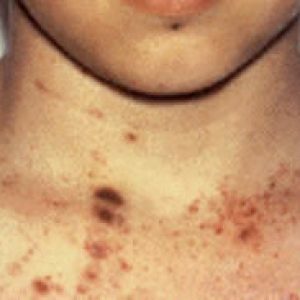
Allergen test (allergy tests): how to prepare, types, indications
Allergy tests - this is one of the most highly informative methods for determining the personal intolerance of the human body to various kinds of chemical irritants (allergens).
This method is most effective, with minimal discomfort for the patient.
Allergic diagnostic tests are carried out only after a complete examination of the patient.
Allergists and immunologists recommend that every person suffering from allergies have allergy tests. How allergy tests are done, how to prepare for them and what the norms should be, we will tell you later in the article.
Content
- Indications for an allergy test
- Contraindications for an allergy test
- Types of allergy tests
- Allergy testing in children
- Preparation before conducting an allergy test
- How are allergy tests carried out?
- Evaluation of scarification skin tests
- Evaluation of intradermal allergy tests
- Decoding the results of allergy tests
- Related Videos
Indications for an allergy test
If a person has an allergy, then it is recommended to conduct allergological tests in order to identify the main pathogen and begin effective treatment. Indications for an allergy test include patients with suspected
- allergodermatitis and bronchial asthma;
- seasonal or chronic rhinitis (hay fever);
- allergic rhinitis(runny nose, discharge of mucus from the nose);
- photodermatitis;
- food allergy(itching, hives, dry skin);
- allergic conjunctivitis;
- swelling and swelling of the skin, shortness of breath;
- unreasonable itching in the eyes, eyelids, nose;
- diarrhea;
- pain and cramps in the stomach;
- reactions to animal or insect bites (for example: mosquito bite allergy);
- the body's sensitivity to household chemicals and medicines.
All or some of the above symptoms present in a person require a complete examination to make sure that there is an allergy. The best method is an allergy test.
The purpose of the allergy test is:
- determination of the method of treatment for allergies;
- testing of reintroduced drugs;
- establishing a reaction to cosmetics, food, animals, insects, dust, etc.
An allergy occurs due to the body's reaction to an irritating factor, which means that the immune system is impaired. Allergotest will help to identify the main pathogens, thereby preventing subsequent reactions of the body.
Having identified allergens, a person will know what to avoid (food, household chemicals, cosmetics, dust, etc.).
Contraindications for an allergy test

Like many other methods, allergy tests may be contraindicated in humans. This happens in cases when:
- a person is sick with infectious diseases with a chronic course (angina, pneumonia, bronchitis);
- a person has acquired immunodeficiency syndrome (AIDS) or others autoimmune pathologies, with them, the allergy test is prohibited;
- anaphylactic shock(anaphylactic and anaphylactoid reactions);
- when breastfeeding (lactation);
- decompensated asthmatic bronchitis;
- carrying a child;
- worsening of allergic reactions;
- mental disorders (neurosis, neurasthenia, schizophrenia, etc.).
Read also:Hay fever: what it is and how to define it
There are two types of restrictions for conducting an allergy test: absolute and relative.
- Absolute involve conducting another safe and highly informative blood test for the presence of antibodies (food allergen panel).
- With regards to relative contraindications, then during pregnancy, pneumonia and sore throat, the introduction of even the slightest dose of an allergy pathogen is prohibited.
Allergy tests for children are also contraindicated if they have a sore throat, flu, colds, etc.
Types of allergy tests
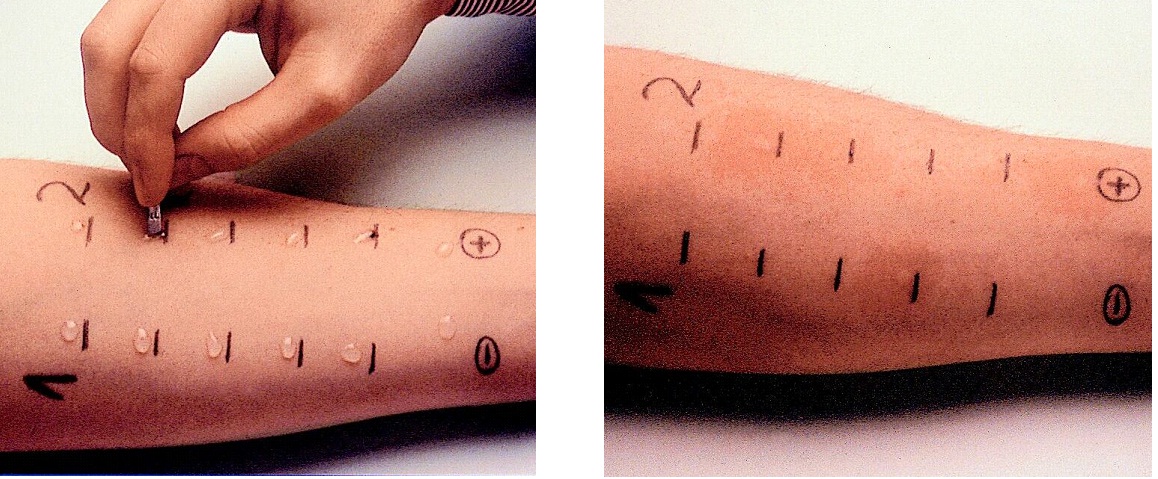
To identify the main allergens, allergists use several types of tests. Types of allergic tests:
- Allergy scarification tests. This allergy test is carried out to establish the sensitivity of the human body to various allergy pathogens;
- Application. This implies the introduction of a fragment of the allergen under the skin, after which local skin changes are observed and evaluated;
- Prik test or injection. The most convenient and fastest test for detecting allergic reactions;
- Straight. The examination is done to diagnose diseases that have developed with intolerance to a particular stimulus. The epidermis and the suspected allergen are in direct contact;
- Indirect. These allergy tests are laborious and time-consuming. When conducting the test, it is necessary to be under the strict supervision of a specialist. Also, the method is painful, since allergens are injected deep under the skin.
- Provocative. The method is used only if other methods have given low information content. A provocative test makes it possible to establish a diagnosis more accurately than previous tests.
- Cytotest. A cytotest is used to detect food allergies. Rash, dry skin and itching can be caused by a disturbed gastrointestinal tract. This allergy test involves checking for reactions to 50 or more foods that can be eaten daily. This method is recommended for people who are underweight or overweight, itchy rash, general malaise, upset stools (diarrhea, constipation).
Conducting certain types of testing involves the inclusion of the top layer of the skin in the process.
Skin allergy tests are the most informative for clarifying the diagnosis, diagnosing allergic diseases or the type of allergen.
What types of allergy tests to carry out is determined by the allergist in order to obtain accurate results in the future.
Allergy testing in children
Children who have allergic reactions to any of their relatives also need to be diagnosed.
It so happens that despite the correct diet and care, the child still has allergic reactions. Neither parents nor doctors will be able to determine exactly what the allergy is. It is in this case that allergy tests can achieve a better result.
To understand how children are tested, it is necessary to consult with an allergist before carrying out the procedure.
Read also:Eosinophilic esophagitis
The most suitable allergy tests for children are scarification tests, that is, an irritant is applied to the skin in a certain amount. The scarification view is usually performed on the forearm, children on the hip or back.
The method is performed in three ways:
- the upper layer of the epidermis is scratched and an allergen is applied;
- piercing the skin with a special needle;
- intradermal test - the introduction of the allergen is performed with a syringe.
Allergy skin tests involve the observation by specialists of the body's response to an irritant. The brighter in color and larger in size the spot that forms around the sample site (prick or scratch), the more likely it is to make a correct diagnosis and identify the main pathogen.
Not all children are allowed to sample. Allergy tests for children under two years old do not give the expected result and cause discomfort.
Also, in order to test for allergies to children, the disease must be in complete remission, then the child should not have a single sign of illness during this period (rash, runny nose, cough, etc.).
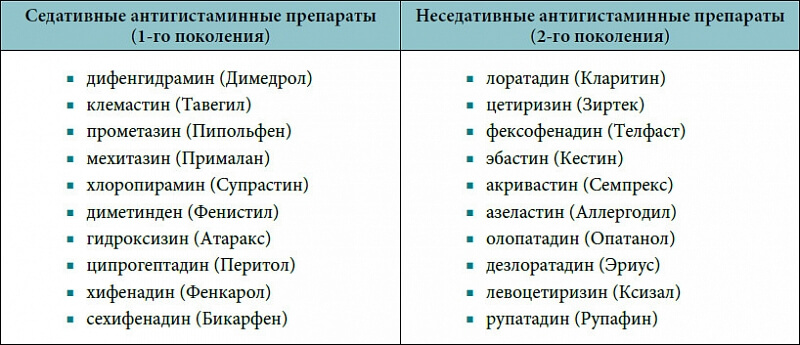
Adults should not give the child any antiallergic medications before conducting an allergy test.
Preparation before conducting an allergy test
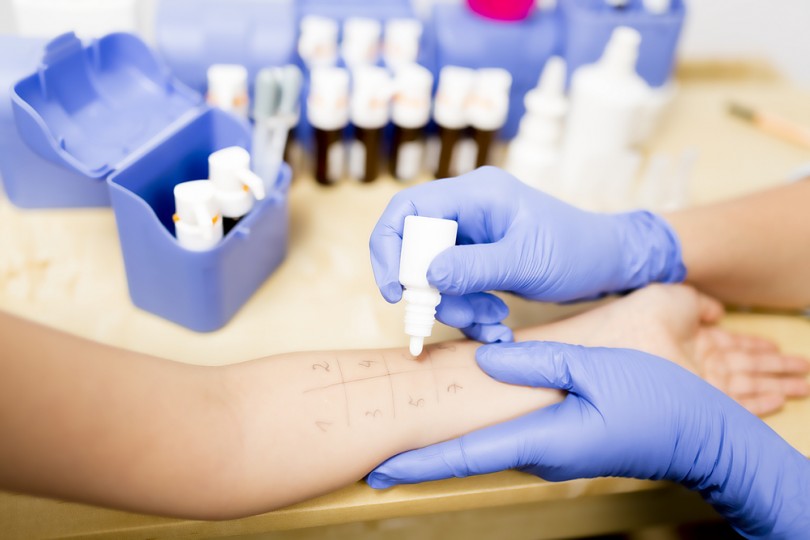
How to prepare for the procedure will help a specialist, explain and give certain recommendations.
It is not forbidden to eat before an allergy test, but on the contrary, it should be mandatory. This is especially true for children.
When using hormonal ointments or creams, you must inform your doctor. In this case, the test will be carried out on an area of the skin that has not been touched by the means.
Before conducting allergic tests, the patient must donate blood for analysis. If the allergy is not identified and there are no obvious contraindications, then you can start choosing an allergy test.
Blood analysis is required in order to find out if there is an allergy and to see the volume of blood constituents. You must carefully prepare for the delivery of an allergy test. A few days before the test, it is recommended to exclude physical and emotional stress.
How are allergy tests carried out?
- Allergy scarification tests. Fragments of the allergen are applied to the patient's forearm. Several small scratches are made with a needle or lancet;
- Application. The safest view. Carrying out does not require any damage to the skin. A tampon moistened with an irritant solution is applied to the skin;
- Prik test or injection. A drop of the allergen is dripped onto the skin, after which the testing area is punctured with a special medical needle;
- Indirect. First, an allergen is injected under the skin, after a while the doctor collects venous blood to detect the level of antibodies;
- Provocative. The Praustnitz-Küstner reaction is performed, that is, serum is injected with the blood of an allergic patient a healthy person, by blood microscopic examination revealed particles of the alleged allergen. A day later, the doctor determines the level of all antibodies in the skin, after which the area where the test was carried out is treated with an allergen. Further, there is a standard observation of the body's response to the stimulus.
Read also:Citrus allergy
Evaluation of scarification skin tests
| Reaction | Result | Characteristic |
| Negative | – | Lack of swelling and hyperemia |
| Dubious | ± | Hyperemia without swelling at the site of the test |
| Weakly positive | + | The swelling reaches 2-3 mm, it is noticeable only if the skin is stretched, severe hyperemia |
| Positive | + + | Swelling reaches 4-5 mm, noticeable without pulling, high hyperemia |
| Strongly positive | + + + | Swelling reaches 6-10 mm with the presence of pseudopodia, high hyperemia |
| Very strongly positive | + + + + | Swelling reaches more than 10 mm with the presence of pseudopodia, severe hyperemia and lymphangitis |
Evaluation of intradermal allergy tests
| Reaction | Result | Reaction characteristic |
| Negative | – | The dimensions are the same as in the control |
| Dubious | ± | The swelling dissolves much more passively than in the control |
| Weakly positive | + | The swelling is 4-8 mm in diameter, the skin around is hyperemic |
| Medium positive | + + | Swelling reaches 8-15 mm in diameter, skin hyperemia |
| Strongly positive | + + + | Swelling reaches 15-20 mm in diameter with the presence of pseudopodia, skin hyperemia |
| Very strongly positive | + + + + | Swelling more than 20 mm in diameter with the presence of pseudopodia, cumulative blisters around the circumference with severe skin hyperemia |
Decoding the results of allergy tests

One of the most informative and quick tests is the prick test. The scratches and the action of the allergen will give an accurate result about the presence or absence of allergic reactions.
The main indicator is the width of the scratch or point.
If the scratch is no more 2 mm, then the reaction is negative, but if 5 mm - positive (see. photo above). General analysis of the analysis takes no more than five minutes. After that, the specialist explains the diagnostic results to the allergic person or to the parents of the sick child.
Today, everyone can guess about the presence of allergies. Symptoms are pronounced, therefore, at the first unreasonable signs, it is necessary to contact an allergist and immunologist. This is especially true for children, since a small child tolerates allergy symptoms worse than an adult.
To know what needs to be eliminated from the diet or to avoid any other irritating factors, you need to do an allergic diagnostic test.