Colic in the abdomen in adults
Colic in the abdomen in adults is not a separate disease. They signal disturbances in the work of the gastrointestinal tract. Cramping painful sensations occur due to spasm of the colon or small intestine. There are many provoking factors: from non-pathogenic causes to serious diseases.

Colic in the abdomen in adults - causes
Content
- 1 Non-pathogenic causes of intestinal colic
- 2 Diseases causing an unpleasant syndrome
- 3 Types and symptoms of colic
- 4 First aid for colic
-
5 Diagnostics and treatment
- 5.1 Diagnostic tests
- 5.2 Pharmaceutical therapy
- 5.3 Folk methods
- 5.4 Video - Abdominal pain. 7 types of abdominal pain
Non-pathogenic causes of intestinal colic
If colic happened for the first time, perhaps they arose against the background of psychogenic factors - stress, depressive conditions, nervous excitement. Most often, for this reason, impressionable asthenics suffer from intestinal spasms.

Abdominal colic attacks are extremely painful
Improper diet is considered the most common cause of colic. It leads to intestinal dyskinesia, that is, a violation of the tone of the muscular membrane and the motility of this organ.
What exactly in the diet can cause cramps:
- fiber deficiency;
- predominance of cold or stale food;
- frequent use of dishes based on fermentation (baked goods, kvass, beer, pickled and pickled vegetables);
- hungry diets and overeating;
- abuse of fast food, fatty and fried foods.

Abuse of fast food often leads to dyskinesia
Poisoning with low-quality food also causes painful spasms.. It is not only poisonous mushrooms or expired food that causes intoxication. You can also get poisoned by those dishes that look fresh, but the technology of their preparation is violated.
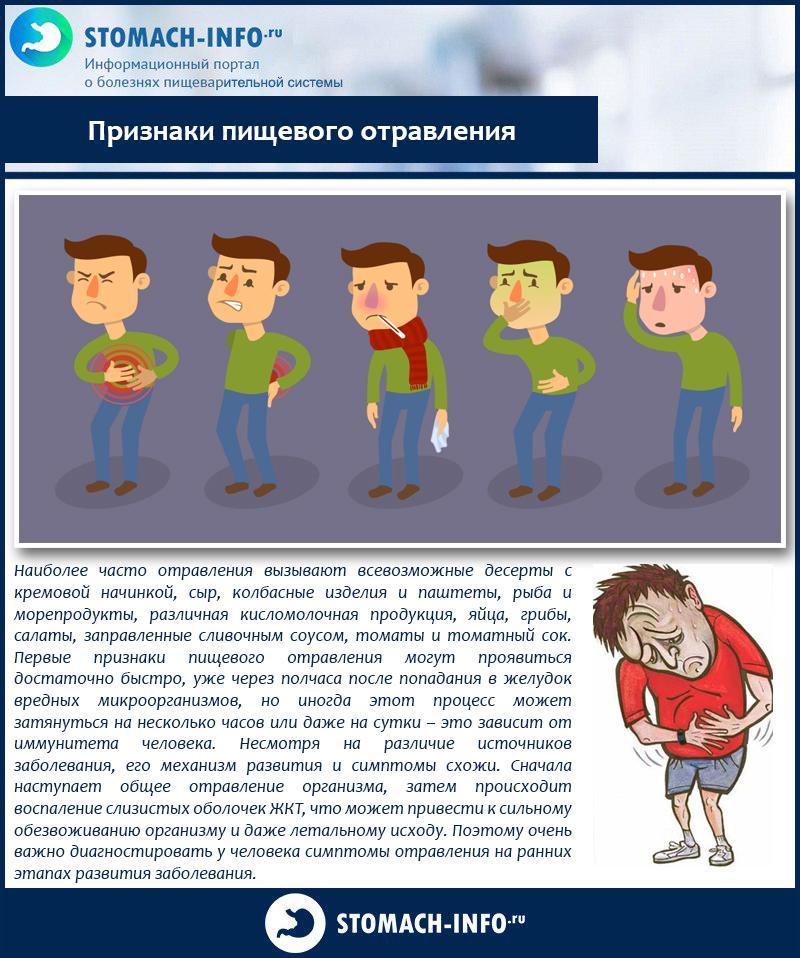
Signs of food poisoning
Diseases causing an unpleasant syndrome
People with congenital abnormalities of this organ suffer from frequent intestinal spasms. But painful changes can be acquired: due to chronic diseases or as a consequence of recent abdominal surgeries.

Intestinal colic occurs with ARVI and influenza
Diseases that are symptomatic of colic are listed below.
- Ailments of the digestive system - ulcers, gastritis, biliary dyskinesia, exacerbation of cholecystitis or pancreatitis.
- Intestinal infections - salmonellosis, dysentery, cholera.
- Helminthic invasions. Parasites not only irritate the lining of the esophagus and poison the body with waste products. Dead helminths form tangles that accumulate in the intestines and block their lumens.
- Respiratory viral infections, including influenza. Viruses with blood flow enter the abdominal lymph nodes, provoking inflammatory processes.
- Adhesions and neoplasms in the intestine. They appear not only due to diseases, but also as a result of lifting heavy objects, intense sports.

Intestinal adhesions
Changes in hormonal levels and metabolic diseases, in particular diabetes, can also provoke colic. Also, spasms in adults appear due to improper bowel movements. Constipation leads to an accumulation of feces, which increases their obstruction.
Types and symptoms of colic
The main symptom of colic is severe abdominal pain. But in addition to it, bloating of the peritoneum, rumbling sounds, flatulence, nausea, loss of appetite, constipation or diarrhea, the appearance of mucus during bowel movements are added. The pain can radiate to the groin area, vagina, testicles. With intoxication, headaches often occur. Hypertensive patients may have pressure surges. The nature and location of unpleasant sensations are directly related to the reasons that caused them.

Pain in the right hypochondrium is characteristic of hepatic colic.
Table. Colic types, causes and symptoms.
| Colic type | Symptoms | Possible disease |
|---|---|---|
| Rectal (rectal) | False urge to defecate, accompanied by severe pain. | Pathological changes in the rectum. |
| Hepatic | Sharp pain in the right side of the peritoneum under the ribs, radiating to the shoulder and scapular regions, as well as bitterness in the mouth, nausea. With severe spasms, vomiting of bile. | Cholelithiasis, exacerbation of cholecystitis. |
| Pancreatic | Diarrhea, gagging, bloating. Dull, aching pain is concentrated in the upper left part of the peritoneum. | Exacerbation of pancreatitis and other pathological changes in the pancreas. |
| Renal | Severe cramps radiating to the lower back and groin, problems with urination. A rise in temperature, a sharp drop in blood pressure, and loss of consciousness are possible. | Urolithiasis, neoplasms in the excretory organs, pyelonephritis, renal tuberculosis. |
| Appendicular | Rapidly growing pain in the iliac region on the right. | Acute appendicitis. |
| Lead | Strong contractions in the peritoneum against the background of an increase in temperature. Probably bleeding of the gums and the appearance of grayish plaque around the teeth. |
There are many reasons for abdominal cramping; only a qualified doctor can make an accurate diagnosis. After conducting research, he will not only offer medicines to relieve pain, but also draw up a therapeutic course. Timely treatment of the disease that caused the colic will help to avoid relapses.

Intestinal cramps - what is it
First aid for colic
Only a doctor can prescribe treatment. But if there is no way to endure the pain before he arrives, try to reduce them.
- If spastic attacks are associated with nervous excitement or stress, take a sedative (valerian or motherwort extract, peony tincture, Fitosed, Persen, Novopassit, Corvalol).
- To relieve pain and spasm will help "No-shpa" or its analogue ("Drotaverin", "Papaverin"). It is recommended to wash down the tablets with mint tea. Decoctions of immortelle and pharmacy chamomile also ease the pain.

In case of spasms, first aid will be provided by "No-shpa"
- If spasms happened after a heavy meal, enzyme remedies ("Mezim", "Festal", "Pancreatin") will help.
- In case of intestinal disorders, dissolve a bag of "Smekty" in half a glass of water and drink the resulting composition.
- If you suspect poisoning, before the arrival of an ambulance, urgently flush the stomach with a weak solution of potassium permanganate or soda. You need to drink 2 liters of the composition and induce vomiting. Repeat the procedure until all stomach contents are empty.

"Mezim"
With intestinal colic, without the recommendation of a doctor, you can not do an enema or put a heating pad on your stomach. If the spasms are caused by an inflammatory process, it will worsen the condition.
Mild spasms can go away after first aid without further treatment. Fix the result by a 12-hour fast, and for a week stop eating foods that cause excess gas formation (cabbage, legumes, dairy products).

Gassing products
If seizures recur, make an appointment with a gastroenterologist. If cramps are accompanied by fever or vomiting, call emergency help. Self-treatment is dangerous with serious complications, even death.
Diagnostics and treatment
When visiting a therapist, be prepared for the fact that he will ask you about all chronic diseases, working conditions, as well as diseases of close relatives, in order to exclude the hereditary factor ailments. Try to clearly articulate the nature of painful sensations, their localization and accompanying symptoms.

First of all, the therapist will find out the patient's history
Diagnostic tests
On examination, the doctor palpates the painful area and examines the surface of the abdomen - the condition and shade of the skin. Then he directs the patient for additional examinations.
Table. List of additional examinations.
| Lab tests | Instrumental examinations |
|---|---|
| General analysis of blood and urine. | Ultrasound examination of the abdominal cavity. |
| Blood biochemistry. | Colonoscopy - examination of the entire large intestine with a colonoscope. |
| Coprogram and study of fecal contents for the presence of blood in it. | Sigmoidoscopy is an endoscopic examination of the rectum and part of the sigmoid colon. |

Ultrasound of the abdominal cavity is mandatory for intestinal colic
If there is a risk of neoplasms or perforation of the walls of the gastrointestinal tract, computed tomography is performed. In difficult cases, consultation of a narrow specialist is required - a surgeon, urologist, gastroenterologist.
Pharmaceutical therapy
To get rid of the suffering caused by painful spasms, the doctor will advise a suitable antispasmodic drug: "No-shpu", "Drotaverin", "Bekarbon", "Notensil". If the pain is too strong, the patient will be prescribed an injection of "Atropine", "Papaverine" or "Diphenhydramine".

"Drotaverin"
After that, the doctor will analyze the patient's condition and, based on the results of diagnostic examinations, prescribe treatment:
- chronic diseases of the digestive and excretory organs require individual treatment, depending on the type and stage of the disease;
- for respiratory infections, antiviral therapy is carried out, and colic is stopped by antispasmodics and enterosorbents;

For severe pain, antispasmodics are injected
- circulatory disorders in the abdominal organs, leading to spasms, are treated with medicines that improve arterial patency of the arteries;
- if spasms are caused by helminthic invasion, drugs for helminthiasis are prescribed, depending on the type of parasites;
- with exacerbation of intestinal obstruction or inflammation of the appendix, surgery will be required.
In case of toxic damage or intestinal infection, the patient is hospitalized. At the hospital, he is undergoing treatment with antibiotic drugs (Gentamicin, Levomycetin) and intestinal antiseptics (Biseptol, Furozalidone). If the intoxication is strong, droppers with glucose, the use of salt and vitamin solutions are recommended.

"Biseptol"
If you have a tendency to intestinal colic, it is useful to talk with a nutritionist so that the specialist draws up the correct diet, depending on the cause of the cramps. You need to eat fractionally, in small portions.
Folk methods
Herbal teas help to normalize the work of the gastrointestinal tract and improve the flow of gases. As a brew, you can use:
- fennel;
- mint;
- yarrow;
- sage.

For the removal and prevention of colic, teas with medicinal herbs are recommended.
Decoctions of chamomile, immortelle and wormwood are especially good for spasms. Other traditional methods are aimed at relieving pain and improving bowel function. They are carried out only after consultation with the attending physician.
Table. Effective folk remedies.
| Folk remedy | Cooking technology | Mode of application |
|---|---|---|
 Pumpkin seeds |
Grind the seeds (2 large spoons), pour a glass of hot water. Add a little sugar or honey to improve the taste. | Drink in small sips for five days. |
 Ginger tea |
Grind the ginger root, boil a couple of pinches in 250 ml of boiling water. | Drink two cups of hot drink every day for at least a week. |
 Lavender oil |
Add five drops of the product to a glass of water. | Drink for pain caused by nervous shocks. |
 Infusion of birch buds |
Soak young buds (0.5 cups) in alcohol for 14 days, removing in a dark place. Filter out. | Dissolve 20 drops in a glass of water and drink in case of spasms. |
Herbal enemas based on mint, lemon balm or chamomile can be used to cleanse the gastrointestinal tract of toxins and feces. You cannot practice such procedures longer than five days.
Before using enemas, be sure to check with your doctor. If carried out incorrectly, they can disrupt the intestinal microflora and increase dyskinesia.

Colon cleansing enemas
Prevention of intestinal colic is aimed at the timely treatment of chronic diseases. Normalize your diet, give up nighttime snacks, alcohol, lemonades and fast food. Focus on dietary fiber-rich fruits and vegetables. People prone to spastic dysfunctions need to avoid stress. Sports activities should be gentle.