Familial hypercholesterolemia: what is it, symptoms, treatment, prognosis, complications
Content
- Introduction
- Symptoms of familial hypercholesterolemia
- Causes of familial hypercholesterolemia
- Diagnostics
- Treatment of familial hypercholesterolemia
- Risk of cardiovascular disease
- Prognosis and complications
- Conclusion
Introduction
People with coronary artery disease (CHD) at an early age may have congenital problems with cholesterol, especially if they are likely to have premature heart disease in family. The most common genetic disorder affecting cholesterol levels is familial hypercholesterolemia.
Familial hypercholesterolemia (SGHS) is a genetic syndrome in which the level of LDL (low density lipoprotein) cholesterol rises from the moment of birth.
People with FHC are at high risk for premature development of diseases such as cardiac ischemia, stroke and peripheral arterial disease (PAD). In fact, many people suffering from myocardial infarction at a very early age, a similar disease is observed.
Fortunately, aggressive cholesterol-lowering treatments can significantly reduce your risk of heart disease. For this reason, it is important to diagnose familial hypercholesterolemia as early as possible - and to make sure that family members of everyone with the condition are also tested for blood lipids (lipid profile).
Symptoms of familial hypercholesterolemia
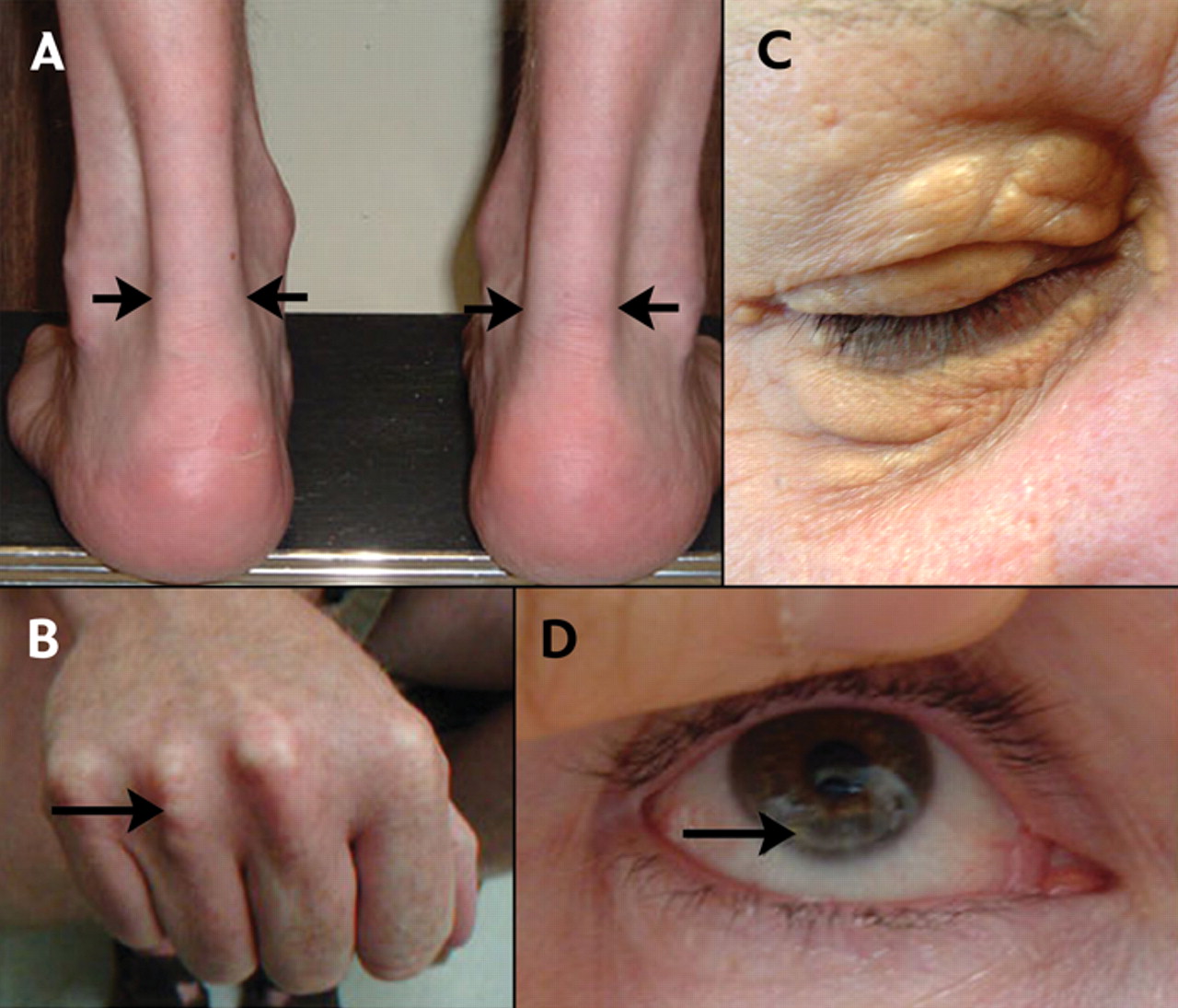
Many people with familial hypercholesterolemia have no symptoms at all until they develop overt coronary artery disease (which often causes angina or more severe heart attack symptoms), stroke, or peripheral arterial disease (which often cause severe leg cramps with exercise).
SGHS may cause the appearance of characteristic fatty deposits around the elbows, knees, along the tendons and around the cornea of the eyes. These fatty deposits are called xanthomas. Deposits of cholesterol on the eyelids, called xanthelasmare also common. Whenever a patient develops xanthomas or xanthelasma, the diagnosis of FHC should immediately occur to a qualified physician.
Causes of familial hypercholesterolemia
Familial hypercholesterolemia can be caused by several different genetic defects, most of which affect the LDL cholesterol receptor. When the LDL receptor is not working properly, LDL cholesterol is not effectively cleared from the bloodstream. Consequently, low density lipoproteins accumulate in the blood. These excessive levels of LDL cholesterol significantly accelerate atherosclerosis and cardiovascular disease.
The genetic abnormalities that cause FHC can be inherited from the father, mother, or both parents. It is said that people who inherited the anomaly from both parents homozygous for familial hypercholesterolemia. People with homozygous familial hypercholesterolemia often develop severe cardiovascular disease at a very young age. This affects one in 250,000 people.
Read also:Heart diseases
People who inherit the abnormal gene from only one parent are considered heterozygous for familial hypercholesterolemia. This is a less severe form of the disease, but it still significantly increases the risk of cardiovascular disease. About one in 500 people has heterozygous familial hypercholesterolemia.
That's really a lot of people.
More than 1000 different mutations have been identified that affect the gene for the low-density lipoprotein (LDL) receptor, and each of them affects the LDL receptor in slightly different ways. For this reason, not all SGHS are created equal. The severity can vary greatly depending on the specific type of genetic mutation in a person.
Before the advent of statins, the incidence of premature cardiovascular disease was very high in people with familial hypercholesterolemia and in their relatives. In a large study conducted in the 1970s (before statin use), 52 percent of male relatives with FHC by the age of 60 had heart disease (versus an expected risk of 13 percent), as did 32 percent of women who had heart disease by age 60 (versus an expected risk of 9%). This study revealed a familial nature of this condition.
Diagnostics
Doctors diagnose familial hypercholesterolemia by measuring blood lipids, taking a family history and physical examination into account.
Blood tests in people with FHC show high total cholesterol and high LDL cholesterol. Total cholesterol levels in this condition often exceed 300 mg / dL in adults and over 250 mg / L in children. Typically, LDL cholesterol levels are over 200 mg / dL in adults and over 170 mg / dL in children. Triglyceride levels are usually not particularly high in people with this condition.
Anyone with familial hypercholesterolemia can have relatives who also have the condition. Thus, a family history of early cardiovascular disease may be a clue for the doctor to suspect this diagnosis.
Read also:Prinzmetal's angina
The presence of xanthomas or xanthelasm should also alert the doctor to the likelihood of this diagnosis.
Presumptive diagnosis SGHS can be deliveredif LDL cholesterol levels are very high, triglyceride levels are normal, and family history is compatible. If xanthomas or xanthelasmas are also present, the diagnosis of FHC can be considered fairly accurate. Genetic testing can be helpful (but usually not required) in making a diagnosis and can be very helpful for genetic counseling purposes.
Cardiovascular diseases caused by FHC begin in childhood. Therefore, children in families with this disorder should be regularly checked for high levels of low-density lipoprotein, starting at age 8.
If their cholesterol levels are elevated, statin therapy should be strongly recommended.
Treatment of familial hypercholesterolemia
The development of powerful "second generation" statin drugs has changed the treatment of familial hypercholesterolemia. Prior to the advent of these powerful drugs, the treatment of this disorder required the use of several drugs, including the less potent "first generation" statin drugs.
Although this multi-drug approach does reduce the risk cardiovascular disease in patients, treatment can be difficult to tolerate and certainly difficult treatable.
With the development of more powerful second generation statins - Atorvastatin, Rosuvastatin (Crestor) or Simvastatin - the approach to the treatment of familial hypercholesterolemia has changed. Currently, treatment is started with a high dose of one second-generation statin drug. These drugs usually cause a significant reduction in LDL cholesterol levels and can also actually lead to a reduction in atherosclerotic plaques.
If cholesterol levels are not sufficiently reduced with high doses of statins, a second drug should be added. Some experts recommend use ezetimibe as a second-line drug, while others recommend the use of powerful PCSK9 inhibitors.
Because lowering LDL cholesterol is so important for people with FHC, if statin alone is not enough, patients should be referred to a lipid specialist.
Treatment of the homozygous form of FHC.
In people born with homozygous (severe) familial hypercholesterolemia, the cardiovascular risk is so high that highly aggressive therapy under the guidance of a lipid specialist is recommended immediately after diagnosis diseases. Due to the sharp and extreme increase in the level of low density lipoproteins in these patients, it is now recommended to start therapy with both high doses of statins and with an inhibitor PCSK9.
Read also:Syncope (fainting): causes of fainting with high and low pressure, first aid, prevention
However, even with such aggressive medication, cholesterol levels remain high. In these cases, you may need apheresis treatment to lower cholesterol levels.
Risk of cardiovascular disease
While elevated cholesterol levels significantly increase the risk of heart disease in people with FHC, other cardiovascular risk factors also remain important. Therefore, aggressive control of all other risk factors is a critical aspect of their treatment. cardiovascular disease, especially smoking, obesity, lack of exercise and increased blood pressure.
Prognosis and complications
How good your prognosis is depends on how closely you follow your doctor's recommendations. Diet changes, exercise, and proper medication can lower cholesterol levels. These changes can help delay the onset of heart attack, stroke, especially in people with a milder form of the disease.
According to the American Heart Association, untreated men and women with FHC who inherited a mutated gene from both parents, the rarest form, are at greatest risk of heart attack and death before the age of 30 years old.
The risk of death in people with familial hypercholesterolemia may vary. If you inherit two copies of the defective gene, the result will be worse. This type of familial hypercholesterolemia is difficult to treat and can cause an early heart attack.
Complications of FHC may include:
- heart attack at an early age;
- heart disease;
- stroke;
- peripheral arterial disease.
Conclusion
CGHS is a serious inherited disorder of cholesterol metabolism. People with familial hypercholesterolemia need aggressive therapy to lower cholesterol and control other cardiovascular risk factors to reduce the risk of premature heart diseases. It is also very important that their family members undergo ongoing screening for this condition.
A diet low in cholesterol and saturated fat and high in unsaturated fat can help control LDL levels.