Barthes syndrome: what is it, symptoms, causes, treatment, prognosis
Content
- What is Bart's Syndrome?
- Signs and symptoms
- Causes of Barthes Syndrome
- Affected populations
- Diagnostics
- Standard treatments
- Forecast
What is Bart's Syndrome?
Barth's syndrome is a rare metabolic and neuromuscular genetic disorder that occurs exclusively in males as it is passed from mother to son through the X chromosome. Although Barthes syndrome usually appears in infancy or early childhood, the age of onset associated with it symptoms and results, as well as the course of the disease, vary significantly even among affected members of the same families.

Major characteristics of the disorder include abnormalities of the heart and skeletal muscles (cardioskeletal myopathy), low levels of certain white blood cells (neutrophils, neutropenia), which help fight bacterial infections, and growth retardation, potentially leading to low growth. The disorder is also associated with elevated levels of certain organic acids in urine and blood, such as 3-methylglutonic aciduria / acidemia. The left ventricle of the heart may have increased thickness as a result of unusually high concentrations
elastic collagen fibers (endocardial fibroelastosis). The thickening reduces the ability of the left ventricle to expel blood through the lungs and is thus a major source of potential heart failure.Barthes syndrome is transmitted as an X-linked recessive trait. The gene responsible for the disorder was located on the long arm (q) of the X chromosome at Xq28.
Signs and symptoms
Symptoms associated with Barthes syndrome may be apparent at birth, infancy, or early childhood. However, in rare cases, the disorder may not be diagnosed until adulthood.
Most people with Bart syndrome observed weakening of the heart muscle (cardiomyopathy), which leads to the expansion of the lower parts of the heart (ventricles).
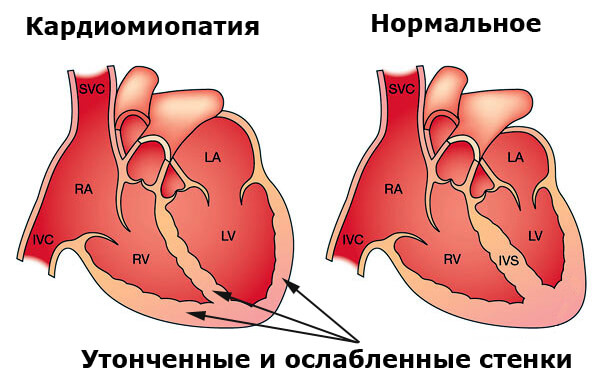
Known as dilated cardiomyopathy, signs of this condition are often present at birth or may appear during the first months of life. Dilated endocardial myopathy typically impairs the pumping activity of the heart, decreasing the volume of blood circulating in the lungs and the rest of the body, causing heart failure. Heart failure symptoms may depend on the age of the child and other factors. For example, in young children, heart failure can manifest as tiredness and shortness of breath with physical exertion.
Barthes syndrome is also associated with abnormally decreased muscle tone (hypotension) and muscle weakness (skeletal myopathy), often resulting in delays in the acquisition of gross motor skills. General motor skills include activities such as crawling, walking, running, jumping, and maintaining balance. These are skills that require the use and coordination of large muscle groups. Weakness of the facial muscles can lead to unusual facial expressions.
Read also:Streptoderma in children: symptoms, home treatment
In addition, affected infants and children may not develop and gain weight at the expected rate. They may have mild learning disabilities (although they usually have normal intelligence), and in many cases may be susceptible to recurrent bacterial infections due to low levels of circulating neutrophils in blood.
Without timely detection and appropriate treating heart failure and bacterial infections can be life-threatening complications.
In addition to cardiac and skeletal muscle abnormalities, neutropenia, and growth retardation, in patients with Barthes syndrome there is a specific biochemical marker that has been recognized for many years as the main indicator of the syndrome Bart.
Biochemical marker Is any substance, such as an enzyme or small molecule, that is found in urine or other body fluids that is diagnostic of a specific disorder.
Researchers have shown that people with Bart's syndrome have abnormally elevated levels 3-methylglutaconic acid in the urine and in the liquid part of the blood. According to clinicians, children with Barthes syndrome can have elevated levels of 3-methylglutaconic acid in their blood from mid-infancy to about three years of age. However, there is no association between elevated acid levels and the severity of other symptoms and signs associated with Barth's syndrome.
Under the microscope, heart muscle cells in patients with Barth's syndrome have abnormally shaped mitochondria. Other metabolic signs that are not diagnostic in themselves, but serve to confirm a diagnosis based on other criteria are high levels of lactic acid in the blood and urine (a by-product of intense muscle activity) and low levels of carnitine. Carnitine plays a role in the movement of chemicals, especially fatty acids, across the cell membrane.
Causes of Barthes Syndrome
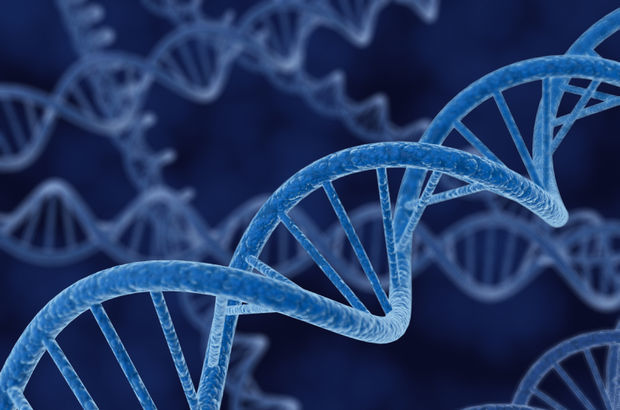
Barthes syndrome is transmitted as a recessive trait associated with an X-shaped connection. The faulty gene can be traced back to the X chromosome on the gene map of the Xq28 locus.
Chromosomes, which are present in the nucleus of human cells, carry the genetic information of each person. The cells of the human body usually have 46 chromosomes. Pairs of human chromosomes are numbered 1 through 22, and the sex chromosomes are labeled X and Y. Men have one X and one Y chromosome, while women have two X chromosomes. Each chromosome has a short arm, labeled "p", and a long arm, labeled "q". Chromosomes are further subdivided into multiple bands, which are numbered. For example, "chromosome Xq28" refers to lane 28 on the long arm of the X chromosome. The numbered stripes indicate the location of the thousands of genes present on each chromosome.
Read also:Rett syndrome in children
Genetic diseases are defined by a combination of genes for a specific trait that are found on chromosomes received from the father and mother.
X-linked recessive genetic disorders are conditions caused by an abnormal gene on the X chromosome. Women have two X chromosomes, but one of the X chromosomes is turned off and all genes on that chromosome are inactivated. Women who have a disease gene on one of their X chromosomes are carriers of the disorder. Carrier women usually do not show symptoms of the disorder because it is usually an X chromosome with an abnormal 'off' gene. A man has one X chromosome, and if he inherits the X chromosome containing the disease gene, he will develop the disease. Men with X-linked disorders pass the disease gene to all of their daughters who will be carriers. A man cannot pass the X-linked gene to his sons because men always pass on their Y chromosome instead of their X chromosome to male offspring.
In some cases, the affected man's mother may not be a carrier of Barth's syndrome and have an obvious family history of the disease. In such cases, the disorder appears to be the result of a new gene mutation on the X chromosome that happened by chance for unknown reasons (sporadically).
The gene located on the X28 chromosome is known as the TAZ gene. The TAZ gene codes for a group of proteins called taffazines that have at least two functions. First, these proteins play a role in maintaining the inner, tightly folded mitochondrial membranes in cells. Mitochondria are the energy-producing grains on which the cell depends. Taffazines serve to ensure that the concentration of specific fat (cardiolipin) is sufficient to support mitochondrial energy production. Taffazines also promote the development of bone cells from bone progenitor cells (osteoblasts).
Mutations in the TAZ gene are also responsible for the appearance of 3-methylglutaconic acid in the blood and urine of patients with Barth's syndrome.
Affected populations
Barthes syndrome seems to affect all ethnic groups. Epidemiologists at Johns Hopkins University Medical Center estimate the incidence of this syndrome to be anywhere between 1 in 200,000 to 400,000 newborns. However, they warn that these numbers may be underestimated, as they believe that many cases of Barth's syndrome go unrecognized and go unreported.
Diagnostics
Barthes syndrome can be diagnosed in infancy or early childhood (or, in some cases, later in life) based on careful clinical assessment, identification of characteristic physical findings, complete medical history of the patient and family, and a variety of specialized tests.
Experts point out that a diagnosis of Barth's syndrome should be considered for any man or child with:
- dilated cardiomyopathy of unknown cause (idiopathic);
- low levels of circulating neutrophils (neutropenia);
- an increased level of 3-methylglutaconic acid in the urine (aciduria);
- abnormal mitochondria in the heart muscle;
- and / or muscle abnormalities (myopathy) of unknown cause due to growth retardation.
For infants and children with signs of cardiomyopathy, metabolic screening tests should be performed. including studies measuring the level of 3-methylglutaconic acid and other organic acids in urine and blood.
Read also:Intracranial pressure (ICP) in infants and infants - symptoms and treatment
As mentioned above, increased urinary levels of 3-methylglutaconic acid (3-methylglutaconic aciduria) has been recognized as a biochemical marker that may function as a diagnostic feature of the syndrome Bart. It is also important to measure the concentration of neutrophils in the blood. A persistent low neutrophil count helps confirm the diagnosis when combined with these other signs.
Standard treatments

Treatments for Barthes Syndrome target specific symptoms that each person experiences. Such supportive care may require a coordinated effort by a team of healthcare professionals such as pediatricians; doctors specializing in heart disease in children (pediatric cardiologists); specialists in the study of blood and hematopoietic tissues (hematologists); specialists in the treatment of bacterial infections, physiotherapists; occupational therapists; and / or other healthcare professionals.
Heart failure and / or bacterial infections are more serious threats for a patient with Barthes syndrome. Many babies and children with Barthes syndrome need therapy diuretics and digitalis for the treatment of heart failure. Evidence suggests that many sick children may gradually be excluded from such cardiac therapy later in childhood due to improved heart function.
For patients with confirmed neutropenia, complications from bacterial infection can often be prevented by ongoing monitoring and early treatment of suspected infections. antibiotics. For example, antibiotics can be given as preventive therapy during neutropenia to prevent infection. For some people with neutropenia, such as people with recurring bacterial infections and neutrophil levels that constantly below 500, doctors may recommend the use of agents that stimulate the production of bone marrow by leukocytes.
Genetic counseling will also benefit affected individuals and their families. Other treatments for this disorder are symptomatic and supportive.
Forecast
Early and accurate diagnosis is the key to long-term survival in boys born with Barthes syndrome. Severe infections and heart failure are common causes of death in affected children.