Ankylosing spondylitis: what is it, symptoms, treatment, prognosis
Content
- What is ankylosing spondylitis?
- Spine
- How common is ankylosing spondylitis?
- Symptoms and Signs
- Complications
- Causes and risk factors
- HLA-B27
- Family history
- Diagnostics
- Treatment
- Physiotherapy
- Medications
- Pain relievers
- Tumor necrosis factor (TNF) blocker
- Bisphosphonates
- Disease-modifying antirheumatic drugs
- Corticosteroids
- Forecast
What is ankylosing spondylitis?
Ankylosing spondylitis (synonyms: ankylosing spondylitis, ankylosing spondylitis) Is a type of chronic (long-term) arthritis that affects parts of the spine, including:
- skeleton;
- muscles;
- ligaments.
Arthritis is a common condition that causes pain and inflammation in the joints and tissues around them.
Symptoms of ankylosing spondylitis can vary, but most people experience back pain and stiffness. The condition can be severe, with about 1 in 10 people at risk of long-term disability.
Spine
The spine is made up of a column of interconnected bones called vertebrae. The vertebrae are supported by muscles and ligaments that control the movement of the spine.
In ankylosing spondylitis, the vertebral joints and ligaments and sacroiliac joints (the joints at the base of the spine) become inflamed (a condition called sacroiliitis). Inflammation in the spine can cause pain and stiffness in the neck and back. Sacroiliitis (inflammation of the sacroiliac joints) causes pain in the lower back and buttocks.
How common is ankylosing spondylitis?
Ankylosing spondylitis can develop at any time, starting in adolescence. The disease is three times more common in men than in women. The condition usually occurs between the ages of 15 and 35 and rarely develops in old age.
Various European populations have estimated that ankylosing spondylitis can affect 2-5 adults out of 1000.
Symptoms and Signs

The symptoms of ankylosing spondylitis vary greatly from person to person, but they usually take a long time to develop. In some cases, symptoms and signs may fully develop after three months, although they may appear several years later.
Symptoms of ankylosing spondylitis usually begin in early adulthood or later adolescence. Symptoms can come and go, and get better or worse over the years.
The main symptoms of ankylosing spondylitis are:
- back pain and stiffness;
- pain in the buttock;
- inflammation (swelling) of the joints (a condition called arthritis);
- painful inflammation in which the tendons or ligaments attach to bone (enthesitis);
- fatigue.
If you have ankylosing spondylitis, you may not develop all of the symptoms listed above. All signs are explained in more detail below.
- Back pain and stiffness.

Back pain and stiffness are usually the main symptoms of ankylosing spondylitis. If you have ankylosing spondylitis, you may find that:
- pain is relieved by exercise, but not by rest;
- the back is especially hard in the morning, lasts more than 30 minutes after you start moving;
- often wake up in the second half of the night from pain and stiffness;
- there is pain in the buttocks, sometimes it can be on one side, and sometimes on the other.
- Arthritis.
Along with symptoms in the back and spine, ankylosing spondylitis can cause arthritis in the hip, knee, and other joints. The main symptoms associated with arthritis are:
- pain when the joint moves;
- tenderness when examining the joint;
- swelling;
- warmth in the affected area.
- Enthesitis.
Enthesitis is a painful inflammation in which bone connects to:
- a tendon (a rigid cord of tissue that connects muscles to bones)
- a ligament (a strip of tissue that connects bones to bones).
Common places of enthesite:
- the upper part of the lower leg;
- behind the heel;
- under the heel;
- at the ends of the ribs.
- Fatigue.
Fatigue is a common symptom of untreated ankylosing spondylitis. It can make you feel tired and lack of energy.
Because the symptoms of spondylitis develop slowly and tend to come and go, you need to see your rheumatologist or therapist regularly.
Complications
Ankylosing spondylitis is a complex condition that affects many parts of the body, which can cause complications in daily life and lead to additional illnesses.
Some of the complications associated with ankylosing spondylitis are summarized below.
- Uveitis.
Uveitis, also known as iritis, is a condition sometimes associated with ankylosing spondylitis. Uveitis is inflammation (redness and swelling) of a part of the eye. Usually affects only one eye, not both. If you have uveitis, your eye will become:
- red;
- painful;
- sensitive to light (photophobia).
Because uveitis can damage your vision, if you have ankylosing spondylitis and you have pain or redness in one eye or blurry vision, you should urgently visit:
- an ophthalmologist (a doctor who specializes in eye disease and its treatment or surgery);
- ophthalmologist (a person who checks eyes and vision).
Uveitis is easily treated with eye drops. With prompt treatment, uveitis usually clears up in two to three weeks. However, if uveitis is not treated quickly, it can lead to loss of some or all of your vision.
Read also:Ankylosing spondylitis in women: symptoms, prognosis for life, treatment
- Osteoporosis.
Osteoporosis Is a condition in which bones become weak and brittle. With ankylosing spondylitis, osteoporosis can develop in the spine.
- Fractures of the spine.
The presence of ankylosing spondylitis increases the risk of fractures (tears) in the vertebrae of the spine. This risk increases with the duration of the condition.
- Cardiovascular diseases.
If you have ankylosing spondylitis, you are at risk of developing cardiovascular disease (a condition that affects the heart and blood flow) such as heart attack or stroke, slightly higher than in those who do not have the disease.
Because of the increased risk, it is important to take steps to minimize your chances of developing cardiovascular disease.
- Decreased flexibility.
It is estimated that 4 out of 10 people with ankylosing spondylitis will end up with severely limited spinal flexibility. The spinal deformity will likely take at least 10 years.
- Fixed posture.
In very severe cases of ankylosing spondylitis, pain and stiffness in the lower back can also spread to the upper spine. This can reduce the mobility of the spine, making it difficult to move. As a result, the pose can be locked in one position. It may:
- interfere with looking people in the eyes;
- reduce self-confidence.
However, it is unlikely that this will result in serious disability unless you have severe arthritis (inflammation of the joints and bones) in your hips.
- Cauda equina syndrome.
Cauda equina syndrome is a very rare complication of the condition that occurs when the nerves in the lower spine are compressed (hardened).
Cauda equina syndrome causes:
- pain or numbness in the lower back and buttocks;
- weakness in the legs, which can affect the ability to walk;
- urinary incontinence or bowel incontinence.
If you have ankylosing spondylitis and develop any of these symptoms, see your doctor as soon as possible.
- Amyloidosis.
In very rare cases, it is possible to develop amyloidosis as a complication of ankylosing spondylitis.
Amyloid is a protein made by bone marrow cells (a spongy material found in the centers of some hollow bones). Amyloidosis Is a condition in which amyloid accumulates in organs such as:
- heart - a muscular organ that pumps blood throughout the body;
- kidneys - two bean-shaped organs that filter out blood waste;
- liver - the largest organ in the body; it has many important functions, such as converting food into energy.
The symptoms of amylodosis vary because the condition can affect many areas of the body. In some cases, there may be no symptoms at all.
Causes and risk factors
The cause of ankylosing spondylitis is not fully understood. However, a specific gene (a unit of genetic material) has been identified that is closely related to the disease.
HLA-B27

Research has shown that most people with ankylosing spondyloarthritis carry a specific gene known as the human leukocyte antigen B27 (HLA-B27). Among people with ankylosing spondylitis, 9 out of 10 have HLA-B27.
It is believed that the presence of HLA-B27 may increase the likelihood of NVO. However, having the gene does not necessarily mean that you will also have the disease. An estimated 8 out of 100 people in the general population have the HLA-B27 gene but do not have spondylitis.
Gene testing is not a very reliable method for diagnosing ankylosing spondylitis because some people may have the HLA-B27 gene but not have ankylosing spondylitis, and there are different subtypes HLA-B27.
Family history
The disease can run in families, and the HLA-B27 gene can be inherited from another family member.
If you have a close relative with spondylitis, such as a parent or sibling (or sister), you are three times more likely to develop the disease than anyone who does not have a relative with the condition.
Diagnostics
You should see your GP if you think you may have ankylosing spondylitis. There is no single test to diagnose the condition, but your doctor will ask you about the symptoms of pain.
Back pain associated with ankylosing spondylitis is fairly common. For example, when resting, it usually gets worse and may wake up in the second half of the night.
- Blood tests.
If your healthcare provider thinks you may have ankylosing spondylitis, they will do some blood tests, including:
- complete blood count, measuring all the different types of blood cells in a sample helps determine if there are fewer red blood cells (cells that transport oxygen), which could indicate anemia;
- erythrocyte sedimentation rate (ESR) - a blood sample is placed in a test tube and the time from which erythrocytes settle at the bottom of the test tube is measured;
- C-reactive protein (SRB) - A blood sample is measured to see how much CRP (a protein produced by the liver) it contains.
Read also:Gout (gouty arthritis)
ESR and CRP tests determine the degree of inflammation (edema) in the body. Inflammation of the spine and joints is one of the main symptoms of ankylosing spondylitis.
If your doctor thinks you may have spondyloarthritis, he or she will refer you to a rheumatologist for further tests. A rheumatologist specializes in conditions affecting muscles and joints.
- Further tests.
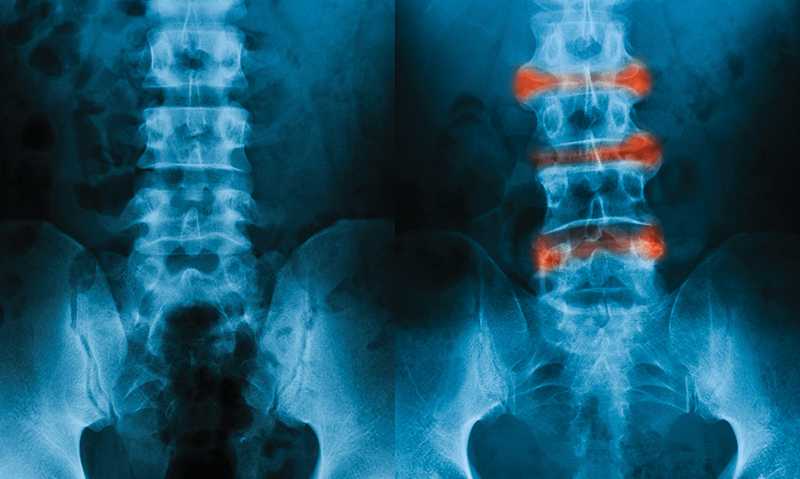
A rheumatologist will do some visual tests to check the appearance of the spine and pelvis. Some possible tests:
-
Radiography (X-ray)X-ray uses short pulses of high energy radiation to create images of solids in the body, such as bones. An X-ray of the lower back can show severe signs of ankylosing spondylitis, such as:
- damage to the joints at the base of the spine (sacroiliac joints);
- the formation of new bone between the vertebrae (bones) in the spine.
- Magnetic resonance imaging: A magnetic resonance imaging (MRI) scan creates an image of the inside of the body using a strong magnetic field and radio waves. An MRI can detect changes in the sacroiliac joints (at the base of the spine) that may not show up on a chest x-ray.
- Ultrasound scan: Ultrasound scans use sound waves to examine the inside of the body, just like a pregnant woman uses to look at a baby inside the uterus. Ultrasound scans can detect tissue inflammation (tendons and ligaments).
Treatment
There is no magic cure for ankylosing spondylitis, but there is therapy aimed at:
- relief of symptoms
- slowing down the process of spinal stiffness.
Ankylosing spondylitis is a chronic (long-term) condition, but most people who suffer from it are completely independent and lead relatively normal lives.
If your doctor thinks you have ankylosing spondylitis, they may prescribe medications to control your symptoms. You will likely be referred to a rheumatologist (a specialist in muscle and joint disorders).
The rheumatologist will advise you and your therapist to continue your treatment using:
- physical procedures, such as physical therapy (where physical methods such as exercise and manipulation are used to improve symptoms);
- medications to control pain and relieve symptoms.
These procedures are described in more detail below.
Physiotherapy

Physical activity and exercise are very important for effective treatment of ankylosing spondylitis. Keeping active can improve the posture and range of motion of the spine, and prevent the spine from becoming stiff and painful.
In addition to staying active, physical therapy is a key part of the management of ankylosing spondylitis. Your rheumatologist will be able to refer you to a physical therapist (health care professional trained in the use of physical therapies). They can advise on how best to exercise. They can also put together a suitable exercise program.
The type of physical therapy that may be recommended may include:
- group exercise program, where they train with other people;
- individual exercise program - you are given exercises that you do yourself;
- massage - muscles and other soft tissues are manipulated to relieve pain and improve movement;
- hydrotherapy - classes in the water (usually a warm shallow pool or a special hydrotherapy bath); water helps improve blood circulation (blood flow), relieve pain, and relax muscles;
- electrotherapy - Electric currents or impulses (small electric shocks) cause muscles to contract (tense), which can help relieve pain and speed up healing.
Some people choose to swim or play sports to stay flexible. This usually helps, although some daily stretching and exercise are important as well.
Medications
You will likely be prescribed medications along with physical therapy. The different types of medications that can be prescribed include:
- painkillers;
- tumor necrosis factor (TNF) blockers;
- bisphosphonates;
- disease-modifying antirheumatic drugs (DMARDs);
- corticosteroids.
Each of the types are described below.
Pain relievers

The first type of pain reliever commonly prescribed is non-steroidal anti-inflammatory drug (NSAIDs).
- Non-steroidal anti-inflammatory drugs.
Non-steroidal anti-inflammatory drugs (NSAIDs) not only help relieve pain, but also help relieve inflammation (swelling) in the joints. Therefore, they are usually an effective treatment for ankylosing spondylitis. Examples of NSAIDs include:
- ibuprofen;
- naproxen;
- diclofenac.
When prescribing NSAIDs, your doctor or rheumatologist will try to find the drug that works best for you and the lowest possible dose that will relieve your symptoms. The dose will be monitored and reviewed as needed.
It should be borne in mind that NSAIDs may not be suitable for you if you have:
- asthma - a condition in which the airways of the lungs (bronchi) become inflamed;
- hypertension (high blood pressure);
- kidney or heart problems;
- stomach problems such as stomach ulcer;
- are pregnant;
- are taking other medicines, such as aspirin or warfarin (medicines that prevent blood from clotting).
Read also:Rheumatism: causes, symptoms and treatment of rheumatism in adults and children
- Paracetamol.
If NSAIDs are not right for you, an alternative pain reliever such as paracetamol may be recommended.
Paracetamol rarely causes side effects and can be used in pregnant or lactating women. However, paracetamol may not be suitable for people with liver problems or those who are alcohol dependent (alcohol dependent).
- Codeine.
If needed, a stronger type of pain reliever called codeine may also be prescribed along with paracetamol. Codeine can cause side effects, including:
- nausea;
- vomiting;
- constipation (inability to empty the bowels);
- drowsiness that affects the ability to drive.
Tumor necrosis factor (TNF) blocker
If the symptoms of ankylosing spondylitis cannot be controlled with pain relievers or exercise and stretching, a tumor necrosis factor blocker may be recommended. TNF is a chemical produced by cells during tissue inflammation.
TNF blockers are given by injection and work by preventing the effects of tumor necrosis factor. It helps reduce joint inflammation caused by ankylosing spondylitis. Examples of tumor necrosis factor blockers include:
- adalimumab;
- etanercept.
Side effects of adalimumab and etanercept include:
- injection site reactions such as redness or swelling;
- infections that can be serious, such as pulmonary tuberculosis (lung infection) or sepsis (blood poisoning);
- nausea;
- abdominal pain;
- headache.
TNF inhibitors are a relatively new form of treatment for ankylosing spondylitis, and their long-term effects are unknown. However, research into the use of TNF blockers for treatment rheumatoid arthritis (a type of arthritis that constricts joints and causes fatigue and malaise) provides clearer information about their long-term safety.
If a rheumatologist recommends the use of TNF blockers, the decision as to whether they are right for you should be carefully discussed and monitored. The main reason for this is that TNF blockers affect the immune system (the body's natural defense system).
Bisphosphonates
Bisphosphonates are commonly used to treat osteoporosis (a condition of weak and brittle bones), which can sometimes develop as a complication of ankylosing spondylitis. Bisphosphonates may also be effective in treating ankylosing spondylitis, but the evidence is not entirely clear.
Bisphosphonates can be taken by mouth (orally) as a tablet or by injection.
Disease-modifying antirheumatic drugs
Disease-modifying antirheumatic drugs (DMARDs) are an alternative type of medication often used to treat other types of arthritis, such as rheumatoid arthritis. BMARPs may be prescribed for ankylosing spondylitis, although they are useful only if joints other than the spine are involved.
Two types of BMARP have been studied for the potential benefits of treating people with ankylosing spondylitis. Both can be helpful for joint inflammation other than the spine:
- sulfasalazine;
- methotrexate.
The drugs can cause a number of side effects, such as:
- nausea;
- vomit
- heartburn (when stomach acid seeps back into the esophagus);
- serious skin reactions.
Corticosteroids
Corticosteroid drugs (steroids) have powerful anti-inflammatory effects and can be taken in a variety of ways, such as:
- tablets;
- injection.
If a specific joint is inflamed, corticosteroids can be injected directly into the joint. Corticosteroids are sometimes used to treat other types of arthritis because they can reduce pain, stiffness, and swelling in the joint.
After injection into the joint, rest for 24 hours (one day). It is best to avoid more than 3 steroid injections in the same joint or area in one year. This is because corticosteroid injections can cause a number of side effects, such as:
- inflammation in response to injection;
- depigmentation (the skin around the injection may change color);
- a tendon (a cord of tissue that connects muscles to bones) near a joint can break (burst).
Corticosteroids can also help soothe painful swollen joints when taken as a pill. However, when pain and stiffness are severe, corticosteroids are best given by injections into the muscles (intramuscular injections).
Forecast
There is no specific cure for ankylosing spondylitis. However, the condition can be treated with:
- physiotherapy - where physical techniques such as massage and manipulation are used to improve the comfort and flexibility of the spine;
- painkillersmedications - helps relieve pain and control symptoms.
The progression of ankylosing spondylitis varies among people. It is assumed that 70-90% of people will remain independent and only minimally disabled by their condition.
After about 10 years, inflammation can make the neck and back stiff. This process is called ankylosis. In some people with severe, prolonged ankylosis, the chest may also become stiff and unbending.