
Temporal arteritis: what is it, symptoms (photo) and treatment
Temporal arteritis is an rheumatic diseases vessels. The victims suffer mainly from one-sided, severe headache in the temporal region. The disease is diagnosed with an ultrasound scan and analysis of a tissue sample. Since the disease can have serious consequences such as blindness, it must be treated quickly. Here on the page you can read all the important information about temporal arteritis.
ICD code of this disease: B08
Content
- What is temporal arteritis?
- Symptoms and Signs
- Headache with temporal arteritis
- Visual impairment in temporal arteritis
- Other symptoms of temporal arteritis
- Causes and risk factors
- Examinations and diagnostics
- Further research
- Taking a tissue sample for temporal arteritis
- Treatment
- Disease course and prognosis
What is temporal arteritis?
Temporal arteritis, also called Horton's disease, giant cell arteritis or cranial arteritis, is a rheumatic vascular disease. Large and medium-sized vessels are mainly affected. Most often, the disease occurs on the branches of the carotid artery. These vessels supply blood to the temporal region, the occiput, and the eyes. In about one in five patients, temporal arteritis affects the aorta. In less than one percent of cases, the disease affects the vessels, arteries of the brain or other arteries of internal organs.
Temporal arteritis is one of the autoimmune diseases. Because in the affected vessels certain cells of the immune system (granulocytes and lymphocytes) accumulate and form chronic inflammation. Particularly large cells called giant cells. The disease, commonly referred to today as giant cell arteritis, causes the cells in the vessel wall to proliferate and eventually narrow the affected vessel. As a result, especially with physical exertion, the blood supply is no longer sufficient. Depending on the organ affected, the corresponding symptoms occur.
Temporal arteritis is also called Horton's disease or Horton's temporal arteritis, according to its discoverer. This is one of the most common rheumatic vascular diseases. The disease mainly affects adults and the elderly aged 50-70 years. Giant cell arteritis affects women about three times more often than men.
Symptoms and Signs
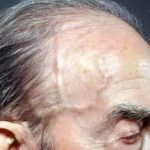

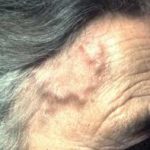

Almost all patients with temporal lobe arteritis have particularly severe headaches. However, most of them have common symptoms that affect the eyes, heart, circulation or nervous system long before the first headache.
Headache with temporal arteritis
About 70 percent of people with temporal arteritis have severe headaches. Pain is mostly boring and usually occurs on one side of the temple. The pain increases when the person chews, coughs, or turns his head. This is due to damage to the artery, which supplies oxygen and nutrients to the chewing muscles.
Read also:Osteoarthritis (arthrosis)
When chewing hard foods, the chewing muscle becomes more tense and needs more nutrients. If blood circulation cannot be restored when an artery is damaged, pain occurs in the temple area, scalp, or in the masticatory muscles. Some patients have to take breaks while eating.
Visual impairment in temporal arteritis
If temporal arteritis affects the vessels in the eye, then both the optic nerve and the ocular muscles may be limited. Like muscles, the optic nerve must be constantly supplied with blood. With a pathological change in the blood supplying arteries, visual impairment may occur. These include short-term vision loss, in which people suddenly lose sight in one eye and see nothing. If only part of the image is missing, this is called scotoma.
Under certain circumstances, visual impressions are perceived as flickering images. If too little blood is supplied to the eye muscles, the following may occur: double vision, pain when looking left-right or up-down. In the worst case, patients with temporal arteritis may remain blind.
Other symptoms of temporal arteritis
For some time before the typical headache occurs, patients often suffer from nonspecific symptoms of the disease.
The patient feels tired, body temperature rises. If giant cell arteritis only affects the main artery, fever may be the only symptom of the disease. Besides, lack of appetite and weight loss are concomitant symptoms of temporal arteritis. These signs can be similar to signs of tumor diseases and therefore doctors sometimes make the wrong diagnoses.
Less than two percent of the disease affects not only the arteries outside the head, but also the internal vessels. As a result, areas of the brain cannot be adequately supplied with oxygen and nutrients - this can lead to strokes with symptoms such as paralysis, speech impairment, or dizziness.
In principle, every nerve in the body can be affected in Horton's disease if the blood supply is restricted. As a result, the sensitivity of the skin or even individual muscle movements may deteriorate. Rarely, but the work of the heart, kidneys or lungs is impaired.
Read also:Scleroderma in adults
If the main artery is affected, the blood pressure between the two arms may differ. In addition, in some patients, the tactile pulse on the wrist disappears. Others suffer from pain in their arms, especially when they are under stress. If this is a section of the main artery in the chest, detachments (aneurysms) and vascular ruptures (dissections) are more common, which can be life-threatening.
In 30–70 percent of cases, temporal arteritis occurs as part of polymyalgia rheumatica. The victims then additionally suffer from pain in the shoulder, pelvis or neck muscles. This pain, unlike a typical headache, is usually symmetrical and does not develop as suddenly. In addition, morning stiffness may persist, improving throughout the day. Even depressive moods are not uncommon.
Causes and risk factors

Temporal arteritis is a rheumatic disease in which the immune system is disrupted. Certain immune cells called T cells trigger an autoimmune response. Why this happens is not well understood. Perhaps the disease occurs as a result infections caused by viruses (chickenpox, rubella) or bacteria (Mycoplasma pneumonia, chlamydia).
Since not all people with these infectious diseases develop temporal arteritis, it is likely that there is genetic predisposition. People with certain proteins in their white blood cells (HLA-DR4) are more prone to this condition. In addition, temporal lobe arteritis is more common in people with polymyalgia, another rheumatic pain syndrome.
Examinations and diagnostics
The specialists needed for suspected temporal arteritis are rheumatic diseases (rheumatologists) or nervous diseases (neurologists).
The American Working Group on Rheumatoid Diseases (ACR) has compiled a set of criteria that your doctor can use to diagnose Horton's disease.
First, the doctor examines the medical history (anamnesis), and then, if a disease is suspected, prescribes tests, imaging studies and a biopsy.
A blood test can show an increased level of inflammation. If a person meets at least three of the following five criteria, there is a greater than 90% chance of Horton's disease:
- age over 50;
- severe headaches;
- altered temporal arteries (painful, weaker pulse);
- increase erythrocyte sedimentation rate (with a blood test);
- tissue changes in the temporal artery.
Further research
In most cases, specific ultrasound procedure temporal arteries. The temporal artery can also be examined with magnetic resonance imaging (MRI). For this purpose, the patient is first injected into a vein with a certain contrast medium, and then on a movable couch is placed in the MRI chamber. This survey requires certain technical requirements that can often only be met in specialized centers.
Read also:Autoimmune diseases: a list of diseases
Blood supply restriction caused by temporary arteritis can be further explored with positron emission tomography (PAT). The examination procedure is similar to the MRI procedure. In particular, PET is performed when the aorta or other organ systems are affected, when patients are suffering from severe concomitant symptoms or when tissue examination (biopsy) does not provide an accurate diagnosis.
Taking a tissue sample for temporal arteritis
If signs of disease and visual tests indicate temporal arteritis, a tissue sample (biopsy) and examined in the laboratory under a microscope. Since ultrasound does not detect the disease in every patient, a tissue sample should be taken even if the ultrasound result is invisible. In some cases, a piece of the artery from the other temporal side is also removed.
Treatment
Once Horton's temporal arteritis has been diagnosed, the person should be treated immediately. cortisone drug. For the first four weeks, a dosage of one milligram is recommended. prednisolone per kilogram of body weight. If symptoms have disappeared due to therapy and the levels of inflammation in the blood have returned to normal, the dose should be continuously reduced. If symptoms recur, more prednisolone should be taken again. The attending physician will develop an exact treatment schedule with the patient. If blindness is unavoidable, prednisone therapy should be given in large doses through a vein for three to five days.
Because therapy with cortisone medications can cause many unwanted side effects, additional medications need to be taken. Calcium and vitamin D reduce the risk of developing osteoporosis (brittle bones). With possible vascular occlusions, you should take aminosalicylate (For example, aspirin). Proton pump inhibitors protect the stomach lining. In addition, blood sugar levels should be checked regularly and adjusted if necessary.
Disease course and prognosis
Without therapy, about 30 percent of those affected go blind. However, with early diagnosis and subsequent therapy, symptoms disappear forever in almost all patients. Rarely, the disease recurs or flows into chronic temporal arteritis Hortonbut.


