Reiter's syndrome (disease): causes, symptoms, treatment
Reiter's syndrome, or reactive arthritis, is a clinical disease characterized by autoimmune inflammation of the joints through a reaction to infection in the human body. The symptoms of inflammation can also affect the urethra and eyes, causing conjunctivitis.
The most common joints affected by the disease are the ankle and knee joints. The first signs of illness usually appear within 1-3 weeks.
Content
- What is Reiter's Syndrome (disease)?
- Causes of Reiter's syndrome (disease)
- Symptoms of Reiter's syndrome (disease)
- Complications of Reiter's syndrome
- Diagnostics of Reiter's syndrome (disease)
- Treatment of Reiter's syndrome (disease)
- Physiotherapy
- Nutrition and Supplements
- Prevention of Reiter's syndrome (disease)
- Prediction of Reiter's syndrome (disease)
What is Reiter's Syndrome (disease)?
Reiter's syndrome (disease) (Reiter's triad, reactive arthritis, post-infectious arthritis) - rheumatic a disease that is a triad of symptoms of unknown etiology, including arthritis, urethritis and conjunctivitis.
The disease occurs due to an earlier infection of the gastrointestinal tract or exposure to sexually transmitted diseases (STDs). The disease was first described by Hans Reuters, a German doctor.
Facts! Reiter's syndrome was first described in 1961 by the Berlin bacteriologist and hygienist Hans Reiter (1881-1969).
The overall prevalence of Reiter's syndrome is rare because its symptoms are often mistaken for the more common symptoms of arthritis.
Women and men in their third decade are more prone to Reiter's disease, as are people with acquired immunodeficiency syndrome (AIDS).
The gender distribution of the disease between men and women is 1: 1. Reiter's syndrome occurs between 20 and 40 years of age.
Causes of Reiter's syndrome (disease)

Reiter's syndrome is a secondary reaction to a primary infection in the gastrointestinal tract and genitourinary system. The primary infection is often gram-negative, facultative, or intracellular bacteria.
Due to its common origin in the intestines and genitals, Reiter's syndrome is, by nature, sometimes classified as a sexually transmitted or infectious disease.
These are the most common etiological agents that cause primary disease in Reiter's syndrome:
- Shigella flexneri (Shigellosis, or bacterial dysentery);
- Gonococcus (Neisseria gonorrhoeae), which causes gonorrhea;
- Ureaplasma (Ureaplasmosis), urinary tract infections;
- Chlamydia trachomatis, a type of Chlamydia that is one of the main causes of sexually transmitted diseases;
- Salmonella, a genus of non-spore-bearing, rod-shaped bacteria, is the primary intestinal infection;
- Mycobacterium tuberculosis;
- the parasite Cyclospora cayetanensis, causing primary infection of the gastrointestinal tract;
- Yersinia enterocolitica (Yersinia enterocolitica);
- Clostridium dificile, which causes pseudomembranous enterocolitis;
- β-hemolytic group A streptococci, which have the highest immune response.
Read also:Wegener's granulomatosis (granulomatosis with polyangiitis)
Urogenital chlamydial infection is the most common of all diseases sexually transmitted diseases, although the number of cases of post-infectious arthritis caused by due to chlamydia, below the estimated incidence.
Also, in about 10% of people, the disease occurs without any infection. This is due to the fact that people have a genetic predisposition to this disease. Patients are carriers of the gene for histocompatibility HLA-B27 (the main immunogenetic marker of a high susceptibility to the development of seronegative spondyloarthropathies).
Symptoms of Reiter's syndrome (disease)

In general, the signs and symptoms of Reiter's syndrome begin 1–3 weeks after the initial infection with the infection. The following specific symptoms are usually observed:
- arthritis (joint aches) - most often on the ankles, knees, legs, heels, and lower back;
- conjunctivitis - Reiter's disease is usually manifested by inflammation of the conjunctiva;
- complaints from the urinary system - patients have an increased frequency of urination with or without pain (also, in some cases, the prostate and cervix may hurt);
- deformities - in some cases, with Reiter's triad, the fingers and toes can swell and deform.
- lumbago (acute lower back pain; lumbago).
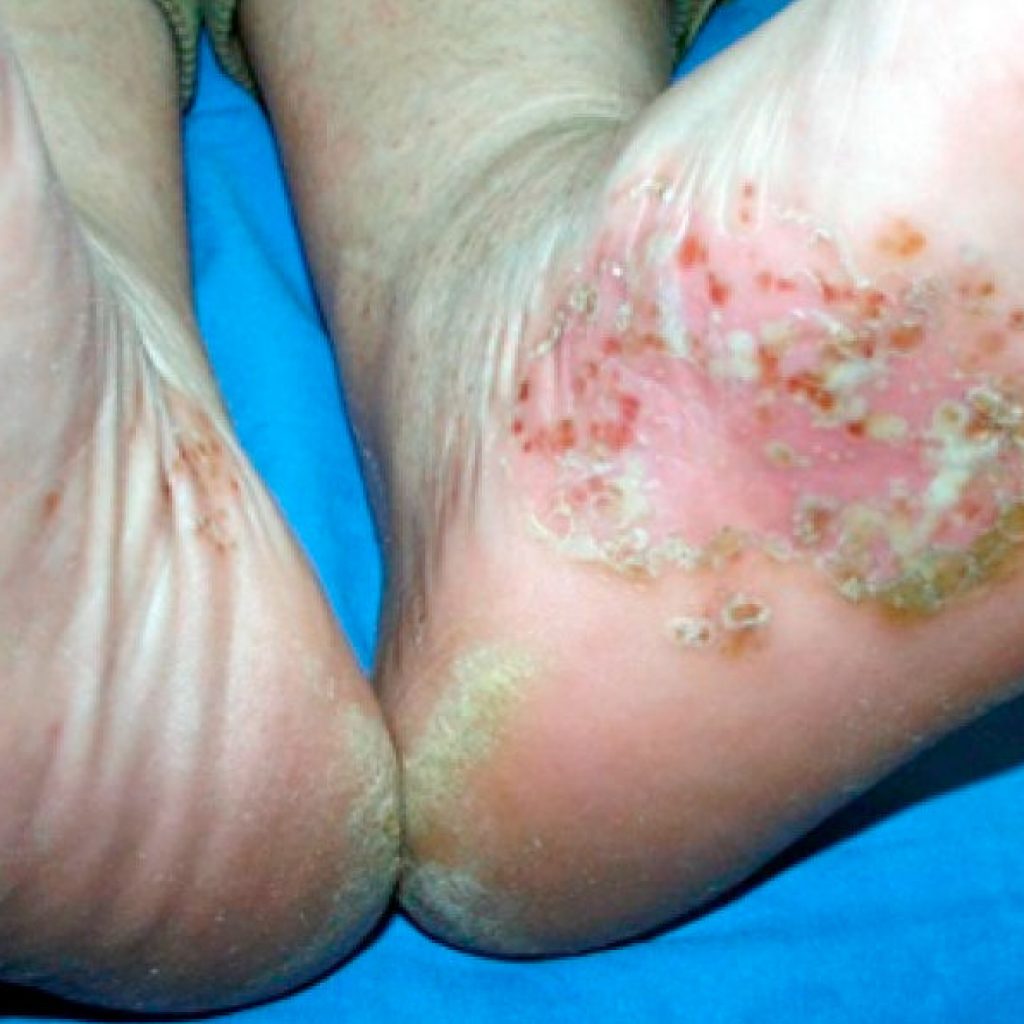
Also, in addition to the classic symptoms of Reiter's disease, if the cause is chlamydia, characteristic signs of skin lesions, such as keratoderma and circinar balanitis in men (see. photo below).
Complications of Reiter's syndrome
With advanced Reiter's syndrome, general dysfunction develops, blurred vision, erectile disfunction, infertility. In advanced stages of Reiter's disease, the kidneys, aorta and heart can be affected.
In most cases of untreated Reiter's syndrome, it becomes chronic. The chronic form of the disease can be very serious as the symptoms may no longer respond to anti-inflammatory drugs.
Diagnostics of Reiter's syndrome (disease)
Before making a diagnosis, doctors study the patient's medical history, conduct a complete physical examination, identifying of the patient swelling of the joints of the legs, arms and back, a physical examination that reveals conjunctivitis or typical skin lesions and analysis blood.
Read also:What is CMT physiotherapy (amplipulse therapy), which diseases are treated for
A blood test is done to look for signs of previous and current infection, signs of inflammation, the presence of antibodies, and genetic markers that indicate Reiter's syndrome.
List of possible studies:
- analysis of C-reactive protein (CRP, CRP);
- determination of the HLA-B27 antigen;
- X-ray of joints, back and pelvis;
- ultrasound examination (ultrasound) of the joints;
- erythrocyte sedimentation rate (ESR) analysis;
- general urine analysis;
- puncture of the joint cavity (arthrocentesis).
Based on complaints, medical history and examination results, the attending physician can quite clearly specify the causes of Reiter's syndrome. However, an important diagnostic step is also the exclusion of other joint diseases (for example, rheumatoid arthritis or Lyme disease) with the help of appropriate research.
Treatment of Reiter's syndrome (disease)
There is no specific treatment for the disease. Reactive arthritis can last from several weeks to several months. The main goal of Reiter's syndrome treatment is to relieve symptoms and eliminate the underlying infection.
Patients, after laboratory tests and identification of the pathogen, are prescribed specific antibiotics against bacterial infection.
Conjunctivitis and skin lesions associated with the syndrome are treated with ointment or eye drops.
To relieve the symptoms of mild pain in Reiter's syndrome, prescribe non-steroidal anti-inflammatory drugs (NSAIDs). For example: Nimesulide (or Nimegesic), Arcoxia, Dicloberl, Celecoxib.
Your doctor will inject corticosteroids directly into the affected joint to immediately relieve inflammation and pain. Corticosteroids are very effective and are considered one of the most powerful anti-inflammatory drugs, but they are only used for severe cases.
Also, some anti-arthritic drugs (alternative to NSAIDs), such as Azulfidine and Methotrexate, can help control pain in the chronic form of Reiter's syndrome. Both drugs are referred to as the so-called main methods of treatment.
Physiotherapy
Physiotherapy and manual therapy are designed to maintain joint mobility and prevent muscle wasting or ligament damage. In most cases, cryotherapy (cold treatment) is prescribed. Cryotherapy has analgesic and anti-inflammatory effects.
Read also:Autoimmune diseases: a list of diseases
Nutrition and Supplements
Diet changes are needed to treat post-infectious arthritis. You should eat more rich foods vitamin D and calcium, as well as Omega-3, these vitamins have a positive effect on the skeletal system, bone connective tissue and muscles.
It is beneficial to consume more nuts, fiber and vegetables, they contain the most vitamins and minerals. On the contrary, you should avoid all foods rich in saturated fat, fast food, pre-cooked food in packages.
All of these recommendations are essential for the treatment of Reiter's disease.
Prevention of Reiter's syndrome (disease)
Preventive measures against Reiter's syndrome include studying the family tree to identify possible hereditary predispositions to this disease. People who have loved ones with reactive arthritis have a predisposition to it. They must protect themselves from gastrointestinal infections and sexually transmitted diseases that cause Reiter's syndrome.
Adequate food sanitation must be ensured to prevent shigellosis, salmonellosis and campylobacter a bowel infection that can lead to reactive arthritis. It is always necessary to observe intimate hygiene and precautions during intercourse, use condoms to prevent the occurrence of sexually transmitted diseases (chlamydia, syphilis, trichomoniasis, gonorrhea etc.).
Prediction of Reiter's syndrome (disease)
With timely diagnosis and correctly selected treatment, the prognosis is favorable. Complete cure of the disease is achieved within 12 months (70-80% of people are cured within a year)
Serious cases that have resulted in death of patients are very rare and usually associated with the consequences of inappropriate treatment.
Recurrence of the disease occurs in 15-50% of cases, especially in people who have been found to have histocompatibility antigens HLA-B27.
The most common complication is the relapse of the disease in almost half of patients during the period of immunodeficiency or chronic stress.