How to distinguish scabies from allergies? Photo, comparison table
Content
- Symptoms of scabies
- Allergy symptoms
- How to distinguish scabies from allergies?
- General instruction
- Diagnostics and treatment of diseases
- Is it contagious?
Scabies is a disease caused by a parasite such as the scabies mite. Allergy is a specific immune response of the body to a certain irritant. The symptoms of these diseases can have both similar features and obvious differences. How to distinguish allergies from scabies - we will consider in more detail in the article.

Symptoms of scabies
Scabies, as a type of parasitic pathology, is caused by a scabies mite, the length of which varies within 0.3 mm. The life cycle of the parasite is about 4 weeks. The female lays offspring in the subcutaneous passages, which have to go through separate stages of development within 2 weeks and turn into sexually mature individuals. Males die almost immediately after fertilization of the female. In the external environment, scabies mites cannot exist for more than 3 days. Temperatures of 60 degrees or more are fatal for these parasites.
Scabies can only be caught by contact-household means, that is, with close skin-to-skin contact, through bedding or wardrobe items.
Manifestation of scabies:
- severe itching of the skin, especially at night and in the morning;
- localization of the rash on the abdomen and back, between the fingers, in the intimate area;

- a group feature of the disease, since scabies is caused by parasites, it is easily transmitted from one person to another within the family.
Allergy symptoms
Allergies do not belong to the group of contagious diseases. This is the response of the immune system to contact with a specific irritant - an allergen. Most people with allergic pathologies know which specific allergen or group of allergens causes them to react. If an allergy occurs for the first time, an allergist consultation is necessary.
Manifestation of allergies:
- continuous sneezing;
- itching in the nasal cavity;
- rashes on the skin;
- cough;
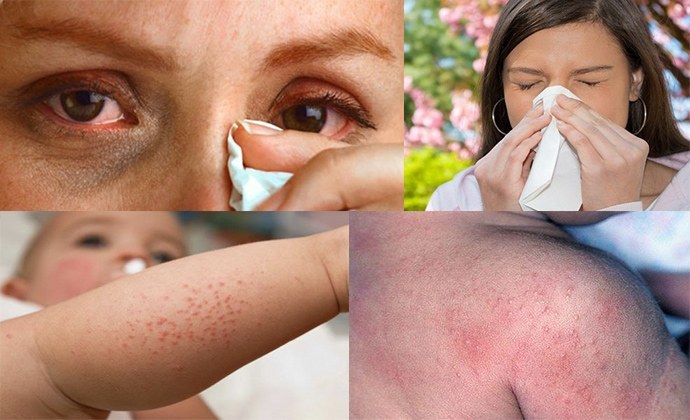
- swelling;
- individual blisters;
- swelling and redness of the eyelids.
How to distinguish scabies from allergies?
From the above, it is obvious that the individual symptoms of these diseases are indeed very similar to each other. However, these are completely different diseases, the diagnosis and treatment of which is fundamentally different. Looking closely at the emerging signs of the disease, you can distinguish scabies from allergies. The main clinical manifestations of these pathologies are shown in the following comparative table.
| Symptoms | Scabies | Allergy |
|---|---|---|
| Rash on the skin | The skin becomes covered with red spots, depending on the itching, their size can vary up or down. When a secondary infection is attached due to scratching, the rash can fester. The rash can affect the entire body except the face, depending on the spread of the tick and the lack of adequate treatment. | The rash appears as redness, sometimes accompanied by itching. In most cases, the rash appears locally, at the site of contact with the allergen. |
| Tick-borne passages under the skin | With an advanced form of the disease, tick-borne passages are visible to the naked eye. | There is no such symptom. |
| The nature of the itching | The itching usually gets worse at night, making it difficult for the person to sleep. | If the allergy is associated with itching, then this symptom will manifest itself equally at any time of the day. |
| Runny nose, lacrimation | These symptoms are not typical for scabies. | Lachrymation and severe rhinorrhea are often noted with allergies. |
| Weakness, general ailments | With scabies, such phenomena do not occur. | Accompany allergies in almost all cases. |
General instruction
How to distinguish scabies from allergies can be seen from the table, then we will try to summarize.
- To determine if a patient is allergic or scabies, taking an antihistamine will help. With allergies, the symptoms of the disease are smoothed out, itching and rash become less pronounced or disappear in full. With scabies, an allergy drug will be ineffective.

- The skin and with an allergic reaction and scabies can become covered with characteristic rashes. Itching is usually present in both situations. But the itching caused by the itch mite bothers the patient precisely at night, since these parasites are active in the dark. Itching of allergic origin worries around the clock.
- Allergy is always accompanied by weakness, a state of weakness, and in this it will differ from scabies. When the skin is affected by parasites, the general well-being of a person, as a rule, does not suffer.
- Clinical signs of allergy - runny nose and watery eyes cannot be companions of scabies. And this is also an important difference between these diseases. A dermatologist can accurately diagnose and determine the nature of the disease. If a person finds it difficult to determine the exact diagnosis, there is no need to speculate and hesitate to contact a medical institution.
Diagnostics and treatment of diseases
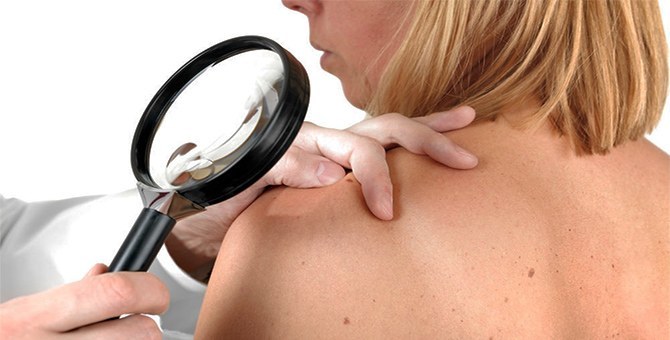
In order to determine which pathology has caused itching and rashes - scabies or allergies, it is necessary to visit a dermatologist. After an appropriate examination, if necessary, the doctor will make a certain scraping to identify the scabies mite, and, if found, will write out the correct therapeutic course.
If a dermatologist has denied the presence of scabies, then in the future it is necessary to consult with an allergist. Allergy diagnosis takes longer, as the examination scheme will be more complex. After examination, the patient is assigned the necessary laboratory tests, general clinical examination and specific testing for allergens. After the allergen is identified, the specialist will prescribe the necessary treatment.
Is it contagious?
Allergies have never been contagious. This is an individual reaction of the body that cannot affect anyone else. If an allergy has arisen to the same product or substance in two people in contact with each other, it is more likely a coincidence than an exception to the rule.
The same cannot be said about scabies, as scabies mites are highly contagious parasites that pose a danger to others. If one family member caught scabies, others will inevitably become infected with it in the very near future. Children are most susceptible to infection, since it is with them that adults tend to contact most often. Partners also run the risk of picking up an itch mite, entering into an intimate relationship with each other, since the disease is easily transmitted when the skin of a sick person and a healthy person comes into contact.
Due to the increased infectiousness, the whole family must undergo treatment for scabies. Moreover, this must be done at the same time. Allergy treatment proceeds individually, depending on the patient's well-being, since this condition is not at all dangerous for the immediate environment of the allergic person.
In any case, it is not recommended to diagnose yourself and select treatment on your own, since it is not always easy to distinguish allergies from scabies, and improperly selected drugs can aggravate problem. Contacting a specialist and carrying out a competently prescribed treatment in a short time will help get rid of clinical signs of diseases, regardless of what was identified - allergies or scabies.