Parotite
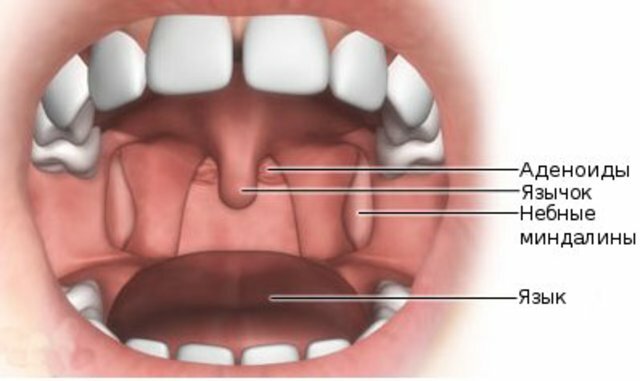
 Parotitis is a common infectious disease that develops from the penetration of the virus from the family of Paramyxovirus into the human body. The virus is prone to defeat glandular tissue, so the first target is the parotid gland. With additional amount of mumps virus, the submaxillary gland, testes and ovaries, and sometimes pancreatic glands, are affected. In special cases, the parotitis reaches the nervous system, affecting the nerve endings and the meninges. All the phenomena of mumps, listed above, take place against the background of intoxication processes and high temperature.
Parotitis lives in places where children are clustered, with a maximum occurrence at the age of three and six. Sensitivity to mumps from the discharge of high( from 10 people about 8 fall ill).
Causes of mumps
Parotitis is caused by a virus containing RNA in the nucleus of the cell, and belongs to the class of Paramyxoviruses. The composition of antigens include neuraminidase and hemagglutinin. The first of the antigens is responsible for joining the tropic organs and implanting the cells inside, and the second, entering the blood, causes clumping of erythrocytes and their hemolysis. The pattern of the antigenic structure of the virus is constant, therefore, the immunity, produced when meeting with the mumps virus, is lifelong. The virus has sufficient resistance and, at relatively low temperatures, can last for many months. The use of disinfectants, which acts on the mumps virus, is disastrous.
Parotitis is the infection that persists between people( usually airborne, but occasionally marked the way of transmission through objects).A person with a mumps condition is considered to be contagious until the ninth day of the clinic. But the virus itself can still be allocated and two days before the deployment of the disease clinic( incubation).This is extremely important epidemiologically. The virus of mumps acts primarily on the oral mucosa, in which it is introduced and multiplied. The first introduction of the mumps virus into the blood may not manifest itself clinically, but it will definitely show up in the laboratory. The second release of mumps virus into the blood leads to a new rise in the disease and leads to complications. The virus relatively briefly persists in the body - about 7 days. It is not possible to find it in the body after a while. You can only determine IgM in high titres, which indicates the disease.
Symptoms and signs of mumps
Mumps are characterized by incubation of 12-26 days. Manifestations depend on the form of mumps. If this is a typical manifestation of the disease, the pathology can manifest itself with the defeat of the glands, with the defeat of the nervous system, in a mixed form( glandular organs and nervous tissue).In this case, the mumps can proceed either in mild form, or in mild or severe. There is also an atypical manifestation of the disease, which plays a dominant role in the spread of the infection( since it practically does not manifest itself clinically).These include erased( with implicit clinical signs) and subclinical( without a clinic, but with the presence of an agent in the blood) form.
Parotid involvement occurs in most cases( as the name of the infection indicates).Parotitis begins with a rise in temperature to high figures and a deterioration in well-being. Subsequently, the temperature rises in the case of damage to new organs and is characterized by undulation. The parotid gland is enlarged on the 2nd day( first one gland, and several hours later).They are enlarged, painful, soft to the touch. Dry mouth is felt. The process lasts mostly about 7 days, but it may take longer. Following the defeat of the parotid glands, the submaxillary and sublingual glands can be affected. A separate lesion of these glands is extremely rare.
The second most affected infection is mumps. This is already assessed as a complication of the disease. This occurs usually 2 weeks after the disease of the salivary glands( cases of isolated lesions of the gonads are more likely associated with an inconspicuous course of infection in the salivary glands).The testicles are usually affected in boys( up to a third of all cases of the disease), less often the ovaries in girls. In exceptional cases, the virus enters the prostate and mammary gland. The defeat of the testes( orchitis) has very dangerous consequences in the form of a violation of spermatogenesis( up to half of all affected) or infertility( in a third of cases).Therefore, it remains important to prescribe corticosteroids at the beginning of such a complication. Parotitis begins with a second rise in temperature and deterioration. There is swelling and swelling of the testicles and scrotum, most often on the one hand. The process lasts about a week, after which the symptoms begin to regress.
The third body involved in the infectious process is the nervous system. Data indicate a different frequency of this complication( from 10 to 80%).Involved can be both the brain( meningitis, meningoencephalitis), and the peripheral nervous system( neuritis, polyradiculoneuritis).Meningitis, which is serous, is the most common of the manifestations. It appears at the moment of the process's abating( the second week).Maningitis is manifested by the following rise in temperature to 39-40 ° C, a headache, multiple, not alleviating the state of vomiting. Accompanied by either lethargy or the opposite is excitement. The stiffness of the neck muscles( impossibility to reach the sternum with the chin), the Kernig symptom( difficulty in knee extension), the symptom of Brudzinsky( with the inclination of the head, the joints flex in the knee) are characteristic. The course of meningitis can be different. With a mild form of mumps, the temperature may rise slightly, meningeal symptoms are not expressed. There is a single vomiting, an insignificant temperature, the general condition is satisfactory. Determines the diagnosis of meningitis by spinal puncture. Detect clear liquor, flowing under pressure, lymphocytosis, a slight increase in protein, normal levels of chlorides and sugar.
Sometimes the brain damage is attached. Vomiting and headache intensify, there are convulsions, confusion, pathological reflexes. All the symptoms of meningitis and encephalitis begin to pass a few days from the beginning, and a week later completely subsided. But this does not apply to cerebrospinal fluid, changes in which do not last until a month. It is worth mentioning that the symptoms of nervous disorders very often do not completely go away. Can remain: fatigue, memory disorders, periodic headaches. As for neuritis and polyradiculoneuritis, these symptoms are extremely rare. There can be a lesion of the facial nerve with rapidly increasing parotid gland. This will lead to violations in the muscles of the face, as well as soreness in the nerves. Rarity is also a loss of hearing in the defeat of the cochlear nerve, paralysis of the lower extremities.
The incidence of parotitic pancreatitis varies from 5 to 80%.The fact is that the presence of amylase in the blood is taken for pancreatitis. But this is not entirely justified. Only the clinic will testify in favor of mumps pancreatitis. It appears in the second week of the disease with pains, different in severity. Pain surrounding, irradiate in the back and right hypochondrium. In the blood there is an increase in the enzymes of the gland. In the analysis of stool - the presence of fatty acids and starch. Symptoms of parotitic pancreatitis last no more than a week, and laboratory changes take place a month later.
Parotitis in adults
Parotitis is a disease of childhood, but occasionally occurs in adults. Like many children's infections that affect adults, it runs quite hard. The danger is not so much the mumps itself, as the severity of the process, so there is a great possibility of complications.
Parotitis develops rapidly and acutely. The temperature can reach 40 ° C, sharply there is soreness near the ear lobe. It is difficult to swallow food, salivation increases. Particular danger is parotitis in the case of genital mutilation. In men, atrophy of testicles may occur, in women, menstrual cycle disorders. Studies show that mumps is the cause of a third of infertility cases. Often parotitis without a clinic takes place in childhood unnoticed, but leads to infertility. In the rest, parotitis in adults is similar to that of children.
Diagnosis of mumps
In the case of a typical course of parotitis with parotid involvement, the diagnosis is not difficult. It is enough to collect a complete epidemiological history, information about contacts and to make an inspection. Upon examination, an enlarged parotid gland of a soft testic consistency will be palpated, tense and painful.
The blood test does not matter. There may be leukopenia.
The basis of diagnosis is the isolation of the virus( virological methods) and the detection of antibodies to the virus( serological methods).
You can isolate the virus from those body fluids where it persists. This is primarily saliva, then blood and cerebrospinal fluid. The collection of material should be carried out until the fifth day. This material is usually infected with chicken embryos. Human embryos and cell cultures are also used. Then begins a long way of waiting for the reproduction of the virus in these cultures. The method is difficult and not economical. Its implementation requires a good laboratory, time. The mumps virus is isolated by the immunofluorescence reaction, which makes it possible to detect the virus in cultures after 2 days. For this method, the material taken is applied to the glass, stained with dyes, and labeled with sera or monoclonal antibodies. Then, the presence of the mumps virus in the material, its morphology, is determined. Lack of subjectivity of the information provided, as the nature of coverage is difficult to say about the virus. The method refers to express methods.
Serological methods include RCC, haemagglutination inhibition reaction, pH, ELISA.The growth of antibodies in sera taken at intervals of 2-3 weeks is found. In favor of the presence of the virus in the material, the growth of the titer is 4 or more times. However, these methods are also quite complex in practical activities, because along with virological methods they require a lot of time for the result. An exception is the enzyme immunoassay, which at this stage is the first in view of its informativeness and timing of the formulation. The appropriate antibodies labeled with the enzyme are used, to which the material is added. In the case of a virus, its antigens will bind to these antibodies. The substrate will be cleaved by the active enzyme and stain the reaction products. Consequently, it will be possible to detect not only the presence of an agent in the material, but also its quantity. This is the difference between this method and the other classical methods of serological immunology. Additionally, the detection of different classes of antibodies( IgG, IgA, IgM), which is of great importance in determining the period of the disease. These antibodies help to detect and atypical forms of the disease, which are practically not manifested clinically, but which give immunological reactions. In the case of mumps it is extremely important for the subsequent prevention of infertility in men.
There are also allergological methods. To do this, intradermally enter the mumps diagnosis. But this method is now practically not used.
Differentiation of parotitis is necessary with inflammation of the non-infectious gland, for example, in diseases of the oral cavity( caries).In this case, the inflammation will always be one-sided, with puffiness and painlessness. Rare are purulent mumps that are characterized by all the classic signs of inflammation: soreness, redness, swelling, change in function. Such a disease as an infectious mononucleosis can also masquerade as parotitis, since swelling of the face can occur with enlarged lymph nodes. A distinctive feature of mononucleosis is the defeat of the entire lymphoid tissue of the body and specific bodies in the analysis of blood.
The defeat of the nervous system must be differentiated from its defeat in other viral infections. Only laboratory immunological tests can do this.
Treatment of mumps
All patients with mumps symptoms are isolated for a period of 10 days. Specifically, parotitis is not treated, mainly symptomatic therapy. In the case of uncomplicated forms, treatment is carried out at home. The regime of the first week of the disease should be bed rest to prevent the development of complications( orchitis in particular).Then the mode can be expanded. Compliance with the diet is also important, especially in the early days. Eat should be at least 4-5 times a day, breaks should be small. The restriction applies to carbohydrates and fats. In moderation, drinking coffee, strong tea is welcome. Excludes all spicy, fried, carbonated drinks, smoking, alcohol. It is necessary to exclude all allergenic products. Diet should be with enough vegetables and fruits, different porridges.
Since the causative agent of the disease are viruses, it is not superfluous to prescribe:
- antiviral drugs: Arpetol for 100 and 200 mg at a dosage of 50 mg / day for the youngest( 3-6 years) to 200 mg / day for adults. Isoprinosine( Groprinosin, Immunovir) for 500 mg in a dosage of 50 mg per kg of body weight in 3 divided doses. Treatment with antiviral drugs lasts 7-14 days.
- interferon preparations: Leukocyte human interferon is dissolved in 2 ml of water and instilled in the nasal passages of 2-4 cap. Several times a day. Grippferon bottles of 50 and 100 ml in the form of drops in the nasal passages. Viferon and Genferon in the form of rectal suppositories of 2 candles per day with an interval of 12 hours.
- inducers of interferon( drugs that stimulate the production of endogenous interferon): Cycloferon 150 mg in tablets. Anaferon in tablets of 300 mg. Amiksin in tablets of 60 and 125 mg.and others.
- plant immunostimulants: preparations based on echinacea, ginseng, magnolia vine, St. John's wort, dog rose, thyme, lemon balm. For example, the drug Immunal( Echinacea) drops of 100 ml.
- bacterial immunostimulant: Ribomunil in tablets of 250 and 750 mg. Bronchomunal in capsules of 3.5 mg and 7.0 mg. Imudon in tablets of 50 mg. These drugs contain separate components of various bacteria as a stimulant of the immune response.
At a temperature of 38 ° C or higher, antipyretic drugs are prescribed, most often nonspecific anti-inflammatory drugs: Paracetamol 10-15 mg / kg per day in the form of tablets of 200 or 500 mg or syrup. Ibuprofen 5-10 mg / kg of weight per day in the form of tablets of 200 mg or suspension. The use of Aspirin is contraindicated, especially in children( due to the danger of Raynaud's syndrome).In case of high temperature and no effect from the use of antipyretic drugs, Analgin and Papaverin are administered intramuscularly at the rate of 0.1 ml per year of life for children.
As for the local treatment of enlarged and swollen parotid glands, warm compresses are prescribed. In the case of large edema, a solution of atropine is used in 6 drops. In case of bacterial infection, antibiotics are injected intramuscularly and into the gland duct. Important is the treatment of the oral cavity( rinsing with antiseptic solutions after eating).
All complicated forms require in-patient treatment due to dangerous long-term effects on the body. With the defeat of the genitals, it is necessary to have a bed rest for the time of the greatest activity of the process, a dairy-vegetable diet. For the prevention of infertility, prednisolone or other similar glucocorticosteroids are prescribed. A dose of 2-3 mg / kg of weight per day for seven days with a gradual decrease in dose from the fifth day. Surveillance is conducted by the surgeon and in case of too much swelling it performs the operation of dissecting the testicle.
When joining the symptoms of brain damage, patients are hospitalized with a mandatory round-the-clock surveillance. Strict bed rest. The main thing is to remove the cerebral edema. To do this, detoxification and dehydration with Furosemide preparations with potassium preparations is carried out. It is important to perform a spinal puncture to lower the pressure by separating a certain amount of CSF.Perhaps the appointment of a large group of drugs that stimulate the brain( Piracetam), as well as drugs that improve cerebral blood flow( Actovegin).
Development of parotitic pancreatitis requires strict regimen and diet. The first 2 days, the nutrients are injected only parenterally, then switch to light meals. The diet should be observed for about a year. The cold is applied to the pancreas, antispasmodics are used: 0,04-0,08 g of Papaverine hydrochloride or Drotaverine 3 times a day for adults( or 2% solution of these drugs intramuscularly for 2 ml).In severe cases, non-narcotic analgesics: ketorolac intramuscularly or intravenously. Inhibitors of proteolytic enzymes are used to exclude the possibility of self-digestion of the pancreas. The inhibitor of proteolysis Kontrikal or Gordoks is intravenously dripped intravenously in a solution of glucose. To improve the digestion of food, use enzyme preparations Mezim, Pancreatin, Creon capsules for 10-25 thousand units for 1-2 capsules for one meal.
In some extreme cases, X-ray therapy of mumps is performed. This concerns the occurrence of mumps in severe patients after serious injuries, blood loss, complicated operations. In this case, x-ray therapy of mumps is combined with other methods of treatment.
Mumps vaccination
It is possible to protect yourself from infection with mumps by active immunization, the value of which can not be overestimated. There are several types of vaccines, but they all contain "weakened" viruses and cause the development of persistent long-term immunity. The bottom line is that these vaccines for mumps can not cause an active process( that is, the disease itself), but can provide active immunity.
Currently, the introduction of vaccination against mumps in the form of a mono vaccine is not entirely convenient. The most common is the introduction of vaccination against three infections - parotitis, measles, rubella. But, unfortunately, three-component combination vaccines are not produced in the domestic market. There are only double vaccines, to which separately it is necessary to enter the third. They use domestic live mumps vaccine( HPV), which is grown on quail culture. It also contains a certain amount of neomycin or kanamycin, as well as a small amount of whey protein( taken into account if the child has an allergy to some of these components).Neither by effectiveness nor by adverse reactions, this vaccine does not differ from foreign analogues.
The most common are three-component foreign vaccines( Priori, MMR-2), since it is convenient to use. In our country, the vaccine is administered at 1 year and 6 years. The vaccine can be started from mumps at 6 months. Before this age, the baby's body is protected by maternal immunity, transmitted in utero and with milk. Additional immunization at 6 years provides a reliable immunity, since after the first vaccination, the immunity may not develop enough to combat the mumps virus level. Further vaccination is carried out in adolescence, which has additional significance. This is a protection for boys who enter during puberty and the consequences of mumps at this period are the heaviest. Plus, it's protection for girls who start having children. The vaccine is then administered after 20 years.
The mumps vaccine is injected under the skin or into the muscle. In young children, it is more appropriate to do it in the outer surface of the thigh. At adults in the shoulder. In the gluteus muscle, the injection is not as effective, since the drug can linger in fatty tissue and the immune system may not react fully. To completely get rid of mumps, it is necessary to vaccinate about 80% of children. Otherwise, the infection will erupt and infect older people, whose disease is always more severe. Preparation of mumps is necessary for vaccination. Obligatory examination of the doctor to exclude the symptoms of seasonal infections, allergies and other diseases. It is necessary to clarify what the reaction was to other vaccinations and the lack of allergy to all components of the vaccine.
The body can react to the inoculation differently. Symptoms distinguish local and general. It is also necessary to distinguish the response to vaccination( side effects) from the complications of vaccination. All reactions are a consequence of the work of the vaccine and are not considered pathological. They develop only after 5 days. Local reactions act as pain and densification. Pass these complications themselves in a few days. Reactions of a general type are: high fever, an increase in the parotid and submandibular glands, an allergic rash on the body, minor joint pain, a runny nose.
The temperature after mumps vaccination may increase slightly, or reach high figures. All this is a natural process, as with the eruption of teeth in young children. It must be reduced by antipyretic drugs. The rash and pain in the joints are usually themselves and do not require treatment. The exception is parotitis in adults who have reactive arthritis that require treatment.
Complications after mumps are not a frequent occurrence. These include anaphylactic shock, meningitis and encephalitis, glomerulonephritis and myocarditis, toxic shock. All these reactions speak of a strictly individual reaction and intolerance to the vaccine, rather than a bad vaccine. In any case, the severity of complications after the transferred mumps is several times higher than the complications after the vaccine.
Prevention of mumps
Prevention of mumps is divided into active and passive. The introduction of a vaccine is an active preventive measure. Passive prevention of mumps comes down to the introduction of immunoglobulin( ready antibodies to mumps infection).Conduct it to a certain contingent of people. They are not vaccinated people who have been in contact with a sick person. At the same time, isolation of the contact person is obligatory for a period of 21 days. The introduction of immunoglobulin does not form immunity, but only protects the contact person from the development of severe disease. Therefore, such people need to be vaccinated in the future. The time of vaccination is prescribed by the doctor, taking into account the time of passive prevention. It is necessary to make two injections with an interval of 2 months to gain sufficient level of immunity. Passive prevention is also carried out by pregnant women who have been in contact with sick mumps, since there is no dangerous effect on the fetus. This is done in the absence of antibodies to infection in the blood of a pregnant woman. It should be said that it is optimal to determine the presence of antibodies before pregnancy. In the absence of antibodies, vaccination is carried out. This ensures the passive immunity of the child's first months of life. In the case of the introduction of immunoglobulin during pregnancy, a newborn child will not receive such immunization.
Since the control of the spread of mumps in the population is now possible, it is simply necessary to carry out prophylaxis. The disease exists only in the human community, so vaccinating against it is the only possible way to protect your children from mumps. Today, every person should understand the need for such measures to combat mumps and be responsible for refusing to vaccinate. And the doctor's duties should include competent information about all vaccination issues.