Diarrhea in babies during breastfeeding or bottle feeding: how to determine and what to do
Diarrhea, or diarrhea, is a rather unpleasant phenomenon, characterized by frequent and thinning of the stool. Diarrhea can be especially dangerous for newborn babies. Diarrhea is difficult to diagnose in infants, since the stool has not yet been formed. Parents may not immediately realize that an infant's stool is abnormal. The color, texture, odor of stool will indicate a health condition.
Content
- 1 Signs of diarrhea in a newborn
-
2 Common causes of diarrhea in children
- 2.1 Infectious diseases
- 2.2 Improper nutrition
- 2.3 Teething
- 2.4 Drug reactions
- 3 Diagnosis of diseases
-
4 Treating diarrhea in infants
- 4.1 Food
- 5 Possible complications
- 6 Prophylaxis
Signs of diarrhea in a newborn
Normal stools in a newborn baby are of uniform consistency. There are no impurities in the feces, the color is from yellow to light brown. Has a sour milk smell. Breastfed babies empty their bowels up to 8 times after each feeding. In a 2 month old baby, stool occurs within 5 times. In a three-month-old child - twice a day or once a day, it becomes more uniform, dark. Stool frequency in a five-month-old baby is 1 time per day. The stool of formula-fed babies sometimes takes on a green tint. This is normal.
In bowel disorders, it is possible to see mucus in the stool. The baby defecates more often than usual. In the feces, there is foam, milky lumps. The stool is green, accompanied by a fetid odor. These signs help the mother determine that the child is sick.
At the slightest suspicion of diarrhea in babies, it is better to give up diapers. Modern diapers are excellent at absorbing liquid, which makes it difficult to detect diarrhea in an infant.

Call a doctor if your child has symptoms:
- Lethargy, inactivity of the baby;
- Feces with foam or blood streaks;
- Signs of dehydration: crying without tears, dry, pale lips, little urine;
- Loose frequent stools for more than a day;
- Increased body temperature;
- The child presses the knees to the stomach, which indicates pain in the organ.
It is important to recognize diarrhea from the very beginning, to prescribe timely treatment so that the baby does not become dehydrated. It is not recommended to treat the child on your own, so as not to aggravate the situation.
Common causes of diarrhea in children
The intestines of a newborn are permeable, any intestinal infection can cause intoxication. Microbes instantly enter the bloodstream through the intestinal lining, due to its ability to absorb, but weak protective functions.
The help provided to the baby depends on the causes of the disease. The causes of the pathology should be identified by the doctor. Among the most common are:
- Infectious diseases.
- Improper nutrition.
- Teething.
- Drug reaction.
Infectious diseases
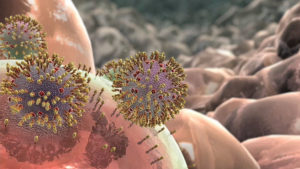
Often, diarrhea in a newborn is caused by a bacterial or viral infection. Because of the fragile immunity, the baby is most vulnerable to diseases of various kinds.
In addition to loose stools, the child has a stomach ache, a high body temperature, he vomits, he may look lethargic. Urgent medical attention is needed. Before the arrival of the doctor, it is permissible to try to restore the fluid supply and bring down the temperature, if it is high, and the age of the baby allows taking antipyretic drugs.
Improper nutrition
The breastfeeding baby receives with the mother's milk both useful substances and what can negatively affect the digestion of the child. If the mother uses poor-quality, prohibited foods, the baby has an upset stomach. It is enough to exclude them from the diet, the symptoms of the baby will disappear.
Diarrhea is sometimes caused by improper feeding. If the mother often shifts the baby from breast to another, the baby receives an insufficient amount of fat milk, which affects digestion.
With artificial feeding, an infant may experience a stool disorder if the formula is replaced with a new one. Diarrhea lasts more than two days - the mixture must be replaced.
Impatient parents give a five-month-old baby vegetable or fruit puree, subsequently the child develops diarrhea.
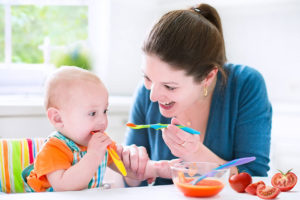
In a month-old child, diarrhea occurs due to a restructuring of the body. In a month, the baby's body is still adapting to the outside world. From 6 months, parents introduce complementary foods. Diarrhea is a reaction to the introduction of foods unfamiliar to the digestive system into the diet. Fruit juices and purees are acidic and can cause diarrhea.
Teething
A common cause of diarrhea in a newborn is teething. In a four-month-old baby, if the teeth are already starting to cut, the gums itch and itch. The child becomes restless, pulls his hands into his mouth and everything that he can hook. Microflora contributes to the appearance of diarrhea.
Drug reactions
If a baby at an early age has already had to take medications or antibiotics, dysbiosis may occur, accompanied by a stool disorder.
Often, disturbances in the work of the gastrointestinal system are found in premature babies, since their organs at birth are not ready for work.
Infection with parasites, colds - diseases, diarrhea in which is not uncommon.
Diagnosis of diseases
Diarrhea does not go away, the baby's condition does not improve - an examination may be required to help identify the pathology that caused a similar reaction of the body in the infant. The doctor prescribes the specified types of examinations:
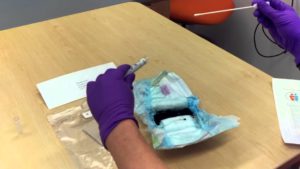
- Stool analysis for dysbiosis;
- Laboratory examination of feces for the diagnosis of the digestive organs;
- Analysis of feces for worm eggs;
- OAM.
Doctors may recommend an abdominal ultrasound scan. It is possible to do such a procedure for newborns, it is harmless and informative, does not cause inconvenience.
Treating diarrhea in infants
The main task of treatment is to replenish the water-salt balance. When breastfeeding, it is recommended to breastfeed more often to help compensate for the lack of fluid. It is permissible to give the baby Rehydron, diluted with water, 5 ml each. after each bowel movement. But you need to dilute the powder twice with plenty of water, since the drug is highly concentrated with sodium salts, which is harmful to babies. The remedy corrects the imbalance of electrolytes and fluids in case of diarrhea.
Antibiotics for babies are prescribed by a doctor, in extreme cases - for bacterial diarrhea.
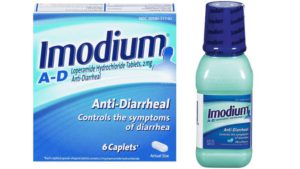
Antidiarrheals are not recommended for newborns. Sometimes the doctor prescribes Smecta when viral diarrhea is detected.
In addition to diarrhea, if the baby has bloating and colic, you can give Espumisan. The medicine is allowed for very young children.
A parent can give the baby a probiotic for diarrhea - Bifidumbacterin. In a two-month-old baby, an intestinal antiseptic is allowed in suspension - Enterofuril.
The health status of a child under one year old depends entirely on adults. The sooner the parents find the symptom and contact the attending physician, the more effective the treatment will be.
Food
With mixed feeding or natural mothers, it is necessary to adjust their own nutrition, to exclude dairy products. Low-fat soups are allowed. You can eat porridge in the water, boiled vegetables. Exclude fruits. A nursing mother is strictly prohibited foods with a high content of dyes and preservatives. If the baby is breastfed, alcohol should be excluded.
If the baby is artificially fed, it is supposed to replace the mixture with fermented milk or soy, reduce the portions in volume. The number of feedings is the same. For infants, it is recommended to shorten the feeding time without reducing the number of applications.
Possible complications
Treating the disorder isn't just about stopping diarrhea. It is necessary to replenish the water balance of the newborn. Together with the liquid, useful salts leave the body. A terrible consequence is dehydration. The condition has signs:
- Rare urination with dark urine;
- Severe weight loss - 5% of body weight;
- Crying without tears, dry lips;
- Pallor of the skin;
- The baby looks lethargic.
Call a doctor at the first sign of complication. Before the arrival of the health worker, give the child clean boiled water, more often apply to the breast.
Prophylaxis
Proper feeding is considered to be the main preventive measure aimed at preventing stomach upset in children. If the baby is a baby, it is important that he gets hind and foremilk. The mixture, in the case of artificial feeding, is selected individually, according to the health condition of the baby.
Parents are required to follow the rules of personal hygiene - wash their hands before contact with a newborn. Regular wet cleaning, airing the child's room is a guarantee of cleanliness and health.
Dishes, nipples, rattles, bottles are sterilized before each use.
A newborn child is vulnerable to infections, the protective mechanisms of the mucous membranes have not yet been formed, and diarrhea is a frequent companion of the baby's first year of life.
Distinguishing diarrhea in a nursing baby from normal stool is very difficult. If the first signs of an upset stomach are found, an urgent need to call a medical professional. It is sometimes impossible to cure a disease at home in an infant. Lack of qualified assistance will cause irreparable harm to the health of the child.