What to give a child for diarrhea: safe medicines and pills
Diarrhea is the most common digestive upset in a child. This is loose, watery stools that are repeated at least 3 times a day. In addition to the failed work of a young child's body, the causes of the condition are infections and serious bowel disease. Each parent should closely monitor the baby. If you have additional symptoms, see your doctor immediately.

Content
-
1 Treatment
- 1.1 Groups of drugs: action and effectiveness
- 1.2 Properties and form of release
- 1.3 Side effects and contraindications
- 1.4 Diet and regimen
- 1.5 Antibiotics and antivirals
- 1.6 Enterosorbents
- 1.7 Probiotics
- 1.8 Restoration of water-salt balance
- 2 Rules for the use of medicines
Treatment
The correct diet and effective drug treatment are the key to a quick recovery of the baby's health.
Groups of drugs: action and effectiveness
The remedies used for diarrhea affect the body in a certain way. There are:
- Astringents;
- Antidiarrheal;
- Antimicrobial;
- Immunostimulating;
- Improving intestinal flora;
- Normalizing electrolyte balance.
There is no universal remedy that has, in aggregate, the listed signs, it is required to select the drug for the baby individually, depending on the cause that caused the diarrhea.
Treatment is considered effective when not only the symptom of diarrhea disappears, but also other manifestations of the disease.
Properties and form of release
Medicines for diarrhea are available in different forms; pills are not suitable for all children due to a number of reasons. In addition, it is required to take into account the composition and duration of the drug.
- Pills. They have the longest effect, they are used in babies who have reached 3 years old, similarly - capsules. Dissolution begins immediately upon ingestion.
- Capsules. The main difference is that they dissolve a little faster, reaching a certain place in the gastrointestinal tract.
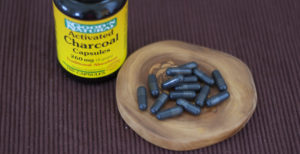
- Gels. This form is more often found in adsorbents that envelop the digestive tract. The gel can be mixed with any product, so it is easier to use.
- Suspensions. At one year old, it is better for children to give suspensions, because the preparations show a pleasant taste and smell. Immediately begin to be absorbed, and therefore the effect occurs quickly. Suitable for babies.
- Solutions and drops are fast acting. The base is alcohol or water. In children under 1 year old, it is convenient to use drops.
- Candles are effective, easy to use, quick-acting.
- Powders. In this form, mainly adsorbent preparations are produced. They are well absorbed and remove harmful substances from the body.
Indications for the use of drugs:
- Loose stools more than 3 times a day;
- Flatulence and abdominal pain;
- Decrease or lack of appetite in the presence of the symptoms described above;
- Nausea and vomiting;
- Sweating, weakness with other symptoms.
Reasons and solution:
- Dysbacteriosis - probiotics that normalize the intestinal flora.
- Stressful diarrhea - astringents and sedatives.
- Diarrhea when taking a new product - enzyme agents.

- Diarrhea as a side effect of the drug - perhaps a new treatment is needed. The issue is being resolved jointly with the doctor.
- Poisoning is treated with sorbents, also used for infections, to remove endo- and exotoxins.
- Bacterial diarrhea - antibiotics.
- Diarrhea of viral etiology - antiviral agents.
Side effects and contraindications
In order not to harm the child, be sure to read the instructions and possible side effects and contraindications:
- Age;
- Insufficiency of the liver, kidneys;
- Chronic diarrhea
- Parasitic diarrhea;
- High potassium levels;
- Intestinal obstruction;
- Bloody diarrhea, with fever;
- Some acute colitis.
These drugs can cause dyspeptic disorders, allergies, pain.
The instructions are supposed to be studied for each individual drug.
Diet and regimen
It is important for a small patient from the first day of illness to provide proper care and prescribe a sparing diet, ensure bed rest. If you have diarrhea, follow your doctor's instructions.

- The main diet for breastfed babies is water and mother's milk. Meals should be frequent.
- If the child is receiving infant formula, it is best to give infant formula every 2 hours in small portions. After 5 days, when the acute period has passed, it is permissible to return to the usual regimen.
- From 6 months, when complementary foods are introduced into the diet, rice and buckwheat porridge cooked in water are allowed.
- At diarrhea in a one year old child meat broth, chicken yolk and poultry are allowed.
- After a year, children need to enter an additional 2 meals in small portions.
- Exclude vegetables, fruits, dairy and bakery products from consumption.
Antibiotics and antivirals
These groups of drugs are used to treat the underlying disease, i.e. for the treatment of bacterial and viral infections. When prescribing a long course, any antibiotic is taken under the guise of probiotics. With a severe course of bacterial diarrhea, it is advisable to prescribe injections of antibiotics, this excludes the loss of drugs during vomiting and diarrhea. Medicines are prescribed individually and depend on the type of pathogen and the severity of the disease.
Enterosorbents
Group of funds against diarrheacapable of binding toxins, toxic substances and allergens.
- Enterosgel. It is allowed to use in children from the first days of life. From birth to a year, 0.5 teaspoons per day are used, dividing the portion into several doses. From 1 year to 5, 0.5 tsp is prescribed. 3 r / d. Teenagers are shown the use of 1 tbsp. l. three times a day. A 3-year-old patient is allowed to drink the adult dosage if necessary.
- Smecta. Diarrhea powder is allowed for a month-old baby. The product must be diluted in warm water, compote, served with liquid porridge. Up to a year, use 2 sachets per day, per year and older, the number of sachets can be increased to 4.
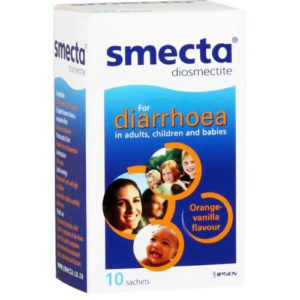
- The medicine for diarrhea Neosmectin has the same properties as Smecta, but has a pleasant taste, so it is easier to drink from the drugs of this group.
- Polysorb - like other powders, is diluted in water. The dose is calculated based on the weight of the child. If the baby's weight is less than 10 kg, no more than 1.5 tsp is used. powder three times a day, with a mass of 11 to 30 kg, it is permissible to give 1 tsp. three times a day.
Like any drugs, enterosorbents have a number of contraindications, it is required to consult a doctor.
Probiotics
For an upset stomach with a disturbed microflora, probiotics containing beneficial bacteria are well suited.
- Bifiform - tablets and powder for making an oil solution, allowed for infants. Helps to raise the baby's immunity. A 3 year old patient is allowed to take pills.
- Drops Hilak Forte. From 2 years old, you can drink up to 30 drops, older children up to 50 drops 3 r / d.
- Bifidumbacterin. Release: candles, powder, capsules. Candles can be prescribed for persons from 3 years old and adults. Capsules are used upon reaching 4 years of age.
- Linex. Babies are allowed 1 capsule per day, from one to twelve years up to 3 capsules.
Restoration of water-salt balance
Due to the risk of dehydration, it is necessary to replenish the lost water. In severe cases, intravenous drugs are administered.
- Regidron. A child needs to take a sachet of a substance dissolved in warm water within a day.
- Hydrovit Forte. Identical composition with Regidron. Diluted in water, warm tea.
- Tour. Powder with chamomile extract, glucose, potassium chloride, bicarbonate, sodium salts.
It is permissible to restore the water balance of the body on your own: mix 1 liter. warm water, 2 tbsp. sugar, 1 tsp. salt, soda. If the child refuses to drink, drink it in small sips until the lost volume of fluid is restored.
Other drugs:
- Loperamide is an agent that slows down bowel movement, characterized by a decrease in the number of urges. Appointed from the age of 6.
- Enterofuril is an analogue of furazolidone, in the form of syrup and capsules. Allowed against diarrhea for a month-old baby.
- Enterol - suitable for diarrhea of an unknown nature.
The dose is selected individually.
Rules for the use of medicines
- It is forbidden to use drugs used in adults for treatment.
- It is required to fulfill the requirements according to the instructions for use.
- Do not treat a child with warm compresses and analgesics without a doctor's prescription.
- Probiotics are applied one hour after antibiotics.
- Sorbents - 40-60 minutes after the main treatment.
- Taking antidiarrheal drugs - one hour before meals. The course of use is short. Stool frequency and nature have not changed - see your doctor.
- Dilute the substance for 1 dose, otherwise the effect is reduced.
- Correct combination of medicines with food.
- Compliance with the personal hygiene of the child.