Diarrhea with blood in a child: what to do, reasons
Young parents understand that the health of the child takes the first place in life. Sometimes moments are created that require immediate medical attention. In particular, such becomes diarrhea mixed with streaks of blood, with mucus, indicating a malfunction in the body of a small person. In medical language - diarrhea, the process is the release of the intestines from liquid masses, constantly accompanied by acute abdominal pain, fever, lethargy.
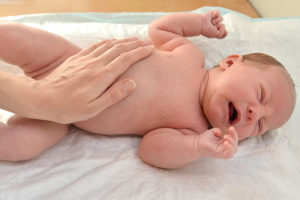
In medicine, there are three types of diarrhea:
- Acute diarrhea. Cause infections, latent inflammations, medication.
- Chronic. Is accompanied by frequent bowel movements.
- Infectious. Occurs when a virus or bacteria enters. E. coli is a common cause of the disease. It enters the intestines through hands or berries that are dirty after the street.
Content
-
1 The reasons for the development of diarrhea
- 1.1 Associated signs
- 1.2 Teeth reaction
- 1.3 Dysbacteriosis
- 1.4 What else do young parents need to pay attention to?
- 2 First aid
- 3 Diagnostics
-
4 Treatment
- 4.1 Folk remedies
- 5 Complications
- 6 Prevention of diarrhea
The reasons for the development of diarrhea
Food:
- Poisoning without fever.
- Expired products.
- Laxative products.
Diseases:
- Teething.
- The appearance of fissures in the anus.
- Allergic, chronic diseases.
- Infections.
- Dangerous use of antibiotics.
- Intestinal polyp.
- Crohn's disease.
- Hemorrhoids with blood.
- Dysbacteriosis causing a bowel movement.
Associated signs
Once discovered loose stools with mucus, with blood streaks, distended abdomen, it is worth carefully examining the liquid mass. The content, color and weight will tell you about everything. Based on these signs in a one-year-old child, it is easy and simple to provide first aid.
- Elevated temperature is a manifestation of the reaction of the body in a newborn to an inflammatory process. If we add bloody diarrhea, mucus, weakness, green feces with a pungent odor, 90% confidence in infants up to a year, an intestinal infection develops.
- A mixture of mucus, feces does not every time speak about the pathologies of the body in an infant. During the period of breastfeeding, first of all, breast milk is checked for sterility. A troublesome illness frequently visits children with lactase deficiency. Likewise, when introducing new foods into the diet that cause an allergic reaction. Remember! A small amount of mucus is not a pathology, but the norm in the case of intestinal immaturity in young children under one year old.
- Blood color. Scarlet bloody spots in the stool indicate dysentery or colitis. Dark - a suspicion of an ulcer that occurs, in principle, in children is extremely rare.
- Itching of the anus. If you complain of itching, tell your pediatrician. Unpleasant discomfort is created by the presence of worms, hemorrhoids. The second appears due to abnormalities in the development of blood vessels.
Teeth reaction
Pediatricians are of the opinion that fecal diarrhea with fever occurs in a child when teething. Salivation increases, entering the intestines and leading to liquefaction of feces. It dispenses with odor, blood streaks. Lasts for three to four days. Further, this manifestation should alert an adult. With the reaction to the teeth, the weakening of the immune system begins. There is a chance of catching an infection.

Infections:
- Intestinal infections. Dysentery bacillus, staphylococci are a common cause of diseases of the gastrointestinal tract. Reproducing in the body, microbes disrupt the gastric process. Lead to inflammation of the mucous membranes, fever, blood-streaked diarrhea, vomiting. Common causes of diarrhea are food poisoning, drinking raw water.
- Rotavirus infection. The disease is triggered by rotaviruses. They enter the body through food, unwashed vegetables, fruits. When washing the last products with chlorinated water, the effect is zero. The virus is able to persist while in the refrigerator. The disease is accompanied by diarrhea with a change in color, smell and composition.
Dysbacteriosis
In European countries, dysbiosis is not recognized as a registered diagnosis. It is regarded as a serious intestinal imbalance, which the body must deal with itself. In Russia, there are constantly conflicting opinions between doctors. Half of the pediatricians will prescribe medication, while the other half will prescribe probiotics and fermented milk products. An imbalance in the intestinal microflora creates an unfavorable environment that accompanies the development of infections or a decrease in the number of bifidobacteria and lactobacilli. This leads to an unbalanced diet, the use of antibiotics. Subsequently, multiple loose stools begin. Treatment consists in the use of bacteriophages, colonization with beneficial bacteria.
Dehydration is the scientific name for dehydration. At this time, water stops flowing to the brain. With a loss of 1%, noticeable changes occur. For the brain, water is the main source of nutrition along with oxygen, at the same time it plays an energetic role. Over time, Alzheimer's disease and sclerosis develop. The immune system suffers no less. Subsequently, diseases of a chronic nature arise. This includes infertility, bronchitis.

What else do young parents need to pay attention to?
Sometimes the color of feces streaked with blood is given by red foods. If a child has eaten tomatoes, red currants or beets 1-2 days before the incident, they are probably the reason.
Often mothers confuse brown streaks after a banana with blood. Therefore, do not forget what the child was fed the day before.
First aid
Everyone should know how first aid is provided. Thanks to knowledge, immediate reaction, correctly selected medicines, you can immediately react and bring the patient to his senses. With diarrhea, instantly:
- Call an ambulance.
- It is forbidden to feed.
- Constantly wash the child with warm water.
- Do not flush escaping liquid to show it to a specialist.
- Solder with water in small portions every seven minutes.
- At elevated temperatures, give a preparation containing paracetamol.
Diagnostics
During the illness, the attending pediatrician, identifying the diagnosis, will clarify the symptom, prescribe an ultrasound of the abdominal cavity, a coprogram, tests for helminths, dysbiosis, and blood tests. After the performed procedures, either additional studies or a course of necessary treatment are prescribed.
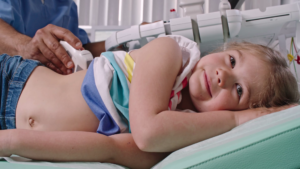
Paying attention to the statistics, the peak of referrals associated with diarrhea is noted in the autumn period.
Treatment
Diarrhea with blood, mucus, abdominal pain is treated under the supervision of a physician. Based on the test results, either a gastroenterologist or a pediatrician is appointed. In the case of an infectious type of disease, at the time of treatment, they try to protect the child from all kinds of contacts.
Medication:
- For infections, a course of antibiotics is prescribed.
- The intestinal microflora is put in order - bifidobacteria and lactobacilli are drunk.
- To stop diarrhea, adsorbable drugs are taken. These are Enterosgel, Polysorb, Smecta.
- It is necessary to restore the water and salt balance due to constant drinking: compote, mineral water, glucose, salt water.
- If diarrhea with blood is manifested as a result of intestinal inflammation, then, without exception, all children under one year old undergo inpatient treatment.
Diet:
- Foods and drinks that can cause a laxative effect are removed from the diet. This includes milk, some fresh vegetables, fruits.
- A strict diet will have to be followed by a nursing mother.
- The use of legumes, sweets is limited.
- The menu is supposed to introduce crackers, make a decoction of rice, eat bananas.

Folk remedies
At home, folk methods will only be able to alleviate the patient's condition. But when blood appears, all accompanying agents are prohibited, since blood is a consequence of serious diseases.
A tincture of walnut helps to get rid of diarrhea, the membranes of which are first prepared during boiling, then they are drunk all day in small portions. Oak bark tincture, which has an astringent property, does an excellent job. In ancient times, they also used blueberries, carrot puree, or diluted with starch.
To stop bleeding caused by the appearance of an anal fissure or hemorrhoids, drink a rosehip infusion, which has a hemostatic effect.
Complications
Rarely, diarrhea with blood, mucus ends up unfavorably for a small growing organism. There are few such cases, but it is required to understand and take into account the fact that disability may occur or, in case of loss of 20% of fluid, death. Other consequences are possible:
- Loss of consciousness.
- Convulsions.
- Constant flatulence.
- Rectal prolapse.
- Lactase deficiency.
The listed consequences are not intended to scare you. Just teach that first aid in most cases depends on the parent! Knowledge of prevention methods, quick response will help to fence the child from diarrhea, which is accompanied by blood, mucus.
Prevention of diarrhea
First of all, the child needs to be explained the importance of hygiene. Remind that washing hands after the street, vegetables, fruits before eating is an integral part of life. Parents should not stand aside, it is recommended to remember:
- Compulsory temperature treatment of milk, meat, eggs must be carried out.
- Limiting all kinds of communication with sick people.
- Drinking unboiled raw water is strictly prohibited.
- Strengthening of immunity is required to lower infectious diseases. Frequent walks, hardening.
- Strictly healthy food.
- Compliance with the shelf life of products.
Diarrhea is a serious condition. It is worth treating and contacting doctors, adhering to the recommendations. Doctors will help in a situation when quick help is needed during diarrhea in an infant mixed with blood, mucus. The earlier the problem is identified, the quicker the response to assistance. This means that the nerves of young parents are preserved as much as possible.