Diet for intestinal dysbiosis: what you can and cannot eat, a menu for a week and nutritional rules
The diet for intestinal dysbiosis does not include alcohol, spicy snacks - as violators are used to eating when they get sick. Better to buy cottage cheese, milk, bananas (source of inulin). The food should contain an abundance of fiber, dilute the milk ration with cereals. Mothers of newborns with bowel disorders in children think about what to feed their baby. Without a doubt, babies should receive breast milk with prebiotics and some of the beneficial bacteria strains. Breastfeeding is required, part of the flora is formed on the skin of the nipples.
There are sources of prebiotics among everyday foods, probiotics are relatively few. It is worth considering what to include in the menu by purchasing probiotics at your nearest pharmacy. Healthy food, milk, a minimum of coffee - any person's feasible contribution to maintaining their own health. Listed below are foods that contain dietary fiber and complex sugars. From the above list, you do not need to make a diet. The food must be varied.
Content
- 1 Prebiotics and balanced nutrition
-
2 What are the nutrients found in regular food
- 2.1 Raffinose
-
2.2 Inulin
- 2.2.1 From the history
- 2.2.2 Beneficial features
- 2.2.3 Sources of
- 2.3 Pectins
- 2.4 Fructooligosaccharides
- 2.5 Galactooligosaccharides
- 2.6 Other
-
3 How to eat
- 3.1 Calories and satiety
- 3.2 Prebiotics
- 3.3 Probiotics
- 4 Treatment
Prebiotics and balanced nutrition
A person who regularly supplies prebiotics to his own microflora does not suffer from the disease in question. Intestinal dysbiosis awaits people who eat monotonously. The voiceover is easy to demonstrate on two categories of citizens: young girls and athletes. Girls consume tons of yogurt and believe that in this way they will save themselves from trouble.
Hiromi Shinya, a Japanese scientist, considers the consumption of fermented milk products by adults unacceptable. Statistics from Japan or the United States are not available, but 90% of our compatriots have problems with the intestinal microflora. Young girls make the mistake of thinking that yogurt contains good bacteria. Meanwhile, bacteria also need food.
What happens when the menu for dysbiosis consists entirely of yogurt? A person throws strains of bacteria into the stomach (if the product is fresh), 99.9% of organisms die immediately. The remaining handful enter the intestines, lacking food. Bifidobacteria and lactobacilli love fiber, mainly raffinose (a simple trisaccharide). There is no fiber in yogurt.
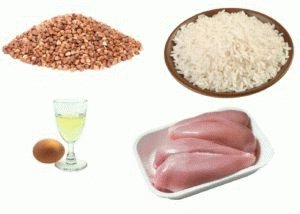
The conclusion is simple: you need to eat the bacteria, then feed the culture, avoiding the death of beneficial bacteria. Let's take a closer look at the nutrition of athletes. The athlete's menu looks like this:
- Buckwheat.
- Rice.
- Egg white.
- Chicken breast.
Savvy bodybuilders add the liver here, which immediately makes up for the lack of vitamins. The listed cereals are useful. The amino acid composition of buckwheat is unrivaled, carbohydrates can be classified as slow. Rice is highly digestible and energizing. Milk is discouraged - Joe Weider recommends taking dairy products with caution due to flatulence.
Bacteria utilize milk sugar to form a pH factor that the body needs. The appearance of flatulence leads the athlete to intestinal dysbiosis. Take medications to normalize microflora, for example, Linex.
Joe Weider speaks in books about the benefits of bacteria, the need for fiber, dysbiosis - not a word. In the West, this disease is not recognized. Meanwhile, flatulence is a symptom of the disease.
What are the nutrients found in regular food
The intestinal microflora begins to form already in the baby. The child's nutrition includes bifidobacteria and lactobacilli obtained from the mother. Organisms multiply in the substrate of human milk. It is useful from the age of 3-4 months to use vegetable and fruit purees, adapted mixtures. It is generally accepted that the formation of microflora ends at the age of one.
Everyday food contains most of the essential ingredients. It is enough to make the right diet.
Raffinose
Contained mainly in peas, beans, cabbage, asparagus, cereals. In structure, it is a complex sugar that feeds bifidobacteria. Includes:
- Galactose.
- Glucose.
- Fructose.
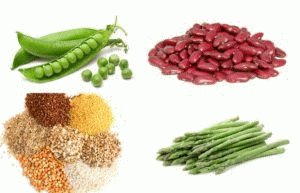
The carbohydrate is widespread in the plant kingdom, and ranks second after sucrose among water-soluble sugars. It is cleaved by the enzyme alpha-galactosidase, an enzyme that is absent in the human digestive tract. In undigested form, the trisaccharide reaches the intestines, becoming food for bacteria.
During the fermentation of raffinose, gases are formed, mainly methane and hydrogen. There is a normal process of decomposition of the trisaccharide under the action of the above-mentioned enzyme produced by bifidobacteria. Partly explaining the flatulence that develops with the ingestion of peas. However, gradually the gastrointestinal tract adapts to such food, the process becomes unexpressed.
The enzyme alpha galactosidase is sold separately. For example, the substance is found in the product Beano. A small proportion of peas or beans must be present in the diet for the development of bifidobacteria.
Inulin
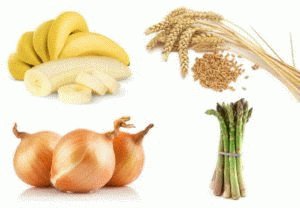
The abundance of this compound of fructose is found in chicory, Jerusalem artichoke tubers, garlic. Inulin is an alternative source of plant energy, along with glucose. It is preserved mainly in the root part. Inulin storage is created by 36 thousand plant species. Common names:
- Bananas.
- Onion.
- Wheat.
- Asparagus.
Plants use inulin to regulate the osmotic potential of cells, helping plants withstand drought and cold weather during the winter.
From the history
Separated in 1804 by Valentine Rose from Ínula helénium (elecampane). The name of the compound comes from the Latin name. The indigestible carbohydrate aroused great interest in the scientific world, in the 20th century the molecular structure of the substance was studied, and the first attempts at synthesis were made. It was used as a marker in the study of the excretory capacity of human kidneys.
Beneficial features
When inulin is dissolved in water, a viscous substance resembling fat is obtained. Due to its sweet taste, it is used in food products to replace sugar. The consistency allows you to simulate fat. Part of the breakdown energy is released in the intestines, reaching a third of the breakdown energy of standard sugar. Inulin fibers are a nutrient medium for bifidobacteria and lactobacilli.
Inulin improves calcium absorption. After six months of regular intake, there is an increase in bone density by 20%, and the absorption of magnesium improves. During fermentation, gases and water are released in the colon, resulting in flatulence. Along with raffinose, it is added to food gradually.
The advantage of inulin is its suitability for diabetics. As food for intestinal dysbiosis, it stimulates the growth of bacteria, prevents the growth of pathogenic flora. Reduces the content of bad cholesterol in the blood of men. If the body does not accept the symptoms, they resemble dysbiosis:
- Diarrhea.
- Bloating.
- Flatulence.
- Belching.
- Rumbling.
- Convulsions.
- Dyspepsia.

Sources of
Let's list the dietary sources of inulin:
- Chicory.
- Onion.
- Garlic.
- Banana.
- Agave.
- Artichoke.
- Jerusalem artichoke.
- Yam.
- Roots.
Doctors pay attention to patients - foods rich in inulin (onions, garlic) have long been associated with good health.
Pectins
Found in many plant species, mainly fruits and aquatic life. At dysbiosis treatment stimulate the secretion of gastric juice, fight against pathogenic flora in the intestine. Used by the food industry as a thickener E440. Produced by industrial methods from:
- Apples.
- Citrus fruits.
- Sugar beet.
- Pumpkins.
- Sunflower baskets.
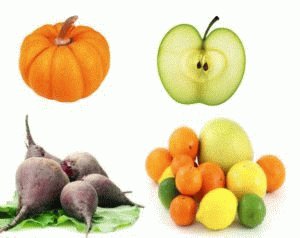
Apricots, carrots, peppers, eggplants, plums, cherries, pears, quince are rich in fibers. An abundance of fiber in the peel of citrus fruits. Based on the consumption of 0.5 kg of fruits and vegetables daily, 5 g of pectin will be in the diet. The chemical formula of the polymer differs greatly between species, locality, and over time.
Biologists suggest that pectin promotes the regeneration of cellular DNA. Consuming the right dose of pectin lowers the level of "bad" cholesterol in the blood. As a dietary product, in case of dysbiosis in children and adults, it serves as food for intestinal bacteria, which splits short molecular fat from fibers, which has a beneficial effect on health. Reducing cholesterol is achieved due to the absorption effect. Dissolved pectin retains bile acids.
During metabolic processes, a non-hazardous, small amount of methanol is produced from fibers. A person produces 0.45 g of the substance per day, from 1 kg of apples 1.4 g is obtained. In significant quantities, methanol is a poison, small doses of gas circulate freely throughout the body without causing harm.
Pectin acts as a regulator of the volume and viscosity of feces. Fiber serves a similar purpose in the food industry. It turns out that lemon peel is an equally effective remedy for constipation and diarrhea. Doctors note the sedative effect of the zest of the fetus for insomnia! Fibers contribute to the elimination of radionuclides from the body.
In ruminants, up to 90% of pectin is broken down; an increase in the content of a substance in plants leads to an increase in the nutritional value of feed.
Fructooligosaccharides
They are called oligofructose or oligofructan. They have been used as a sweetener in drinks since the 1980s, analogous to other carbohydrates. It is obtained industrially from inulin or polyfructose. In the gastrointestinal tract, they are not digested until the large intestine, where they are fermented by anaerobic bacteria. Periodically serve as an additive to yoghurts (to nourish flora). Selected food sources:
- Garlic.
- Onion.
- Chicory.
- Bananas.
- Blue agave.
- Asparagus.
- Wheat and barley.
- Jerusalem artichoke.
The highest sugar content is found in chicory and Jerusalem artichoke. The action in the body is similar to inulin. Fructooligosaccharides help the absorption of calcium, serve as food for bifidobacteria. Some scientists believe that this group of fibers can be utilized by Klebsiella, Clostridia, Escherichia coli, which are considered opportunistic microflora.
Galactooligosaccharides
In the literature, they can be called oligogalactosylactose, oligolactose, oligogalactose. They have been used as additives in Japan and Europe for 30 years. Often included in baby food. On the market, they are found in the form of powder, syrup or lozenge. Produced from galactose by the action of certain enzymes on the original substrate (specific names depend on the manufacturer). In the scientific world, certain values of galactooligosaccharides are known:
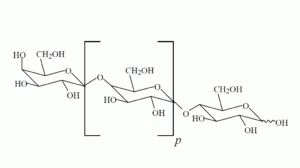
Galactooligosaccharide
- Promote the growth of bifidobacteria and lactobacilli.
- Strengthening the immune system (due to the substances formed during fermentation).
- Reduces the risk of allergic reactions in children.
- Relieves dyspepsia symptoms.
- Improves calcium absorption (bone density increases).
- Softens stools, relieves constipation.
- Provide the least gas formation among prebiotics.
- Synergistic effect in combination with strains of live bacteria (probiotics).
- Reduces the recovery period from colds and flu.
- Provide the highest growth rate of beneficial microflora among the known prebiotics.
An interesting thing has been noticed: the maximum benefit is obtained when galactose is fermented by bifidobacteria. The correct decision is to accept the GOS obtained in this way. The main source is human milk or specialized infant formula. Palm oil is not a useful base for these foods.
Other
In addition to the above, other products are also beneficial for dysbiosis. Try to eat natural foods. Any dietary fermented milk product contains a specific strain of bacteria. To obtain a full range of crops, it is necessary to periodically supplement the menu with specialized products. These are biokefirs, yoghurts.
The emphasis is on the need to obtain bifidobacteria, supplementing with lactobacilli (for example, with the help of acidophilus). The real gut key during constipation is peas, a powerful natural remedy. Do not rush to switch to artificial nutrition for dysbiosis in children. In the course of evolution, nature has already endowed women with the necessary substances for the treatment of babies.

How to eat
Nutritionists are advised to eat according to the regimen. There is a little, with a break of 3-4 hours. Not everyone will be able to withstand such a regime, but efforts must be made. Several times a day it is required to consume heated food, this normalizes the process of accumulation of heat in the large intestine.
Calories and satiety
To quote Joe Weider, through whose hands many athletes have passed, he recommends listening to the stomach: you should not eat solely because of the return of strength to the workout. Try to eat when you feel hungry.
The calorie content of the daily diet is calculated using standard formulas. The minimum daily expenditure for metabolism is multiplied by the occupation factor (depending on the profession). The figure obtained from the calculations should not be omitted.
The diet for dysbiosis needs to be checked. Weigh regularly. With stable weight loss, menu adjustments are required. The calorie content of meals per day is calculated based on the person's lifestyle. Moreover, the lion's share falls on the afternoon. Taking carbohydrates in the morning is the right decision.
Have dinner 2 hours before bedtime. You can't eat carbohydrates. Athletic people suffer from gastrointestinal troubles less often. Therefore, you need to imitate them in lifestyle, and difficulties with digestion can be avoided.
Excess carbs are usually deposited on the stomach overnight. This will do more harm than eating fats, which, due to a lack of enzymes, will not be absorbed. Excess carbohydrates are absorbed into the bloodstream and, under the action of insulin, are stored in reserve in the form of a layer of fat.
It is interesting! Chechens call fat - moh, the same word as cargo. Excess deposits are inconvenient for life in the mountains, it is no coincidence that kefir's homeland is in the mountainous terrain of the Caucasus. Highlanders consider kefir to be a gift of Allah.
Prebiotics
The diet for dysbiosis with diarrhea should include pectin in large quantities. Eat carrots, apples, pumpkin porridge, citrus fruits (along with the peel). From the group of substances described above, select the desired products, make sure that it is permissible to include those indicated in the daily diet. Don't break the menu abruptly. Joe Weider said two things:
- The body loves products that grow in its native land.
- You can not abruptly throw out certain products, replacing them with others. The transition is taking place gradually.
Don't neglect onions and garlic. To fight off an unpleasant smell, mix the plants crushed into gruel with milk and drink.
Probiotics
Diarrhea forces the use of baby food with additions of probiotics, which facilitates the patient's condition in the absence of the opportunity to buy specialized drugs in a pharmacy, for example, Smecta. Bifidoc and acidophilus should become regular guests on the menu.
Treatment
Intestinal dysbiosis requires complex treatment. Sample list:
- Specialized diet.
- Antibacterial drugs or bacteriophages.
- Probiotics, prebiotics.
- Detoxification with sorbents.
- If necessary, rehydration (replenishment of fluid losses).
- Vitamins.
- Enzymes.
- Drugs that stimulate the immune system.
The diet is only one component. The intestinal dysbiosis itself often turns out to be only a consequence of a certain disease; it will be necessary to eliminate the root cause. The approximate meal plan for the week should include the maximum number of foods described above. Leave low-fat foods for the evening. It is useful to have supper with cottage cheese, kefir.