What foods have a lot of fiber for constipation: a list and effects on the body
Retention of feces in the intestinal canal, the inability to remove them outside is called constipation. In this case, the patient feels pain in the abdomen, his body temperature rises, signs of general intoxication of the body appear. Treatment is needed. To combat the state of discomfort and bring the work of the digestive tract back to normal, fiber is used for constipation. Many foods are rich in the desired element. In pharmacies, fiber-rich preparations are sold.
A healthy person should visit the toilet at least once a day. Ideally, this figure should be 2. Constipation is diagnosed by not going to the bathroom for 7 days.
If the patient visits the toilet less than 3 times every 7 days, a diagnosis is made of chronic constipation. A person has been suffering from defecation disorders for more than three months. The human body itself is able to cope with the disease, but sometimes medical attention is needed.
The first doctor accepting a patient is a therapist.

After the initial examination, he sends him to a narrow specialist: a proctologist, a gastroenterologist. Pharmacies sell medications for constipation. Doctors recommend adding fiber-rich foods to the diet that are rich in essential nutrients that can soften stool. They are able to naturally provoke the elimination of digested food residues from the human body.
You need to understand that the absent stool is not an independent disease - it is a signal of violations from the internal organs:
- The patient menu is not balanced. Large amounts of heavy, fatty foods are consumed. Semi-finished products prevail. The diet lacks fresh vegetables, fruits, herbs.
- The drinking regime is violated. A person who cares about health should take 2 liters of liquid per day. The lack of the necessary moisture makes the body dehydrate the stool, thereby provoking their hardening and constipation.
- Stress, nervous system disorders. In the modern world, a person daily encounters situations that affect neurology: at home, at work, on the road.
- Pregnancy. As the fetus grows, pressure is exerted on the intestines from the enlarging uterus. The organ is under pressure, digested food residues can get stuck in narrow areas of the intestine, thicken and interfere with normal bowel movements.

- Endocrine system diseases. Diabetes and a malfunctioning thyroid gland cause a lack of enough enzymes or their absence involved in the digestion of food.
- Uncontrolled intake of medications. Violation of the dosage, prolonged use, the wrong drug is the reason for the decrease in the motor activity of the intestines.
The initial solution to the problem lies in changing the diet, enriching it with dietary fiber, which helps to increase the motility of the colon.
Content
-
1 What is fiber
- 1.1 How it helps with constipation
-
2 List of foods containing fiber
- 2.1 Prunes
- 2.2 Raspberries and blackberries
- 2.3 Berries and fruits related to stone fruits
- 2.4 Whole grains
- 2.5 Beans, nuts, seeds
- 3 Fiber for children with constipation
- 4 What can be bought at the pharmacy
What is fiber
In order to correctly draw up a menu for a constipated person and in order to prevent an ailment, you need to know what it is and what products contain.
Fiber is a dietary natural fiber found in certain fruits, vegetables, and cereals. If you use this substance in sufficient quantities, then the human body copes with the disease on its own.
How it helps with constipation
Dietitians and doctors divide fiber into two types, which differ in the nature of the effect against constipation:
- Soluble. Being in the body, it helps to lower blood sugar levels, slows down the digestive processes. It has a positive effect on the work of enzymes for digestion and decomposition into easily digestible components. Promotes the absorption of nutrients from food.
- Insoluble. Accordingly, dietary fiber does not dissolve under the action of gastric juice. In the intestine, it has an effect on fecal matter: it liquefies, increases in volume. The absorbed liquid turns into mucus and promotes gentle removal of residues from the body without causing pain or discomfort.
Natural fiber is not immediately eliminated from the body. Lingering in the intestine, it provides a stable effect of excretion, is a breeding ground for the local microflora.
List of foods containing fiber
Having learned the principle of action of natural dietary fiber, it is worth deciding, studying the list with food products containing elements necessary for digestion. How much fiber is contained in each raw material.
Prunes
It is a commonly used product on the table of a person suffering from chronic constipation. The fiber content in prunes is not high, but eating 3-4 pieces a day, a person provides 4 g. useful fiber, which is enough for the normal process of digestion.
- The beneficial substances contained in the dried fruit help to increase the production of bile and acids. For the intestines, the benefit is to accelerate physical activity, the production of enzymes.
- Fiber increases the moisture content of the stool and speeds up the bowel movement.
- The sugar content creates a breeding ground for beneficial microorganisms that make up the intestinal microflora.
Raspberries and blackberries
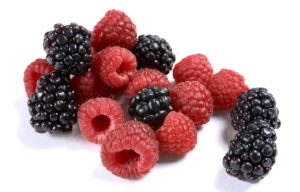
Many fruits and vegetables are rich in natural fiber. The raspberry and blackberry berries are no exception. The high moisture content helps relieve constipation. 100 g berries provide the human intestinal tract 6 g. natural fibers.
Berries and fruits related to stone fruits
Apple, apricot, cherry, strawberry, sweet cherry, peach, pear, blueberry, banana, orange. Raw materials containing a large amount of fiber. When eaten 100 g. a person gets 5 g of fruit. fiber.
Whole grains
Meals made with whole grains can provide the right amount of fiber to prevent constipation. While on a dietary diet, the patient eats meals based on unprocessed whole grains. These are rice, barley, wheat, buckwheat, millet, oats. Pastries and baked goods made from unprocessed cereals are also great for treating constipation problems.
However, you should avoid the presence of refined and refined raw materials in the diet. These foods are fiber-free.
By consuming whole grains, a person provides nutrition to the body for 6 g. necessary natural fibers per 100 g. finished product.
Beans, nuts, seeds
The content of fiber in plants of the legume family varies at least 10 g. per 100 g. finished product, no more than 16 g. per 100 g. finished product. You can use flax seeds, beans, peas, sesame seeds, sunflowers for food.
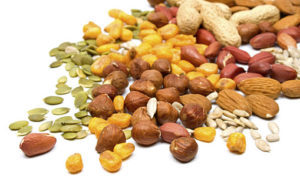
However, you should not get carried away. Legumes provoke increased gas production in the intestines, which responds with bloating, painful sensations.
The constant consumption of foods containing fiber allows you to forget about the problem of constipation, disorders and other systematic disorders in the functioning of the digestive tract for a long time.
Fiber for children with constipation
Unfortunately, children also suffer from the problem of prolonged absence of bowel movements. At a young age, it is not difficult to detect this ailment. The problem sometimes turns into a difficult stage for schoolchildren. The absence of lockable cubicles in the school toilet becomes a disaster, which turns into constipation for children due to the inability to fulfill their natural needs.
Doctors recommend adding to the diet of a school-age child and adolescent:
- Bran, fresh fruit, herbs. It will help speed up intestinal motility, saturate the feces with moisture and increase their volume.
- Vegetable oil and fish oil. They have the ability to envelop the food bolus, allowing it to pass painlessly and non-stop to the lower digestive tract. They also cleanse the walls of the organ from accumulated toxins.
- Baked potatoes, cereals, dried fruits. Enrich the body with potassium. They have a positive effect on the intestinal muscles.
- Kefir. Eating a fermented milk product before bedtime will allow you to naturally get rid of food debris in the morning, without pain and constipation.
A properly selected diet will allow the younger generation to forget about the problems associated with the upset of the digestive system.
What can be bought at the pharmacy
In the pharmacy, you can buy ready-made fiber in the form of bran, cellulose, processed seeds, bran. Also available are fiber-packed bars. It can be used to normalize the functioning of internal organs during snacks.
You can include cellulose or bran in liquid hot meals. Fermented milk products, broths, boiled water are also suitable. Being in the stomach, fiber fills the space of the organ and can cause a feeling of fullness, which prevents a person from eating more than required.