How to restore the pancreas and its work
Most likely, not a single person on the planet will be seduced by the prospect of living the rest of his life with drains sticking out of the abdominal cavity.
This is a serious blow to the quality of human life. The patient begins to feel bad, periodically he may be tormented by bloating, jaundice.
It is for this reason that it is worth knowing how to restore the pancreas, eliminating the likelihood of complications in the form of diabetes mellitus.
To begin with, it is worth undergoing a comprehensive examination by a gastroenterologist, who will determine how fully the iron functions.
If necessary, the specialist will tell you how to help the pancreas, prescribe therapeutic therapy.
About what the course of organ restoration can be will be presented in this article.

Content:
- 1 On the importance of the organ
- 2 Which doctor to contact
- 3 Chance for complete healing
- 4 Causes of gland diseases
- 5 Restoration of the gland
- 6 Restoration of an organ after an acute form of pancreatitis
- 7 Organ recovery in chronic pancreatitis
- 8 Specialist recommendations
- 9 Useful video
On the importance of the organ
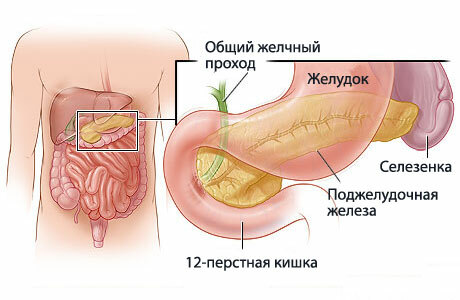
In the human body, the pancreas is one of the largest organs. It plays an important role in the digestion process.
Its main function is to form a secret and allocate it.
The liquid contains special enzymes that contribute to the breakdown of food into useful trace elements, they should mean proteins, fats and carbohydrates. The process takes place in the cavity of the duodenum.
In addition, the pancreatic secretion contains special bicarbonates that help neutralize acidic contents that pass from the stomach into the intestines. The pancreas produces about 700 ml of secretion per day.
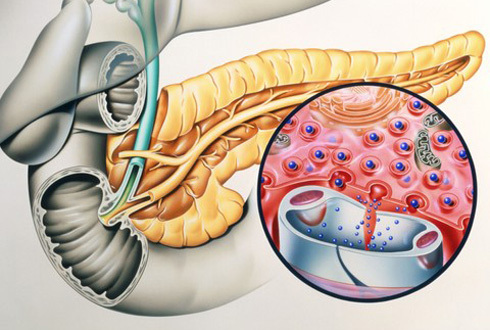
In addition, the organ is valuable in that it has special cells that promote the synthesis of two hormonal substances that take part in carbohydrate metabolism.
These are glucagon and insulin. The first substance increases the glucose content in the body, while the second, on the contrary, decreases the indicator.
In chronic pancreatitis, there is a prolonged recurrent course of the inflammatory process, accompanied by alternating stages of remission and deterioration of the patient's condition.
All this leads a person to ask the question: "how to restore the pancreas?"
Just before giving an answer to it, it is necessary to indicate that experts distinguish not only chronic pancreatitis, but also the acute stage of the pathology, which carries a great threat to life person.
In the latter case, you need to be treated with the help of a surgeon while in the hospital on an inpatient basis.
Which doctor to contact
The treatment of the pancreas is not always exclusively done by one doctor. Everything will depend on the patient's diagnosis.
If an acute inflammatory process in the organ was determined, then the surgeon takes over the treatment.
He will prescribe a course of drug therapy, assess the degree of destruction of the gland, as well as the risks of all kinds of complications.
If necessary, drainage will be introduced into the abdominal cavity. The doctor will subsequently tell you how to support the organ in order to improve the patient's quality of life.
In the chronic form of pancreatitis, a gastroenterologist will be involved in treatment. In this case, it should be understood that in the past a person has experienced an acute form of pathology.
Subsequently, the doctor will tell you how to restore the work of the pancreas, prescribe diet therapy, and prescribe a second examination. It is also important to bypass doctors of a narrower focus, among them there will be an endocrinologist.
The therapist takes on the task of conveying to the patient information on how to recover pancreas, how to do so that there are no repeated exacerbations in the future or chronicity of the process pathology.
Chance for complete healing
People who are faced with a disturbed organ function immediately ask themselves an exciting question: "Is it possible to restore the pancreas completely?"
To answer this question, it is worth noting for a start that the organ itself consists of a large number different cells, which synthesize hormones, useful hormone-like substances, as well as food enzymes.
All of them have a special specialization, which is important for the full functioning of the organ and the gastrointestinal tract as a whole.
The restoration of the pancreas will fully depend on the extent and nature of its damage.
If the organ was edematous due to the acute form of pancreatitis, then it can completely restore its structure.
If the gland has suffered due to a chronic form of inflammation, then the structure of the organ will be restored, but functionality is not always.
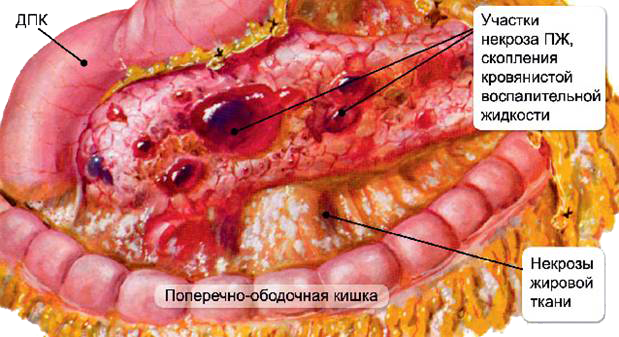
In cases with necrosis, scars, pseudocysts or hemorrhages may remain. The latter are extremely rare, but they can be.
The structural surface of such areas can be restored, but not completely, and the new tissue membrane, scars, cysts are not able to enable the gland to cope with its previous functions.
It turns out that the answer to the question of whether the pancreas is being restored is positive, but regeneration is possible only in the prenatal period.
After the cells function, they are not able to completely renew, only the organelles are restored.
After the transferred pancreatic necrosis or removal of a part of the gland, the cellular system divides or hypertrophies, trying to replace the role of the resection site.
The cells of the endocrine gland, even after reparation, are not able to recover, they are so highly specialized.
From this we can conclude that the recovery process will depend solely on the stage organ damage, its initial state, age data of the patient, as well as a number of accompanying pathologies.
Causes of gland diseases
First of all, experts note that the pathology of the pancreas provokes excessive drinking.
Ethanol has a toxic effect on the pancreatic cell system. These are not just words, but facts, proven by a number of studies by scientists.
When the pressure in the ducts of the organ rises, excessive production of food enzymes is observed.
All this leads to the diagnosis of alcoholic pancreatitis. Mostly young people suffer from this pathology, who significantly save on alcoholic beverages.
The next reason for the development of problems with the pancreas is considered to be improper nutrition.
An overabundance of fried, fatty, spicy foods negatively affects the body. This also includes the fact of overeating.
A common cause of pancreatitis is the presence of other pathologies in the body. It can be a duodenal ulcer, cholelithiasis, chronic gastroduodenitis.
These pathologies very often provoke malfunctions of the pancreas in women over 50 years old, who suffer from obesity or high blood pressure, high cholesterol in blood.
The reasons also include the presence of a disturbed outflow of secretion from the organ, smoking, neoplasms, stressful situations, impaired motor skills smooth muscle gland, hereditary factor, frequent departure, infection with worms, getting a pancreatic injury, as well as the development cystic fibrosis.
The latter condition is characterized by sclerosis of the tissue membrane of the pancreas. Very often children of preschool age suffer from this.
Restoration of the gland
If pancreatitis was diagnosed at an early stage, followed by treatment, then it is really possible to restore the work of the pancreas.
This pathology is provoked by an inflammatory process that has penetrated the ducts of the organ, as well as the ingress of microorganisms into them from the intestinal cavity.
The cause of the development of the disease can be helminthic infections and lamblia.
Sometimes, pancreatitis can be a consequence of the transferred cholecystitis. Therefore, with an inflammatory process in the cavity of the gallbladder, microbes should not be allowed to enter the gland.
To date, there are 2 forms of pancreatitis. As noted above, these are acute and chronic phases.
Each of them has certain differences in accordance with its nature, and therefore the advice for restoring the gland will also differ.
But they also have one thing in common - the patient should not expect an early effect. This is a long and laborious process, and therefore it is worth gaining strength, patience and following all the recommendations of your attending physician.
Restoration of an organ after an acute form of pancreatitis
This pathology is characterized by sudden onset and severe course. The treatment course involves the intervention of a surgeon.
Symptoms of pathology include: bouts of vomiting and nausea, flatulence, increased body temperature, pain in the left hypochondrium.
The reasons include the use of "heavy" food on an ongoing basis, excessive alcohol consumption.
Against the background of this pathology, pancreatonecrosis develops. This disease is inherent in those who often fall into binges.
The mechanism of development of pathology is that food and alcohol increase the level of production pancreatic secretion with high viscosity, and therefore the outflow of juice is difficult at high pressure 12-type intestine.
The gland stores the secret within itself, digesting its own tissues. This condition is accompanied by severe symptoms.
In order to restore health, you must give up food for 1-3 days. You can only drink warm water and then in limited quantities. The gland will stop producing a secret.
To restore the organ and remove signs of pathology, the doctor prescribes funds from the groups of blockers of the production of food enzymes, antispasmodics, M-anticholinergics.
When the organ is destroyed, an operation is prescribed to remove part of the gland. This technique helps to remove necrosis.
Subsequently, the diet will be expanded. But you should definitely follow the principles of fractional nutrition and a therapeutic diet called "Table number 5".
A proper diet will allow the gland to stimulate the production of secretions and stop it from stagnating.
An acute form of inflammation can also be triggered by taking antibiotics, pressure pills and diuretics.
This pathology is called drug pancreatitis. It can also be chronic.
Organ recovery in chronic pancreatitis
Chronic pancreatitis is somewhat easier for the patient, but it is impossible to say the same about the consequences of the pathology.
This is due to the fact that for a long time it makes itself felt in the form of minor signs. This can be a heaviness in the abdomen, aerocols and belching.
Only in fact, pathology has a destructive effect on the tissue membrane of the gland itself.
In the future, the fact of an exacerbation of the disease, accompanied by severe pain, bouts of vomiting and nausea, which resemble an acute form of pathology in manifestations, is not excluded.
If you look at it, then during an exacerbation, unlike the acute phase, there is no large-scale release of food enzymes into the pancreatic tissue.
The mechanism of action itself is similar to the acute form, but the destruction of the organ is not so fast and long-lasting.
Therefore, when the manifestation of symptoms begins, a person turns to a doctor who determines pronounced changes in the gland, which are of a diffuse nature.
The causes of the pathology remain the same: smoking, stress, impaired motility of the gastrointestinal tract, chronic cholecystitis, unhealthy diet, alcohol abuse.
The sooner the pathology is detected, the higher the chances of organ restoration. The patient is faced with the task of completely getting rid of bad habits, overeating, establishing a correct diet, eliminating harmful products.
If necessary, the doctor will prescribe a course of treatment for Iberogast, Duspatalin, Trimedat, No-Shpy.
It should only be noted that not all forms of pancreatitis can be restored by the pancreas.
If this is a hereditary or autoimmune pathology, as well as a developed ailment against the background of a diagnosis of cystic fibrosis, then it will not be possible to restore the gland.
These forms of the disease require careful adherence to diet therapy measures and the recommendations of the attending physician.
All this should allow a person to live a full life as long as possible, and not constantly feel flawed.
Specialist recommendations
As already mentioned in the article, the pancreas belongs to the digestive tract, and nutrition will play an important role in its recovery after illness.
It is important to follow a strict diet, following the recommendations of the treating doctor:
- You can not eat fried, spicy, fatty. It is necessary to give preference to steamed dishes or cooked in a boiled way.
- You should not eat very cold or very hot. The same rule applies to drinks.
- You need to eat lean meat and fish. These can be beef, veal, poultry, rabbit, haddock, pollock and hake.
- Chicken eggs may be present in the diet, but exclusively in a steamed protein omelette or soft-boiled boiled form.
- You need to include dairy products in the menu. It can be fermented baked milk, cottage cheese, natural yoghurts and kefir.
- You can eat vegetables, potatoes, but in limited quantities.
- Fruits can also be present in the diet, but not citrus fruits. Better to bake pears and apples in the oven.
- For dessert, you can pamper yourself with biscuits, marshmallows or marshmallows.
- Among the drinks, it is recommended to give preference to weak tea, chamomile broth, rosehip.
- You can not eat smoked meats and sausages.
- The ban included chocolate, coffee, soda, ice cream.
- In the first week after an attack, you need to eat grated food. As the condition improves, the need for this measure is eliminated.
- It is recommended to take half a glass of buckwheat flour and 250 ml of kefir. Mix in the evening and leave until morning. Then take half a portion in the morning and 2 hours before going to bed. The course of receiving funds is 10 days. After that you need to take a break for 10 days. This method is useful for those who also have diabetes. Reception can be continued until the pancreas is fully restored.