How to treat the pancreas during an exacerbation
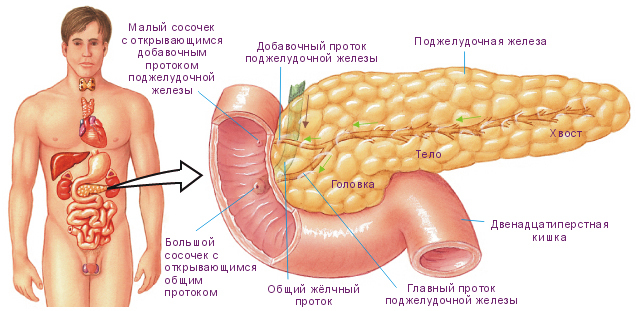
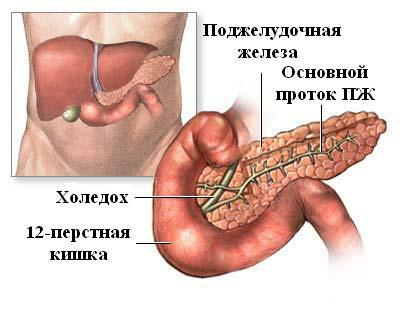
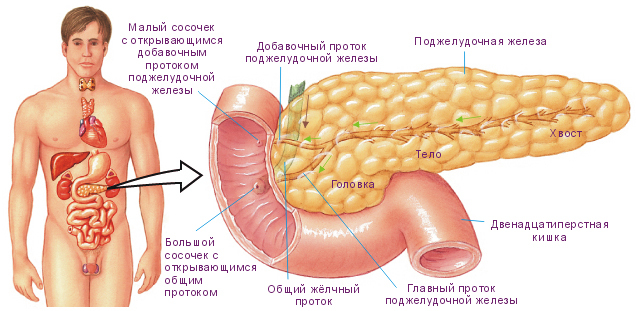
The pancreas plays a key role in the functioning of the body. The most frequent pathological process that an organ is exposed to is pancreatitis (inflammation in its tissues).
Treatment of the pancreas with an exacerbation of the inflammatory process occurs in different ways. Despite the high level of current medicine, some patients resort to alternative therapy.
To know how to treat the pancreas during an exacerbation, you need to consult a specialist.

Content:
- 1 Causes
- 2 Symptoms
- 3 Duration of exacerbation
- 4 Diagnostics
- 5 First aid
-
6 Treatment
- 6.1 Drug therapy
- 6.2 Diet
- 6.3 Traditional therapy
- 7 Prophylaxis
- 8 Useful video
Causes
A considerable number of provoking factors of exacerbation of the pancreas are known. But often pathological changes are observed due to:
- excessive consumption of alcoholic beverages;
- non-compliance with dietary nutrition;
- the use of certain medications;
- intoxication;
- exacerbation of gallstone disease;
- stressful situations and excessive psycho-emotional shocks;
- acute infectious processes.
Even a single consumption of alcohol or alcohol-containing drinks can exacerbate the chronic form of pancreatitis.
At this stage, an increase in the activity of enzymes occurs, under the influence of which the tissue and walls the affected gland will be irritated, there will be swelling and intense pain in the peritoneal region.
Sometimes getting rid of the causes of the disease contributes to the rapid relief of the attack diseases, but the aggressive form of inflammatory changes in the pancreas is treated only in stationary conditions.
Symptoms
The manifestations of an exacerbation of the gland can be confused with the symptoms of other pathological processes in the gastrointestinal tract, but they cannot be felt.
The patient is often disturbed by intense pain in the abdominal cavity. The most pronounced manifestations of the disease will be:
- acute pain in the left side, radiating to the back or shoulder blades;
- diarrhea;
- nausea and gag reflex that is difficult to stop;
- bitterness in the mouth;
- an increase in temperature indicators, shortness of breath and chills;
- decrease in body weight.
The most dangerous symptomatology will be an increase in body temperature indicators to critical indicators, accompanied by chills.
Such a manifestation often signals the secondary formation of inflammatory processes, often resulting in internal bleeding.
Duration of exacerbation
Chronic pancreatitis is characterized by a long period of exacerbation. Basically, it lasts 5-7 days, but in a situation with a severe pathological process, the duration is 10-15 days.
The duration of the exacerbation is due to the inability of the affected organ to quickly restore damaged tissues and impaired functioning of the gland.
Directly because already at the initial manifestations of pathology, the patient needs to consult a specialist.
When an exacerbation of the pancreas is not cured in a timely manner, chronic pancreatitis turns into recurrent, therefore, periods of exacerbation will appear more often and will be protracted.
Diagnostics
The state of the pancreas, the severity of damage to its tissues and functioning is determined by means of various diagnostic techniques. Mostly the patient is assigned:
- general analysis of blood and urine;
- Abdominal ultrasound;
- gastroscopy;
- MRI.
First aid
In the presence of an acute and intense recurrence of the pathological process, intense painful sensations appear that have an increasing character.
The consequence of such discomfort will be unconsciousness and shock, so the patient will need immediate hospitalization.
Before the arrival of doctors with an exacerbation of the pancreas, it is necessary:
- Guarantee the patient's peace of mind. The patient needs to take a semi-sitting or semi-recumbent position. This will make it possible to reduce blood flow to the affected organ and stop the development of inflammation.
- Do not eat food. For 3 days, it is optimal for the patient to refuse to take any food. This will make it possible to reduce the production of enzymes.
- Apply cold to the affected organ. A cold heating pad or ice helps to eliminate swelling and soreness.
- Use antispasmodics.
It is prohibited in a domestic environment:
- Take anesthetics (for example, Analgin, Spazmalgon), since their effect makes diagnosis difficult.
- Use enzymes (for example, Mezim, Festal), as they aggravate the situation.
- The stomach is washed out on its own. It is permissible to induce a gag reflex when the patient is nauseous.
Exacerbation of the disease in question is a very complex condition, which is characterized by pain and intoxication.
In such a situation, it is required to contact a specialist as soon as possible and start therapy, and before that, take emergency measures.
Treatment
In case of disturbances in the work of the pancreas, treatment is prescribed by a specialist, taking into account the patient's well-being.
If you experience unpleasant symptoms and discomfort appears, you need to take action. The main goals will be:
- elimination of pain;
- unloading the affected organ;
- stimulation of self-recovery of the gland.
Drug therapy
The decision to use any medication is made by the attending specialist. In each situation, treatment can vary significantly, taking into account the complexity of the symptoms and the stage of the pathological process.
For the treatment of the disease, drugs of the following subgroups are prescribed:
- Antispasmodic drugs. The main manifestation of an attack will be painful sensations. Sometimes the discomfort is so intense that it cannot be tolerated. The agents from the subgroup of antispasmodics, which have a vasodilating and myotropic effect, help to improve the patient's well-being. For quick relief of pain during exacerbation of the pancreas, it is optimal to use injectable drugs. For example, No-shpa or Papaverine. Such drugs have the least side effects. During the intravenous administration of these drugs, their effect will come immediately, which is extremely important for the psychoemotional state. But Papaverine, No-shpa are characterized by a rather short exposure period. Platyphyllin is capable of eliminating intense pain for a long period, but in comparison with other antispasmodics, it has a large number of contraindications and side effects. In the presence of a state of shock, narcotic anesthetics are used.
- Enzyme medicines. Exacerbation of the disease is very often associated with enzyme deficiency. Therefore, enzyme agents play an important role in pancreatic therapy. They can be divided into the following groups: single-shell (Penzital, Mezim, Pancreatin) - inhibit the activity of the affected organ, reduce puffiness and eliminate painful sensations and two-shell (Pancitrate, Creon) - are covered with acid-resistant shell. Some of the drugs under consideration (Digestal, Festal) are contraindicated for the gland in the process exacerbation of the disease, since they include elements of bile that stimulate pancreatic activity, increasing pain.
- Other medications. When an exacerbation of the disease occurs, the patient develops concomitant pathologies. Therefore, therapy during exacerbation will be aimed at restoring the functioning of the pancreas, as well as maintaining the work of other organs. For these purposes, histamine receptor blockers and antacids (Almagel, Phosphalugel) are used to decrease in the production of hydrochloric acid, choleretic, antibacterial drugs in the presence of bacterial infections.
All of the above funds are prescribed by a specialist, the dosage is selected individually for each patient.
When the therapy of exacerbation of the pancreas by conservative methods did not give the expected effect and the risk of dangerous consequences increases, doctors perform surgery.
Diet
Diet food is an important element of therapy during an exacerbation of the disease.
A properly composed diet and following a doctor's prescription will make it possible to relieve the digestive organs and give them peace.
The ban on the use of any food products is valid for 3 days. It is only allowed to take alkaline mineral water up to 2 liters per day.
After that, liquid and semi-liquid dishes are introduced - soups, jelly. You need to eat them in small portions 5-6 times a day. Alcohol of any strength, fatty, spicy and fried foods are prohibited.
As a basis, dietary food No. 5 is taken, which is developed in order to normalize the functioning of the digestive tract.
It includes the components necessary for the body, and also excludes harmful products.
If you follow a gentle diet for 3-5 months, it is possible to achieve a stable remission and significantly reduce the number of medications used.
It is extremely important to satisfy the need for protein, therefore, almost immediately after fasting, it is recommended to introduce meat products into the menu. Optimally saturate the diet with lean meats.
Before cooking, it must be cleaned of veins and crushed. During the recovery process, it can be consumed in one piece, either baked or boiled.
Since insulin is produced inside the pancreas, it is forbidden to eat sugar for a month after an exacerbation. When the condition stabilizes, it is allowed to make jelly and fruit compotes.
After the first 7 days of the disease, it is permissible to include low-fat varieties of fish and steamed cutlets from it in the diet.
Diet include cod, pollock, perch and navaga. Canned fish and meat, salted, dried and dried fish are prohibited products for the entire duration of therapy.
After fasting, it is recommended to eat porridge made from rice and oats thoroughly boiled in water. No sugar, oil and salt are added.
Corn porridge, millet is also not recommended, since it is extremely difficult to digest.
Traditional therapy
It is believed that it is possible to eliminate the acute form of pancreatitis in a domestic environment by means of alternative therapy.
But modern gastroenterologists argue that the use of a variety of herbs and medicinal plants is able to give a positive effect and improve the functioning of the organ only in the chronic stage of the disease during remission.
Using such drugs during an exacerbation is fraught with dangerous consequences.
According to experts, alternative therapy can be used to eliminate some negative manifestations.
To improve the outflow of bile and normalize the functioning of the liver, it is permissible to use corn silk, wild rose, immortelle.
In order to improve the patient's psycho-emotional state, chamomile, lime and mint decoctions are used.
Prophylaxis
To prevent an exacerbation of the chronic form of the disease, gastroenterologists recommend:
- adherence to dietary nutrition No5;
- complete refusal to take alcohol;
- constant undergoing diagnostics and visiting a specialist;
- maintaining an active lifestyle;
- control of the content of cholesterol and sugar in the bloodstream;
- the use of enzyme agents prescribed by a doctor;
- elimination of the toxic effect on the body of the chaotic use of various medicines;
- implementation of therapy in specialized sanatoriums.
An exacerbation of the pancreas is a rather complex condition that requires immediate assistance from specialists.
To improve the patient's well-being and prevent recurrence of the disease, it is extremely important strictly follow all medical prescriptions and take preventive measures for inflammatory process.
If you consult a doctor in time, the prognosis of pathology in many situations is positive.