Acute abdominal pain: reasons what to do
Important organs of human life are located in the abdomen. The occurrence of acute pain indicates pathology. Pain is a signal of a malfunction in a particular organ. It is extremely dangerous to ignore a symptom localized in the abdomen, the reasons can be serious and lead to death.
Feelings in the abdomen are not the same. Each organ has certain receptors, which react with irritation in case of inflammation or damage. Experts divide pain into types.

Types of pain:
- Somatic. The patient is able to independently determine the localization of unpleasant sensations. The location of the focus is felt: top, bottom, left or right. The muscles are very tense. Movement or change of position causes discomfort and increased sensitivity. Positive symptom of Shchetkin-Blumberg. This condition is felt as a stomach ulcer or intestinal bleeding.
- Visceral. It is characterized by irritation of the receptors of a specific organ of the abdominal cavity. The patient does not understand the exact location. Sensations are located not in the affected organ, but anywhere: above, below or in the center of the peritoneum. Bloating or cramping occurs. Manifested as intestinal or renal colic.
- Reflected. The species is characterized by severe damage to an organ not located in the abdominal cavity. This can be a spinal injury, brain injury, stroke, etc. Painful sensations radiate to the abdomen, so a person is not able to specifically indicate the location.
Any of the above types in case of a sharp occurrence and greatly complicating the patient's condition is referred to as an "acute abdomen". This condition is characterized by a complex of signs of disease or damage to the abdominal organs. The result is often peritonitis, which is very serious. A surgical kind of help is required.
Content
-
1 Sharp abdomen
- 1.1 Manifestations of an acute abdomen
- 1.2 Causes of an acute abdomen
- 2 Assistance before the arrival of the doctor
Sharp abdomen
This concept implies sharp pain in the abdominal cavity. In all cases, immediate medical attention is required. The concept includes a complex of signs that arise in conditions that pose a threat to life, damage to the digestive system, small pelvis. A sharp abdomen is not a diagnosis. The concept defines the patient's condition at the time of the attack, when the stomach began to hurt, before the doctor's examination, laboratory tests, when the diagnosis has not yet been established. To establish a diagnosis, it is supposed:

- Inspect.
- Take a blood test, feces, urine.
- X-ray scanning and / or ultrasound.
- Take anamnesis.
Manifestations of an acute abdomen
This condition is characterized by acute pain, tense muscles of the peritoneum, cramps, disturbances of intestinal motility. Signs:
- Periodic or persistent cramping, stabbing pains in the abdomen.
- The skin and mucous membranes are pale.
- Constipation or diarrhea. Impossibility of gas discharge.
- Pulse and breathing quicken.
- Blood pressure may drop.
- Nausea or vomiting
- The patient assumes a fetal position.
- Loss of consciousness is possible.
- Weakness, dizziness, cold clammy sweat.
Sometimes the temperature rises, but this is an optional symptom of an acute abdomen. The temperature sometimes rises as a result of late seeking help, with inflammatory processes of the abdominal and pelvic organs.
Causes of an acute abdomen
The onset of acute conditions implies a variety of reasons. These are inflammatory diseases of the abdominal cavity, retroperitoneal, pelvic organs, intra-abdominal bleeding, injuries of the spine and chest organs.
Common reasons:
- Acute appendicitis. The pain can come on suddenly and sharply. It is located in the place where the stomach is located, then spreads over the peritoneum. The patient is unable to determine the localization. Gradually, the sensations intensify. The temperature rises to 38C. Additional signs appear. Tongue dry, covered with bloom, lack of appetite, weakness, nausea, vomiting. On palpation, acute pains are felt in the right side. If the temperature begins to decrease, this is a sign of gangrene of the appendix, which leads to peritonitis. If you suspect appendicitis, you should not take any analgesics. You need to call a doctor or ambulance.
- Acute intestinal obstruction. In this state, the intestine is "clogged with a cork." The pain is sharp and sudden, but cramping, of varying intensity. A permanent severe attack is possible when the patient moans or screams. If the sensations subside, which happens when you do not seek help on time, tissue necrosis begins. Nerve cells die off, pain subsides. Spilled peritonitis begins, vomiting appears, dry tongue, stools and gases do not go away. You need to immediately call emergency help. Allowed to take an antispasmodic. Do not take laxatives or enemas!
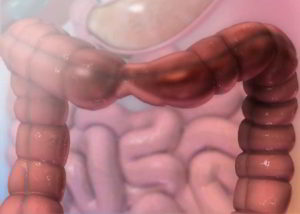
Intestinal obstruction
- Perforated ulcer. A characteristic feature is sudden, acute pain, also called dagger pain. The syndrome is constant, strong, pronounced. The patient often remains motionless, tries to hold back his breathing. In the first hours, an attack is felt in the right hypochondrium, gradually covering the entire peritoneal cavity. The sensation is given to the shoulder, spine, under the scapula and collarbone. Strong muscle tension becomes an additional characteristic symptom. The abdomen is firm and straight like a board. An urgent need to call an ambulance, do not eat, do not drink.
- Strangulated hernia. With an ailment, sensations are located in the area of the hernia. The area of the groin, navel, thigh, postoperative scar is affected. The syndrome is strong, combined with vomiting, nausea. Gas and stool do not go away. Heartbeat increases. At the site of hernia formation, a compaction is felt, extremely painful. With a delay in going to the doctor, necrosis begins, and later - peritonitis. If the patient knows about the hernia, antispasmodics can be taken before the doctor arrives. Call an ambulance urgently.
- Acute gastritis. With this diagnosis, it hurts "in the stomach". The nature of the sensitivity is constant, strong, especially if the gastritis is chronic, this is not the first time. It occurs due to provoking factors, unhealthy diet, alcohol, stress. Before seeking help, it is possible to alleviate the condition with medication.
- Chronic colitis. The attack is characterized by a mild sensation. Localization in the lower abdomen or everywhere. It is accompanied by heaviness, tension in the anus, bloating, rumbling. Along the entire length of the large intestine, palpation sensations are unpleasant. A doctor's help is needed. Diet is a must.
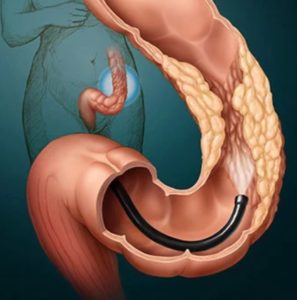
Colitis in humans
- Hepatic colic. Severe cutting and unexpected pain in the right hypochondrium. Gives under the right clavicle and scapula, right shoulder and right side of the neck. There is nausea, vomiting of bile. The temperature rises. Yellowness of the skin is observed. It is supposed to immediately call a doctor. Refuse to eat before arrival.
- Renal colic. The attack begins unexpectedly, the pain is sudden, it proceeds sharply, painfully. The location originates in the lower back and descends along the ureter. May be given to the perineum, leg or groin. Nausea, vomiting, gas formation with flatulence, painful and frequent urination are concomitant. In some cases, soreness is felt throughout the lower abdomen. The nature of the symptoms is very similar to the "sharp abdomen". The patient does not find a place for himself, rushes about. The temperature rises. If a person is aware of the presence of kidney stones, it is possible to take an antispasmodic or a warm bath before the arrival of an ambulance.
- Intestinal infections. Different diagnoses are likely. Possible intestinal spasm, dysentery, salmonellosis. The pain is often localized in the navel, accompanied by diarrhea, painful, unpleasant color and odor. It is necessary to call a doctor and try to be hospitalized. Treatment is best carried out in a hospital setting, for constant monitoring of the course of the disease.
Many more conditions are known that are close to an acute abdomen. Each has a common feature - soreness in the abdominal region, localization is difficult to determine, often the entire abdominal cavity hurts. Almost all diseases are urgently needed. Until the doctor arrives, they try to help the patient.
Assistance before the arrival of the doctor
Everyone should have an idea of what to do in a situation when there is a patient next to him with acute abdominal pain. The main thing is to stay calm and act according to plan.
Basic actions:
- First of all, ensure bed rest and rest.
- Find out if this is a chronic disease, whether such attacks have happened before.
- Urgently call an emergency or ambulance. Especially with symptoms of cramps, vomiting of blood, black stools, bloody discharge in the urine.
- It is possible to take antispasmodics, No-shpa will do. Be sure to inform the doctors about the appointment.
- It is allowed to apply ice and a hot water bottle with ice water.
- If the patient is in a fainting state, but the pulse is palpable, you need to lay him on his stomach and turn his head to one side. This will provide breathing when vomit is expelled.
- If breathing and pulse are absent, resuscitation is started. Artificial respiration and chest compressions are required.
Forbidden:
- Serve food or drink to the person.
- Offer analgesics or other pain relievers.
- Warm compresses are prohibited.
- Take laxatives or diuretics.
- You cannot leave the patient alone until the arrival of the doctors.
Knowing the symptoms of a condition known as an acute abdomen, having an idea of possible diseases, having first aid skills, it will be possible to alleviate a person's condition, and possibly even save a life.