Dizzy and nauseous: what could it be, the main reasons
Every person experienced dizziness and nausea in life. The reasons for these symptoms indicate the course of short-term or hazardous processes in the body. The disease does not choose gender and age, therefore, when non-transient signs of nausea and whirling in space you should visit your doctor.
With dizziness, there is a violation of the equilibrium balance of the body with the connection of the brain, organs of vision and hearing, nerve endings and blood vessels. The cerebellum is responsible for coordination of movements, muscle tone and balance control. Continuous correction of conscious and involuntary actions of a person fails in diseases of the central nervous system, head injuries and other factors.
Content
-
1 Causes of vertigo with nausea
- 1.1 Why is my head spinning
-
2 What diseases are associated with dizziness
- 2.1 Food poisoning
- 2.2 Head injury
- 3 Dizziness symptoms
-
4 Diagnostics
- 4.1 What the doctor will prescribe
- 5 Symptoms for early treatment
- 6 Treatment
Causes of vertigo with nausea
The feeling when everything floats before the eyes, the head seems to be lost, while there is a temporary loss of hearing or ultrasound in the ears, associated with vertigo. This is the impression of the rotation of the surrounding objects in a circle. Nausea is a painful sensation in the diaphragm and throat and is often a harbinger of vomiting.

Why is my head spinning
Whirling relative to objects in space indicates a weak vestibular apparatus. Etiology of central vertigo:
- Violation of blood flow in the vessels of the brain. It is observed in Lyme disease, infections that can cause brain inflammation (encephalitis, meningitis).
- Osteochondrosis of the cervical spine. Provokes a violation of the blood supply. In this condition, the hands become numb, the neck moves stiffly, and the head hurts.
- Migraine. An attack of acute episodic or regular headache is accompanied by loss of balance and nausea.
- Precancerous and cancerous conditions, malignant brain tumors.
- Epilepsy. Regardless of the severity of the disease, vertigo accompanies an attack of nausea.
For vertigo of a peripheral nature:
- Damage to the tympanic membrane, diseases of the middle ear.
- Neuronitis. The vestibular apparatus does not receive the required amount of blood for functioning.
- Meniere's disease. Endolymph accumulates in the inner ear.
Stabilization of the body with central vertigo occurs quickly. Temporary violations disappear without outside intervention. Weakness with nausea retreat. The symptomatology of central vertigo leads to greater concern for a person's well-being. Against the background of increased cardiac arrhythmias, nausea can cause vomiting and impotence.
What diseases are associated with dizziness
People prone to panic attacks, in addition to wild unreasonable fear, experience vertigo and trembling, compression in the epigastric region. Mental illness literally makes you freeze and break out in cold sweats. Anxiety is accompanied by tremors (hands shaking), suffocation, abdominal pain, and other somatic symptoms.
Motion sickness in land, air and sea transport is called "seasickness". The state of people prone to signs of disorder, with monotony of movement, is comparable to a rocking motion. Therefore, the disease occurs more often in children. The inconsistency of the visual perception of reality and the signals that the vestibular apparatus sends to the brain leads to the fact that a person is dizzy, nauseous and can vomit. Intense carousel riding provokes emotional excitement and physical lethargy, tremors in the legs and arms that are difficult to calm down.
Pathologies in which nausea and dizziness occurs:
- Orthostatic hypotension. A sharp change in body position provokes a jump in blood pressure. It becomes dark in the eyes, the blood in the vessels does not have time to be redistributed throughout the body. The brain does not receive a blood supply, the head is dizzy, nauseous, the body is unwell, the legs are shaking.
- Hypertension, hypertensive crisis. A systematic or sharp increase in blood pressure, accompanied by a feeling of constriction behind the sternum, pain in the occipital and temporal lobes, vertigo. Nausea is replaced by vomiting, followed by relief.
- Hypoglycemia. A decrease in blood glucose levels destabilizes the body. Getting insufficient sugar affects the brain, manifesting itself in dizziness and lightheadedness.
- Oxygen starvation. Hypoxia causes a blockade of brain functions in order to save energy resources. Among these is the regulation of balance.
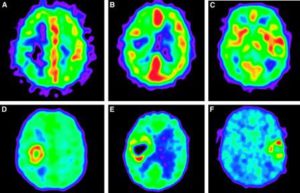
Brain hypoxia
- Anemia. Anemia is characterized by a decrease in red blood cells in the blood. A person experiences a cold feeling in the arms and legs, drowsiness, vertigo. More often, similar sensations with low hemoglobin occur in women during menstruation, pregnancy and menopause.
- Stress. The release of adrenaline and norepinephrine into the bloodstream provokes a sharp narrowing of the vessels of the brain, from which it pounds in the temples, doubles before the eyes, the heart is pounding furiously, vomiting.
- Anorexia. Prolonged fasting leads to depletion of the body. The stomach stops eating. The desire to lose weight is more often observed in a girl. Refusal of food, turning into mental dependence, harasses food centers, suppresses appetite. Getting rid of the disorder is difficult. The girl constantly experiences dizziness, weakness, she is sick of food.
Food poisoning
The ingestion of the pathogen of a toxic infection causes a different result. Poisoning is not contagious. Digestive disorders can occur when a person neglects personal hygiene or is indiscriminate in food. Having eaten a pie with dirty hands, having drunk expired yogurt, you need to be prepared for the fact that your stomach will soon hurt. Seeding food causes a nauseous feeling, salivation, painful cramps in the stomach, which culminate in gushing vomiting. Dizziness, malaise appears, body temperature rises. In the stomach comes relief after vomiting, the body is thus cleared of toxins. The consequence of vomiting is a sore throat, a slight cough.
The severity of symptoms in case of poisoning varies from person to person. Toxic infection manifests itself quickly in a weakened organism, in the elderly or in a child. The consequences of poisoning are different, a severe degree of toxicity is fatal (with botulism).
Head injury
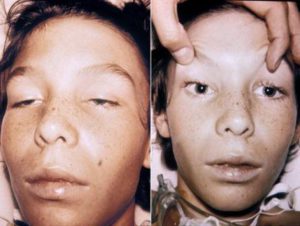
Traumatic brain injuries (traffic accidents, bruises, sports injuries) disrupt blood circulation, causing the severity of the consequences: mild, moderate, coma, death. Concussion symptoms:
- Fainting;
- Severe pain in the head;
- Great nausea with vomiting;
- Unstable gait with dizziness;
- Loss of energy, confusion of thoughts.
Dizziness symptoms
The signs of vertigo are divided into four clinical groups:
- Vestibular vertigo. An adult has the impression of falling from a height of growth. Surrounding objects float in the eyes. In addition to the buildup of everything around, symptoms appear: increased sweating, nausea with vomiting, hearing impairment, slight visual vibration.
- Light-headedness. A sudden drop in blood pressure and heart disease cause unconsciousness and a feeling of clouding. Feeling unwell is accompanied by pallor of the skin, nausea, darkness in the eyes, sweating, rapid pulse.
- Lack of balance. Vertigo without nausea is associated with unsteadiness when walking. The patient can hardly stand in one position, swaying a little. Orientation is lost in the dark, at night a person stumbles upon surrounding objects.

- Psychogenic vertigo. World perception, characteristic of severe mental disorder, depression. The condition is accompanied by nausea, there is heaviness in the head. A person walks with a clouded consciousness, the surrounding space looks like a viscous substance. From dizziness, there is a fear of falling.
Diagnostics
The examination of the patient is carried out before the appointment of therapeutic measures. The doctor will inquire about the history of the symptoms of the disease. To describe the condition in men and women, the physician will ask questions:
- about the injuries suffered (it is very important to remember the case of damage to the head, neck);
- about chronic diseases;
- how often there is a breakdown, fatigue increased;
- what happens when you change your posture;
- the teenager will find out the level of workload at school, in sections;
- headache is sharp or gradual, how long the head can hurt;
- in which direction the body tends when dizzy;
- whether nausea is associated with a change in position or occurs after eating;
- whether there is vomiting, painful sensations in the lower abdomen;
- what medications the patient is taking, may have noticed a side effect;
- whether there is hearing loss or loss, noise, ringing in the ears, flies or darkness in front of the eyes;
- there is a thirst, an attack of hunger;
- whether the temperature that accompanies chills rises.

What the doctor will prescribe
After clarifying all the aspects, tests and additional studies will be prescribed to accurately establish the causes of what makes you sick and dizzy. Diagnostics consists in:
- tests for balance, balance, hearing strength;
- general blood analysis;
- blood test for sugar, cholesterol, hemoglobin;
- EEG;
- examination by a therapist;
- examination by a gynecologist for pregnancy in women;
- MRI, CT of the brain;
- ECG, pressure is measured;
- Ultrasound of the vertebrobasilar arteries.
Symptoms for early treatment
If a person is dizzy, he is nauseous, and these symptoms appear repeatedly - everything indicates that it is time to take action. What are the signs you should see a doctor:
- Prolonged dizziness;
- A combination of nausea, vertigo, temperatures over 38 degrees;
- High or low blood pressure;
- Shakes hands;
- When the position is changed, weakness is felt in the body;
- Unjustified mood swings (apathy, irritability);
- Blurred consciousness, confused speech.
Treatment
It is not enough to remove the signs, it is important to eliminate the disease. Vestibulolytics are prescribed to reduce nausea and dizziness. Treatment aims to remove anxiety, vertigo, nausea attacks.
High blood pressure and hypertensive crisis are gradually eliminated. Means are used to thin the blood, lower cholesterol. For a week or more, the patient receives a massage of the collar zone. With hypertension and hypotension, the change in body position is performed slowly: the legs drop, the patient gets up without harshness. In hypotonic patients, the slowed-down flow of blood to the head is associated with vascular tone. In case of hypoglycemia, help is based on the early ingestion of a simple carbohydrate (candy, rolls) into the body. To make it easier for the patient, he is laid horizontally to exclude fainting.
Meniere's disease is recommended to be treated with betahistine while following a salt-free diet with the use of diuretics. Self-medication is not allowed, exacerbating the situation. First aid is limited to changing the posture to a safe one. With hypoxia, the first thing to do is to provide fresh air. Reception remedies for dizziness masks the symptoms of the disease, the lack of oxygen kills the brain cells. Constipation of the inner ear is relieved by special exercises, which not everyone can withstand.
Vertigo in transport, on a swing is eliminated by training the vestibular apparatus. It is easier to train the balance system of a teenager and a child. Panic attacks are controlled by antidepressants and psychotropic medications. Help is associated with the action on nerve cells. In cases dizziness and nausea medical intervention and treatment is required.