
Purulent appendicitis: symptoms, causes, consequences and postoperative period
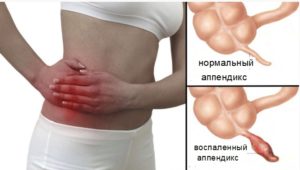
Suppurative appendicitis is an acute inflammation of the appendix cecum, accompanied by the transformation of its structure into pus. The disease is characterized by a high level of pain syndrome. This common abdominal pathology is treated with surgery and is likely to lead to complications. This is a generalized concept, which means all types destructive inflammation of the appendix.
Content
- 1 The reasons for the development of pus
-
2 Types of pathology of the appendix
- 2.1 Catarrhal
- 2.2 Phlegmonous
- 2.3 Gangrenous
- 2.4 Rupture stage
- 3 Symptoms of a pathological condition
- 4 Complications caused by pus
- 5 Rehabilitation after surgery
The reasons for the development of pus
Experts have no consensus regarding the causes of the pathology. In gastroenterology, it is customary to distinguish several theories that explain the reasons for the formation of destructive forms of appendicitis:
- Mechanical. The anatomical structure of the cecum organ: bends, narrow lumen, tendency to bend, foreign objects, fecal stones - all this provokes blockages of the appendix, which causes a severe form of the disease.
- Infectious. The inflammatory process is triggered by infection with infectious pathogens: typhoid, amoebiasis, yersiniosis or tuberculosis.
- Alimentary. Unhealthy nutrition: an excess of protein foods and a lack of foods containing fiber - lead to functional disorders in the intestines, provoke dysbiosis and constipation.
- Vascular. Suggests a spasm of the vessels supplying the appendix, leading to impaired blood supply and stagnation.
Types of pathology of the appendix
There are four types of the inflammatory process, which are stages of its development. Acute appendicitis begins with a catarrhal stage, all subsequent ones are united by the term destructive.
It is known that the disease goes through four stages:
- Catarrhal - develops in the first 6-12 hours;
- Phlegmonous - proceeds during the day;
- Gangrenous - 2-3 days from the onset of the disease;
- The rupture phase is a rapid deterioration in a person's condition.
Catarrhal
It is characterized by the appearance of puffiness on the mucous membrane. This is not a destructive form of the disease. As a result of the edema of the membrane, the lumen of the appendix narrows. Then it increases in size, and the pressure inside rises. As a result, there is discomfort in the abdominal region, attacks of nausea, dry mouth, bloating. This phase lasts 6 hours. At this time, indistinct symptoms make it difficult to diagnose. Often, the process receives a reverse movement - the swelling subsides, the inflammation is eliminated. This scenario is possible with strong immunity, when the mobilization of the body's protective functions eliminates the threat. If the situation is different, the disease progresses and enters the next phase.
Phlegmonous
The tissues of the epididymis are melted. Inside it, suppuration accumulates, which permeates the entire organ, as a result of which it thickens and increases. The infection spreads outward. The purulent process causes a hanging of the temperature and the appearance of fever, weakness, nausea and sharp pain in the lower peritoneal region. The phase lasts from 6 to 24 hours.
Gangrenous
On the second day, the disease passes into this stage and lasts up to 72 hours. It is characterized by necrosis of the appendix. During this time, the painful symptoms disappear. The illusion is created that the patient is recovering. This is due to the fact that the nerve endings have undergone necrosis. At this time, there is a sharp weakness in the human condition. Decomposition products enter the bloodstream, spread throughout the body, and severe intoxication begins. The body is severely dehydrated, the abdomen becomes hard and distended.
Rupture stage
In another way, this stage is called perforation. Necrotic tissue is destroyed, and pus enters the abdominal cavity, spreads through its layers, causing infection - peritonitis. The patient falls into a critical state: the pressure drops, the pulse is spasmodic, the skin acquires a pale gray tint, the consciousness is inhibited, and its loss is possible. A decrease in painful sensations is an unfavorable sign of the progression of the disease. In surgery, with such a clinical picture, immediate surgical intervention is required.
Symptoms of a pathological condition
Inflammation of the appendix is difficult to diagnose, and special knowledge and the use of hardware diagnostics are required to differentiate it from other anomalies. Therefore, the appearance of suspicious pain sensations at the bottom of the abdominal region is a reason to immediately go to the hospital.
The dominant symptom is pain. It arises suddenly and begins in the navel area, moves down after 4-12 hours, and then spreads further. This is a dull and moderate pain that worsens when you cough and when you try to lie on your left side. On the third day, its intensity becomes sharply expressed, limiting a person's mobility. To reduce it, patients prefer to constantly lie in the embryo position on the right side, with any action with the tension of the abdomen, the discomfort increases. After five to seven days, the pain subsides. This signals the onset of a difficult phase, in which the nerve endings die off and the body does not respond to infection. During this period, a rupture of the dying appendage occurs, and suppuration pours out. With this course of events, in order to help a sick person and save his life, doctors will have no more than 12 hours at their disposal. If, after two days of painful syndrome, the pain suddenly stops, you should immediately go to the clinic for help.
Painful sensations can be accompanied by other signs: loss of appetite, nausea, infrequent vomiting, and diarrhea. There are signs of intoxication of the body. All of them appear after pain syndrome. Intoxication without preliminary painful sensations speaks of other ailments of the intestinal tract.
A sharp rise in temperature is characteristic. For two days, it stays within 37.5-38 C. An increased temperature for a longer period of time indicates perforation of the dead tissue.

And although it is almost impossible to independently diagnose appendicitis, a combination of several factors indicates the need to seek medical help.
In the course of the development of the disease, the following symptoms are added to the main manifestations (abdominal colic, nausea and vomiting, fever on the first day) on the third or fifth day:
- Loss of consciousness, dizziness;
- Increased heart rate;
- Sweating of the palms and forehead;
- Bloating;
- Pallor of mucous membranes and skin.
At this stage, if the necessary surgical care is not provided, the probability of a fatal outcome exceeds 65%.
Complications caused by pus
Late diagnosis and treatment at the stage of suppuration causes serious consequences. Suppuration does not disappear by itself, it will certainly destroy the tissue of the organ, after which it will penetrate into the abdominal cavity. In the first two days, the anomaly does not go beyond the epididymis, and its rupture does not occur. Sometimes this rule is violated - the gap between the child and the old happens earlier. If during this period the patient is not provided with treatment, then after the specified period, the manifestation appendicular infiltrate, abscesses, peritonitis and pylephlebitis are almost inevitable.

- Appendicular infiltration. Abnormal tissue changes occur, in the center of which there is a destroyed organ. It is the result of an untimely visit to a doctor.
- Appendicular abscesses. They develop as a result of suppuration of the appendicular infiltrate within 8-12 days. Education is subject to autopsy and sanitation according to general rules.
- Peritonitis. This is an inflammation of the lining of the inner wall of the abdominal cavity. Surgeons distinguish three stages: reactive, toxic, irreversible. The last one is the hardest. According to statistics, after three days from the beginning of the development of peritonitis, doctors cure only 10% of patients.
- Pylephlebitis. This is an extremely difficult type of complication that develops rapidly and leads to death in a few hours. Represents an infection of the portal vein with subsequent liver abscess.
Rehabilitation after surgery
After diagnosis, the appendix is removed. This is a simple and common surgical procedure. The recovery time depends on the degree of neglect of the disease, the amount of surgery and postoperative complications.
In the postoperative period, a course of antibiotics is prescribed to suppress bacterial infections. Already eight hours after the operation, the patient is allowed to move, but with the condition of constant monitoring of the condition of the sutures. To activate the processes of regeneration, therapeutic exercises are prescribed. It aims to prevent gassing and constipation. After the operation, the patient is prohibited from physical and sexual activity, a special diet is prescribed. Do not eat foods that irritate the intestines - salty, spicy, sour or smoked. It is forbidden to consume alcohol and smoke. Food is taken warm, overheating is not allowed for the same purpose. Duration of the diet is at least two months. Rehabilitation takes place under the supervision of the attending physician. With full compliance with medical recommendations, the patient's health is completely restored.


