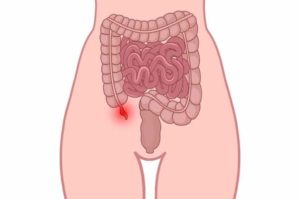
Phlegmonous appendicitis micropreparation: phlegmonous ulcerative
With phlegmonous appendicitis, it is necessary to examine a microscope of the walls of the appendix under a microscope.
This is necessary to identify and exclude the causes of the disease.

Content:
- 1 General information about the disease
- 2 Symptoms of phlegmonous appendicitis
- 3 The main causes of the disease
- 4 Diagnostic methods
- 5 Appendectomy
- 6 Recovery after surgery
- 7 Complications after appendectomy
- 8 Prevention of appendicitis
- 9 Useful video
General information about the disease
Phlegmonous appendicitis is an inflammation of the appendix, characterized by purulent processes.
This pathology develops suddenly, without any changes in the organ itself. This type of disease is the third stage of appendicitis and is considered the most dangerous.
In addition to purulent phlegmonous appendicitis, there are other forms of acute inflammation of the appendix, for example, catarrhal appendicitis.
This form is characterized by the absence of a large amount of pus. The phlegmonous type of inflammation of the appendix is the most dangerous.
This disease mainly develops in children, but there are cases of pathology in adults.
Appendicitis at any age is dangerous and needs urgent treatment. However, the child's body is most susceptible to bacterial infections, so the risk of peritonitis or sepsis is quite high.
Another type of disease is gangrenous appendicitis. This form of the disease can also have very serious consequences.
If patients do not follow medical recommendations, secondary appendicitis may occur.
There is also phlegmonous-ulcerative acute appendicitis. It is accompanied by the formation of ulcers on the mucous membrane of the appendix and purulent inflammation.
The main task of a specialist is to make an accurate diagnosis and select the appropriate treatment. In most cases, the only option is surgery.
After removal of the appendix, the patient undergoes long-term rehabilitation, which includes nutritional therapy and reduced physical activity. It is important to eliminate heavy and irritating foods from your diet.
Symptoms of phlegmonous appendicitis
The main signs of this form of the disease include:
- thickening of the walls of the appendix and their swelling;
- fibrinous layers;
- tension in the appendix;
- when examined in the lumen of the appendix, pus is observed.
The symptoms of the disease in children are more pronounced than in adults. These include:
- acute pain in the abdominal cavity and lower back, aggravated by coughing and sneezing;
- nausea, vomiting, diarrhea;
- kidney cramps;
- education in the language of white-gray plaque;
- lack of appetite;
- increased body temperature.
If you do not contact a specialist in a timely manner, intoxication of the body will begin.
Usually children become very lethargic, naughty and hold on to their tummy.
If such symptoms are found, it is necessary to urgently call an ambulance. Before the arrival of doctors, you cannot self-medicate and put warm heating pads on your stomach.
It is also not recommended to eat or drink.
The main causes of the disease
Phlegmonous inflammation of the appendix occurs as a result of reasons such as:
- non-observance of the regime and rules of nutrition;
- entry into the intestines of foreign;
- the presence of helminthic invasion;
- an increase in the tissues of the lymph nodes near the appendix;
- narrowing of the lumen or bending of the appendix;
- the formation of fecal stones;
- duodenal ulcer;
- bacterial infections;
- neoplasms in the intestine.
After surgery, doctors send the tissues of the appendix for histology. If it is phlegmonous or phlegmonous-ulcerative appendicitis, experts evaluate the micropreparation of the contents of the appendix.
This is necessary to identify the root cause of the inflammation.
Diagnostic methods
Only a qualified doctor can assess the patient's condition and make an accurate diagnosis.
He will study the patient's history and conduct the necessary tests and tests (Sitkovsky, Bartomier-Mkhelson, Voskresensky and Shchetkin-Blumberg). Diagnostics will help to confirm or deny acute appendicitis.
Laboratory tests are an obligatory point of diagnostics. In case of inflammation, there will be an increased white blood cell count in the blood. Also, if necessary, the specialist will prescribe an ultrasound scan.
Appendectomy
After examination and confirmation of the diagnosis, the doctor will prescribe treatment. Most often, appendectomy is prescribed - the removal of the appendix.
The operation is usually performed under general anesthesia, but if there are contraindications, local anesthesia may be limited.
There are two methods of performing the operation:
- Traditional. The right iliac region is incised with a scalpel and the appendix is removed. The wound is treated and a cosmetic suture is applied.
- Laparoscopy. Punctures are made in the abdominal wall and a laparoscope is inserted, which removes the appendix. Contraindications to this method are: excessive body weight, intestinal adhesions, pregnancy, inflammation of the cecum.
Having studied the medical history and individual characteristics of the patient, the doctor will select the appropriate type of surgical intervention.
Recovery after surgery
The rehabilitation period is long lasting. For a speedy recovery, you must follow the recommendations of specialists.
After surgery for the appendix, the patient must follow a number of recommendations:
- With uncomplicated surgery, you can start walking in 5-6 hours. If the operation went with complications, you should adhere to bed rest.
- It is imperative to use a postoperative bandage. This will prevent a hernia from forming.
- Physical therapy and breathing exercises will have a positive effect on the recovery process.
- Compliance with diet and diet.
- Elimination of intense physical activity and weight lifting.
- Daily walks in the fresh air at a slow pace.
Complications after appendectomy
After suffering phlegmonous appendicitis, there is a risk of dangerous consequences. If medical assistance was not provided on time, the following complications may develop:
- appendicular infiltrate;
- peritonitis of the appendix or abdominal cavity;
- perforated appendicitis;
- narrowing of the intestinal lumen;
- thrombophlebitis;
- purulent inflammation of the portal vein (pylephlebitis).
Also, an untimely diagnosis of pathology can cause the tissue of the appendix to die off and the development of gangrenous appendicitis.
Phlegmonous-ulcerative appendicitis is also a dangerous complication. This pathology is characterized by ulcerative formations of the appendix and the occurrence of purulent processes. There are cases of death of patients.
Prevention of appendicitis
To prevent the disease, it is very important to adhere to the correct regimen and diet.
It is best to stick to plant-based and healthy foods and cut out foods that are high in fat.
When choosing meat, you should choose lean varieties such as young veal, fish and poultry. Wash vegetables and fruits thoroughly before eating.
Also, the use of dairy products has a beneficial effect on the condition of the intestines, preventing the occurrence of acute appendicitis.
You need to drink the optimal amount of clean water. It cleanses the body very well and removes toxins from the intestines.
And, most importantly, you need to listen to your body and contact specialists in a timely manner, if necessary.