Appendicitis during pregnancy: symptoms, signs, consequences for the child
The female body during the period of gestation is vulnerable to diseases. Acute appendicitis is no exception, but painful sensations in the right hypochondrium can be attributed to pregnancy manifestations. As a result, time was lost to prescribe treatment with minimal risk. To avoid this, you should take into account some of the features of the disease.
Content
- 1 Distinctive symptoms of the disease in pregnant women
- 2 Possible causes and diagnosis
- 3 Actions at the first sign
- 4 Treatment methods
- 5 Consequences for mother and child
- 6 Postoperative period
Distinctive symptoms of the disease in pregnant women
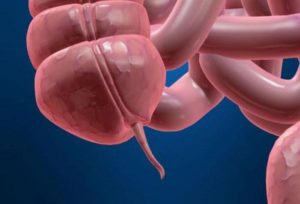
Appendicitis during pregnancy is the most common surgical procedure, the risk of morbidity in pregnant women is higher, most often occurs in the first trimester of pregnancy. Appendicitis is characterized by an inflammatory process of the vestigial appendix of the cecum, called the appendix, which is present in every person. This disease is more common in women than in men.
Symptoms for appendicitis:
- Pain. The classic picture of appendicitis - with slow pressure on the right side, it subsides, and if released sharply, it increases sharply. In pregnant women, the uterus, increasing in size, raises the appendix upward, so the pain localized in the hypochondrium, gradually descending to the liver and to the edge of the pelvis, given to the lower back, to the other side.
 "Lowering" the pain helps to identify inflammation and not to be confused with the increased tone of the uterus. At first, the pains are pulling and weak, but intensify over several hours and their manifestation becomes stronger if you lie on your right side.
 - The abdominal wall of the right half of the abdomen hardens.
- Nausea and vomiting if the process presses on the liver. Such signs are typical for toxicosis, however, together with the localization of pain, they should not be ignored. If the process is located low, the picture of acute cystitis is typical.
- Temperature rise up to 40 C, rapid pulse, high blood pressure.
- Bowel disorders - diarrhea or stool retention.
Possible causes and diagnosis
The most likely causes of the development of the disease:
- Violation of the blood supply to the appendix;
- Damage to the nerves in the appendix;
- Infection from nearby organs;
- Changes in the immune system.
The exact causes of appendicitis are unknown. Pregnancy for appendicitis may be a predisposing factor. The fetus, as it grows, presses on the process, constricting the blood flow and provoking inflammation. Also, during pregnancy, there are frequent cases of constipation, which cause stagnation of feces and the emergence of pathogenic microflora. Against the background of the reconstructing weakened immunity, this becomes an aggravating factor.
To diagnose appendicitis in pregnant women, the following methods are used:
- Blood test - with appendicitis, there is an increase in the number of leukocytes in the blood. At an early stage of the disease, their number is close to normal, but gradually increases.
- Urinalysis with sediment microscopy - similar to a blood test, the study indicates severe leukocytosis. You should properly prepare for the delivery of the analysis, there is a high probability of getting a false result.
- Ultrasound examination is a safe procedure that all pregnant women undergo regularly and helps to see how enlarged the organ is. It is not always useful, since the process is not visible on ultrasound in everyone.
- Doppler is a procedure similar to ultrasound, in which the speed and direction of blood flow is examined, only in this case, not to the fetus, but to the appendix.
- Laparoscopy is a procedure for examining the inside of the abdomen, in which a thin optical tube with a camera is inserted into a small incision in the anterior abdominal wall.
Actions at the first sign
If you suspect appendicitis, you should:

- Call an ambulance;
- Record the time of onset of pain;
- Refrain from eating and drinking plentifully until the arrival of the doctor, a maximum of a glass of water is allowed;
- Do not take any medications - this will interfere with making an accurate diagnosis;
- While waiting for an ambulance, do not take active action, take a lying position;
- Upon arrival, the ambulance must show the doctor a passport, policy, exchange card.
Do not be afraid, a pregnant woman will not be taken to the hospital - the inflamed process is removed in surgery, and not in gynecology. But if appendicitis happened at a later date, then delivery by cesarean section is acceptable where the patient will be taken.
Treatment methods
In cases where the patient is pregnant, therapy in the form of cold, hunger and antibiotics is not used. An operation called appendectomy is performed immediately. To prevent the development of infection, antibiotics are selected before surgery. The operation is performed by anesthesia through general anesthesia or epidural anesthesia. The latter is optimal for pregnant women, since it is less harmful to the baby. Two methods of appendectomy are used: open (or traditional, when an incision is made in the abdominal wall) and closed, using a laparoscope, which is performed by puncturing the abdominal wall.
In early pregnancy, removal of the appendix can be performed using laparoscopy. This method has a number of advantages over the open method: lower pain syndrome after surgery, faster recovery, no large scars from incisions. In addition, laparoscopy is the only way to establish appendicitis if the doctor has doubts about the diagnosis. The small size of the fetus does not interfere with the full functioning of the instruments in the abdominal cavity. If the gestation period exceeds 20 weeks, the operation is performed in an open way. This is due to the fact that the risk of losing a child in the second half of pregnancy is much higher than in a small period.
The open method is carried out through an incision in the skin and abdominal wall.

The surgeon performs excision, the process is excised. If an abscess is present, the pus is removed with a drainage tube and the incision is sutured. The seams are treated with 0.05% chlorhexidine solution, removed after a week. It is important to monitor the condition of the stitches - during pregnancy, the belly grows rapidly, and the stitches, no matter how well they are applied, can come apart.
Regarding the timing of pregnancy:
- If an exacerbation occurs before 37 weeks, then the pregnancy is maintained until a date closer to the PDD.
- If later than 37 weeks - in the absence of contraindications, a cesarean section is performed.
If pregnancy is just planned, it is not worth getting pregnant immediately after the operation, since the antispasmodics used can have a negative effect on the development of the fetus. In addition, the growing belly inevitably harms the injured muscles of the peritoneum. The minimum period that should be observed before conception is 6 months, in cases of laparoscopy - 2-3 months.
Consequences for mother and child
By itself, inflammation of the appendix does not affect the fetus, which is protected from the effects of the placenta and the walls of the uterus. The danger is only the last stage of the disease, when the process is perforated. This condition is preceded by three stages: catarrhal, phlegmonous and gangrenous, usually they manage to help the patient at the very first.
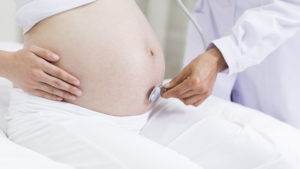
However, there are situations when there is simply no opportunity for an operation due to circumstances. In the absence of antibiotics and proper treatment, the phlegmonous process fills with pus and becomes gangrenous. Complications are fraught with the development of diffuse peritonitis. The main threat to the life of the mother and child is sepsis, which develops as a result if assistance is provided out of time.
Even mild forms of inflammation are dangerous - excessive pressure on the uterus carries the threat of placental abruption, hypoxia and intrauterine fetal death. The risk of polyhydramnios, premature birth, and frozen pregnancy is extremely high. Hypoxia often causes irreversible changes in the organs of an unborn child.
Postoperative period
All pregnant women after appendicitis are included in the risk group for the threat of premature birth. In such cases, the expectant mother is observed by both the surgeon and the gynecologist. If the doctor's recommendations are not properly followed, the postoperative period is no less dangerous than the disease itself. After removal of the appendix, there is a high probability of disturbance of intestinal motility and the occurrence of infection. To prevent complications, the attending physician chooses a course: these are sparing drugs, physiotherapy, ultrasound, hormone tests, ECG and Doppler. If labor begins a short time after the operation, the pregnant woman anesthesia is provided with spinal or epidural anesthesia, hypoxia is prevented fetus. In case of natural childbirth, it is possible to use an episiotomy and a vacuum extractor. The application of obstetric forceps is used, but this method is gradually receding into the background due to the high risk to the health of the child.
Prevention of premature birth consists in adhering to bed rest and taking prescribed medications: antibiotics, sedatives, tocolytics and vitamins.
Regardless of the stage of the course of the disease, it is important to understand that this is a widespread phenomenon and at its first manifestations you should not be afraid and look for ways of self-medication. If you follow the doctor's instructions, the operation is safe and painless, it is important to listen to your feelings and tune in to a positive outcome.