Chronic appendicitis: symptoms, signs and treatments
Chronic appendicitis is a disease with characteristic inflammation in the appendix that occurs without acute symptoms. Usually the disease is associated with an acute form of inflammation of the appendix, which was treated without surgery. Upon admission, the patient notes aching, pulling soreness and discomfort under the ribs, especially acutely manifested during sports or physical work. Discomfort is often accompanied by bouts of gas formation, alternating loose stools with a difficult bowel movement. What are the reasons for the transition of the disease into a chronic form, the main symptoms and treatment options are discussed in the article.
Content
- 1 The causes of chronic appendicitis
- 2 Symptoms
- 3 Diagnostics
- 4 Treatment
The causes of chronic appendicitis
Chronic appendicitis is divided by doctors into types. The classification defines:
- Residual;
- Relapsing;
- Primary chronic.
The residual or residual form of appendicitis differs in that the patient has already had an acute form inflammation of the appendix, while the attack passed without surgery, the appendix was not removed. The treatment was carried out with medication, based on the use of antibacterial drugs. Malaise is characterized by the persistence in the appendix of the conditions under which it develops an inflammatory process, such as neoplasms in the form of a cyst, adhesions, integrity disorders mucous membrane.
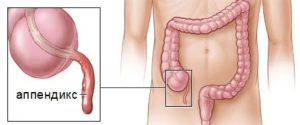
The recurrent form is characterized by the symptomatology of an attack of appendicitis, in the healing stage.
Some specialists distinguish the primary chronic form, which is characterized by a smooth course of the disease, without characteristic signs, thanks to which doctors are able to diagnose acute appendicitis.
With impaired blood flow in the intestine or in the cecum itself, the local immune system is weakened. A similar phenomenon contributes to the development of the microbial environment, the pathology of the conditions of the mucous membranes develops, and in the absence of surgical intervention, a second attack is possible. A repetition of the attack also occurs with the remainder of the appendix with a length of 2 cm.
Symptoms
The clinical picture of symptoms in the chronic stage of the inflammatory process in the appendix is similar to the signs of an acute attack, but has a sluggish appearance. Symptoms are less severe. The chronic stage is not characterized by such sharp bouts of pain and discomfort. The patient notes the aching rare nature of pain under the right rib, a feeling of heaviness, recurring constantly after loads in the form of playing sports, lifting weights, heavy physical labor, spicy or heavy food, overeating.

Some patients report intermittent stool disturbance. Diarrhea can change with constipation and vice versa, the stomach often hurts from an increased level of gas, there is an urge to nausea. But hyperthermia - a constant symptom of acute appendicitis - is not noted. In some cases, the temperature can rise in the evenings, but not always.
These sensations also arise after improper nutrition. A patient who does not follow a diet often experiences disturbances in the work of digestion, especially after eating rough food. At the same time, the chronic form of the disease can be easily confused with intestinal inflammation. Differentiation in this disease is of great importance.
The malaise is also characterized by the presence of the following manifestations: frequent, sometimes painful urination, in women there is soreness in the gynecological part, especially when examined by a gynecologist through the vaginal palpation. Patients experience discomfort when examining through the rectum, feel soreness and unpleasant heaviness. Of particular difficulty is the diagnosis of the disease in babies. Children, due to their age, cannot explain the exact location of discomfort and pain in the abdomen. At the same time, the chronic form is more common in children than in adults, since sometimes in childhood, for a number of reasons, it is impossible to remove the appendix. Treatment is carried out with medication, as a result of which the disease becomes chronic. The inflammatory process can last for some time without symptoms, after which it manifests itself as pain, heaviness, diarrhea or constipation.
Diagnostics
Due to subtle signs, the disease is difficult to diagnose. Doctors more quickly and easily determine the chronic-recurrent type of inflammation. Basically, the symptoms are similar to those that have already occurred, the diagnosis is made based on the history and examination of the patient. In this case, a specialist diagnoses an attack of acute appendicitis, not chronic.
Often, the basis for the diagnosis of a chronic form of malaise is the sensation when feeling the abdomen, the appearance of discomfort and soreness under the right rib and in the navel, that is, in the approximate location appendix.

- The palpation method remains the main and effective method for examining the patient. The first thing a doctor does when a patient is admitted with signs of chronic appendicitis is to feel the belly in the navel and on the right under the ribs.
- In case of a disease, diagnosis is always carried out using X-ray equipment. The study is necessary in order to detect a deformed appearance of the appendix, change it surface, the presence of narrowing in the lumen, which makes it difficult to cleanse the appendix, causes overflow and discomfort in the patient.
- A colonoscopy study is often prescribed to detect or reject the presence of neoplasms, tumors, cysts in the intestine.
- With the help of ultrasound, the peritoneal cavity is studied: diseases of others are detected or refuted internal organs with symptoms similar to the manifestations of chronic inflammation of the worm-like appendix. An informative method for examining women, allowing you to detect gynecological problems in the form of inflammation of the appendages or diseases of the uterus.
- Modern doctors love to use CT in diagnostics. In this study, the organ is viewed in layers, changes in the appendix or nearby organs are seen easier and faster. The research method is the most accurate, it allows you to detect tumors in the appendix or in the entire intestine.
- Urine and blood tests, necessary for an acute attack, are not informative for a chronic form, since they do not contain changes.

Diagnostics is designed primarily to differentiate diseases of internal organs that have common symptoms with chronic appendicitis. It is important to differentiate chronic appendicitis from stomach ulcers, acute cholecystitis, kidney disease, genitourinary system, gynecological problems in women and other diseases of the gastrointestinal tract, including tumors.
Treatment
When making a diagnosis of chronic appendicitis, surgery is often indispensable. Doctors remove the inflamed appendix. An open, abdominal operation or laparoscopy is performed. In the second case, an incision is not made in the peritoneal cavity, and the surgeon's manipulations are carried out through small holes that allow one to penetrate the organ and detect inflammation. In addition to the removal procedure, doctors examine the condition of the rest of the abdominal organs to determine if diseases, inflammatory processes to eliminate errors, if there is a similarity of symptoms of different diseases.
After removal, sluggish appendicitis begins to be treated with antibiotics. This is necessary to eliminate the possibility of developing infection in the wound after surgery. Reason: after chronic appendicitis, processes in the form of adhesions are always preserved, which is not observed after acute appendicitis.
When a patient complains of unexpressed symptoms, chronic appendicitis is treated without surgery. Prescribed to take antispasmodics, drugs that eliminate signs of disorder in the intestines, physiotherapy procedures.
Sometimes there may be situations in which changes in the intestinal process are weak and become apparent only after studying the removed organ. In such situations, it often happens that the removal of the appendix leads to even more pronounced pain and discomfort.
After the treatment of chronic appendicitis, it is important for the patient to monitor their well-being, eat right, following the doctor's recommendations in nutrition. It is important to follow the sleep and rest routine, not to overdo it with activity at first, by switching to a gentle mode of work or other physical activity. It is important to remember that recovery will go faster if you follow the rules of behavior and will allow you to quickly return to your old way of life. In case of deviation from the norm, fever, pain, discomfort, you do not need to self-medicate. Having consulted a doctor in time, the patient will not allow complications and maintain health.
It is important to take care of health, try to eat rationally, play sports, maintain an active life position in adulthood. It is equally important to monitor the state of immunity, to maintain it at a high level. A strong body will not allow the onset of the disease to develop and go into a chronic form, and in case of a disease, it will be faster and easier to recover.