Appendicitis symptoms by authors: main signs in adults and children
In the face of a deteriorating environmental situation, the promotion of fast food in the media, lack of many vitamins and trace elements in the diet, people are more likely to suffer from diseases gastrointestinal tract. A small part of them are life-threatening, for example, appendicitis.
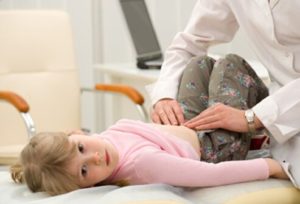
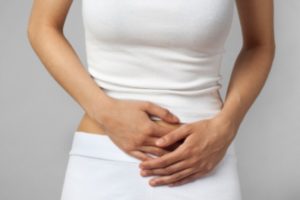
Symptoms of appendicitis varied. The main symptom is pain. A frequent manifestation is a sharp stabbing soreness, on the right side, at the bottom of the peritoneum. In 31% of people, the disease begins to manifest in the upper abdominal region, descending after 2-5 hours into the lower iliac abdomen. In children from birth to 6 years of age, the pain syndrome of an inflamed appendix manifests itself in the form of a restless change in body position, disturbed sleep patterns, and raising the legs to the stomach. It is recommended to pay increased attention to such babies, it is worth consulting with a specialist at the slightest hint of a disease.
Inflammation of the mastoid process leading to acute appendicitis
, manifested by a decrease in appetite (or lack), nausea, one-time vomiting. Symptoms indicate endotoxicosis. Sometimes diarrhea develops, frequent urination. Also, the disease is accompanied by dry mouth, general weakness and malaise, a feeling of weakness.During the diagnosis, a number of procedures are carried out (X-ray, ultrasound). In the general analysis of blood, an increased number of leukocytes is present. Most often, the temperature rises. If appendicitis is not confirmed, it is worth spending a few hours in the hospital. Indeed, with a sudden exacerbation, doctors will be able to save lives.
Due to ongoing research aimed at collecting analytical data for compiling history of appendicitis, scientists have identified certain signs, which were later named by authors.
Name symptoms:
- Aaron. Symptoms of acute appendicitis. It is manifested by throbbing pain, a feeling of fullness, when the lower abdomen is squeezed on the right side.
- Bartomier-Michelson. It manifests itself in an acute form of the disorder. The caecum is probed when the patient is laid on the left side. During the procedure, the pain syndrome increases many times over.
- Basler. An increase in painful manifestations when feeling the abdomen from the navel to the top of the peritoneum.

- Brown. After determining the highest pain point while lying on the back, the patient is turned to the left side. After 15 minutes, the highest peak of pain will shift 2-5 cm down or up the median.
- Brando. During pregnancy, with pressure on the left rib, soreness is felt.
- Britten. In the male part of the population, while probing the lower abdomen on the right, muscle tension appears and the right testicle is pulled up to the scrotum. Interruption of the examination brings the testicle back. Acute form.
- Wachenheim-Raeder. Feeling the rectum causes severe pain in the lower abdomen.
- Widmer. The temperature regime in the armpits is different (increased on the right).
- Voskresensky. Also called the "shirt" symptom. The doctor pulls the patient's shirt down. When the patient takes a deep breath, the doctor moves his hand from top to bottom to the lower peritoneal region on the right with slight pressure. Where the doctor's hand stops, pain manifestations are pronounced.
- Gabaya. It is determined with the retrocecal position of the appendix process. When feeling the petite triangle, a cutting pain anomaly appears at the moment when the doctor abruptly removes his hand.
- Dolinova. During the retraction of the abdomen, the pain intensifies in the iliac part of the abdominal cavity on the right.
- Donnelly. When the patient extends the right leg, palpation of the peritoneum is performed, the pain is localized around the McBurney point.
- Dielafoy. There is a joint manifestation of pain in the lower right part of the abdomen and tension in the muscles of the abdominal cavity. On tactile examination, the pain increases.
- Zatlera. In a sitting position, the patient begins to lift the straightened right leg. At the same time, the pain effect in the lower abdomen on the right increases.
- Ivanova. Contraction of the abdominal muscles on the right side leads to a change in the distance between the navel and the cavity on the right and left (the right side is smaller).
- Ikramov. Pressure on the femoral artery in the right leg causes increased pain in the lower right abdomen.
- Karavaeva. When coughing, pain increases in the right iliac side.
- Terminal. X-ray shows an abundant scattering of gas in the ileocecal part.
- Cope. In the supine position on the left side, the patient extends the right leg. This provokes increased pain in the lower peritoneum.

- Kocher-Volkovich. Moving painful sensations from the upper epigastric part of the abdomen to the right iliac part after a few hours (3 hours).
- Krymov. During palpation of the opening of the inguinal canal (right), there is an increase in pain in the lower part of the peritoneum.
- Krymova-Dumbadze. Feeling the umbilical ring leads to irritation of the anterior peritoneal wall, accompanied by an increase in the level of pain in the iliac region.
- Laroca. In the male part, there is an involuntary elevation of the right testicle or when probing the abdomen.
- Lenander. The difference between anal and axillary temperature manifestations is over one degree Celsius.
- Mendel. When carrying out percussion of the abdomen, pain intensifies in the lower region of the peritoneum on the right.
- Murphy. In the presence of fluid in the iliac region on the right during percussion, the intensity of pain decreases.
- Michelson. Worsening of pain in women during pregnancy on the right, in a supine position on the right side, since the enlarged uterus has a pressing effect on the appendix with inflammation.
- Obraztsova. When squeezing the rectum, the patient lifts the straightened leg. An increase in pain is felt.
- Ostrovsky. A patient who is lying on his back raises his straight right leg up, the health worker sharply lowers it. The cutting pain radiates to the part of the lower abdominal cavity on the right.
- Payra. The sensitivity of the rectal passage decreases, accompanied by a sensation of frequent burning and cutting pain, manifested by spasms during bowel movements.
- Pshevalsky. The patient has difficulty lifting the right leg.
- Razdolsky. Tactile examination of the anterior wall of the peritoneum is combined with sharp pain in the lower right part.
- Rizvana. Deep breathing causes increased stabbing pain in the iliac region.
- Rovzing. Soreness on the right increases with pushing on the right side and pressure on the sigmoid colon.
- Sumner. With slight squeezing, the abdomen tenses, hypertonicity of the walls of the peritoneum is felt.
- Sitkovsky. Strengthening the painful state in a supine perspective on the left side.
- Cut it off. The patient is given percussion from a supine perspective (on the back, legs are bent at the knees). Coughing increases pain.
- Horn. Pulling on the scrotum causes throbbing pain in the right testicle.
- Chase. With a strong palpation of the transverse intestine and pressure on the descending colon, the pain syndrome increases.
- Cheremskikh-Kushnirenko. Cough increases the manifestation of pain symptoms.
- Chugaeva. Tactile examination reveals "appendicitis strings" (bundles of oblique abdominal muscles).
- Shilovtseva. After probing the patient in a supine perspective on his back, he is turned over and examined again. The location of the pain symptom moves down and to the left by 3-4 cm.
- Shchetkin-Blumberg. Symptom of irritation of the peritoneum in the front. When squeezing and quickly removing the hand from the lower abdomen on the right, the patient will feel an increase in pain.
- Yaure-Rozanova. Percussion of the petit's triangle is accompanied by a pronounced pain syndrome.
Any age is susceptible to disease, especially from 15 to 35 years old. The main thing is to recognize the symptoms in time for timely surgical intervention.
Diagnosis of appendicitis complicated. This disease is often disguised as other diseases of the gastrointestinal tract. Sometimes the most experienced healthcare providers will not immediately recognize it. Therefore, when stomach pains appear, it is necessary to urgently undergo a full examination in a medical institution (delivery of tests, ultrasound, radiography, examination by a surgeon). You should not rush to leave the hospital, so as not to endanger your life.