Allergy tests
 Allergy tests are various ways to diagnose a variety of allergic diseases. Carrying out of the given samples allows to establish with accuracy the source of development of allergic reaction by definition of hypersensitivity of the person to the various allergens introduced during testing. Allergy tests include provocative tests, indirect and direct tests for allergy, skin tests of qualitative and quantitative nature. All these ways of diagnostics are united by the fact that a possible irritant, which causes an allergic reaction in a person, is introduced into his body, and then an assessment of the response of the organism to its administration is carried out. Allergy tests should be done only during a period of persistent remission, and to be more precise, no earlier than thirty days after the end of the aggravation of an allergic disease.
Holding samples for allergies shown in the presence of the following diseases:
• Bronchial asthma, causing shortness of breath, wheezing and dyspnea
• seasonal allergic to pollen, which is accompanied by itchiness in the nose, continuous sneezing, nasal congestion and runny nose
• Atopic dermatitis manifestingskin rash
• allergic rhinitis, causes profuse runny
• allergic conjunctivitis manifested by redness of the eyes, itching and watery eyes
• Food allergies, Sopraozhdayuschayasya itchy skin rash
samples for allergies are sufficiently specific diagnostic techniques, for which there is truly enormous amount of products manufactured from the pollen of grasses, trees, dandruff and wool different animals, concentrated house dust and so forth. Also, when diagnosing applied preparations forThe basis of ticks, fungi, bacterial, food and chemical irritants.
You can make allergy tests using several methods:
• Scarification tests. On clean skin of the forearm according to the pre-made special markings, different allergens are applied dropwise, through which a disposable lancet is then made small scratches
• patch test. To the intact area of the skin is applied previously soaked in an allergen solution cotton swab
• Prik-tests. By their conduct, this method is very similar to skarifikatsionnye samples, with only one difference that instead of scratching lancet through a drop of allergen is easily done shallow injections
disposable needles In carrying out this type of allergy diagnosis, at one time used no more than fifteen allergens. Often tests for allergy in children are carried out by the same allergen, only in different concentrations. In the event that the subject has an allergic reaction to one of the tested allergens, the puncture site or scratch begins to swell, blush, and skin rashes appear around. In allergological practice, skin tests are the most common method of diagnosis.
Evaluation of skin tests for allergy begins depending on the allergen used. If the first test results are obtained after twenty minutes from the moment of contact with the allergen, the later results are estimated not earlier than after one or two days. After deciphering all the samples, the patient receives a paper with the results obtained, in which the opposite inscription opposite each tested allergen can be: weakly positive, positive, doubtful, negative.
Allergy tests for skin tests are never limited. Together with them, in any form of allergy, a blood test is indicated to determine the type of allergic reaction.
Provocative tests for allergy are prescribed in cases when there is a clear discrepancy between dermatological samples for allergy and anamnestic data. An indirect dermatological test consists of injecting a subcutaneous injection of a specific stimulus into a person, after which the serum of the patient's blood is injected with this kind of allergy. According to the obtained reaction, a conclusion is drawn about the danger to a person of this particular allergen.
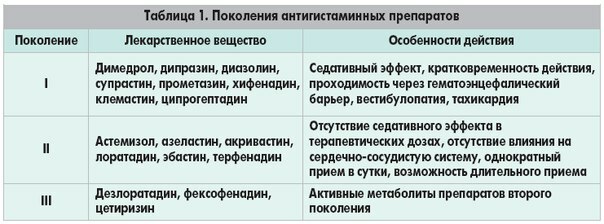
Before passing allergy tests, each person should be appropriately prepared. The first task is to determine whether at least thirty days have elapsed since the last allergic reaction. In addition, in the testing process, you need to be prepared for the fact that an organism can have an unexpected reaction to an introduced allergen and, accordingly, emergency medical care will be needed. From this it follows that carrying out any tests for allergy should only take place in a medical institution under the vigilant supervision of a doctor. At least one day before the start of the allergy test, you should stop taking any antiallergic drugs. On the procedure itself, you need to tune in positively and calm down. Subcutaneous injections are absolutely bloodless and painless.
Contraindications to allergy tests: age over sixty years, pregnancy, aggravation of allergies, cold, long-term hormone therapy, taking antiallergic medications at this time.