Spur: Symptoms and Treatment
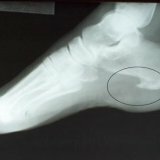
Spur or osteophyte is a new growth, a growth of normal bone. Most people believe that the spur is necessarily something sharp, but it is not always so. Because there are soft outgrowths that do not cause any particular problems. However, over time, this build-up can be erased by causing inconveniences associated with ordinary discomfort or acute pain in the spur area.
If we are dealing with a hard and sharp neoplasm, then everything is more complicated. When moving, this protrusion cuts into soft tissues, thereby causing unbearable pain in some cases. Soft tissues around the spur, are prone to inflammatory processes, why are there such unpleasant moments that cause bone formation? Bone spurs: symptoms and treatment will be discussed in more detail below.
There may be several reasons for the formation of the built-up edge:
- Flat-footed;
- Trauma suffered;
- Sharp and significant weight gain;
- Gout;
- Infections;
- Circulatory disturbance;
- Chronic arthritis;
- Chronic polyarthritis;
- Disturbance of metabolic processes in the body.
But all of them are associated with a prolonged load on the bone or friction. Spur is a kind of response of the body to the destructive effect of external factors. Thus, the bones are trying to recover.
Spur - the symptoms.
In fact, if we talk about the symptoms, then initially they may not be at all. It happens in cases when the spur exists, but it is either small and the person just does not notice it because there are no intense pain sensations. This applies to spurs, for example, on the shoulder joint or on the thigh. Sometimes it has a flat protrusion and also does not cause any special problems. But in most cases, the only symptom of the spur is an unbearable cutting, piercing pain most often in the area of the base of the heel. In this case, the patient tries to avoid its recurrence and ceases to step on the heel, and sometimes even does get up on crutches or takes a cane in hands. Striving only to one as much as possible to reduce the pressure that falls on this area of the limb and rid itself of the pain.
When forming a spur on the shoulder of the femur, spine and elsewhere, irritation, inflammation, numbness of the tissues in the spur formation area, weakness, pain, and sometimes even tendon rupture occur.
With spur on the back of the foot, swelling may occur and corn appear.
Spur can not be determined by touch. In addition, it does not give changes to the surface or any other signs of inflammation.
A final verdict on the existence of a spur can only be made after an X-ray image has been taken.
Spur - treatment.
Do not get fed up with the fact that the spur will pass by itself, which is nothing, but all the same this bone formation, and the bone will not just collapse like that, and its remains will not be excreted from the body naturally, like kidney stones.
Among the methods of treatment can be identified conservative and operational.
Conservative methods.
Conservative treatment is carried out mainly out-patient-polyclinic. And it is a complex of medicinal, physiotherapeutic and other procedures.
Treatment should begin with anesthetics and anti-inflammatory therapy. And such drugs are used, can both locally and internally. In the period of struggle with inflammation, it is necessary to unload as much as possible the place where the built-up edge was formed. Usually this happens with the use of various orthopedic devices.
A patient with a spur is assigned hot baths with 10 percent saline solution. For night use, non-steroid ointments, creams and gels can be used. Prolonged treatment with tablets. It is usually prescribed by courses of 10 days with a break between them 2 or 3 weeks. However, with this treatment it is necessary to take into account individual intolerance to the drugs.
On the site of the lesion are prescribed - procedures such as magnetotherapy, laser therapy, ultrasound, electrophoresis, UFO.
Today, in the treatment of spurs, a new technique of treatment with shock wave therapy is used. But there are a number of limitations under which it is not possible. These restrictions include:
- Blood clotting disorders;
- Malignant tumors;
- Pregnancy.
During severe exacerbations, the patient is recommended bed rest for usually one and a half, two weeks.
If in the process of carrying out anti-inflammatory measures, the effect of improvement does not occur then use spirituonokainovye blockades, as well as X-ray therapy.
X-ray therapy is a method in which X-rays generated by a special tube are used. They are acting on the cells by ionizing radiation to destroy them. If the first course of therapy did not bring results, then you can repeat it in two, three months.
The lack of results after applying all possible conservative methods, which in fact with this disease is not so much, is the basis for placing the patient with a spur in the hospital.
All symptoms and treatment are interrelated, but doctors have not yet fully investigated the causes of bone spurs, one thing is known that after removing the symptoms of inflammation, it is necessary to undertake the diagnosis and treatment of the cause of the disease.
Operative methods of treatment.
In general, doctors try to resort to operational methods of exposure as rarely as possible. The reason is that the operation does not eliminate the cause of the spur, and only the consequence is deleted. In addition, during the operation, not only the spur itself is removed, but also the part of the bone on which the build-up was formed.
Another point on which the spur is trying not to operate is in postoperative complications that can be severe enough, although the spur itself does not pose a danger to life.