Specific childhood infections
 To date, there is a huge number of diseases. Some of them are considered childish. This does not mean that adults never get sick by them. Just kids, because of their physiological characteristics, they are sick more often than adults. Such diseases include: chicken pox, parotitis, rubella, measles, whooping cough. These diseases are very specific, therefore, they should always be treated with care. More details about them we will discuss in this article.
The above diseases are very contagious for children. If one kid is sick in the kindergarten, he can infect everyone else. Having been diagnosed once with such a disease, a child for the rest of his life develops immunity against him. However, there are exceptions, when for example, the adult is infected with chickenpox repeatedly.
A sick child must be isolated from other children. If the state of health is not severe, the child simply stays at home. If the state of health is severe, the baby is hospitalized. Unfortunately, the incubation period lasts up to three weeks and throughout this time the baby looks absolutely healthy. Therefore, it is not easy to suspect his illness. In addition, it is worthwhile to understand that a child can get infected anywhere, so it is not worth it to completely isolate it.
Before talking about the above described diseases in more detail, I want to mention and intestinal infections. As the statistics show, it is children who suffer from it. After all, all the kids constantly pull dirty handles or objects into their mouths. Occasionally, poor quality food is found. For this disease the following symptoms are typical: sharp painful sensations in the lower abdomen, vomiting and diarrhea, sometimes temperature. With these symptoms, you need to see a doctor as soon as possible.
What should parents pay attention to?
Some childhood diseases are very specific and even an inexperienced person can recognize them. Therefore, parents should always pay attention to such symptoms:
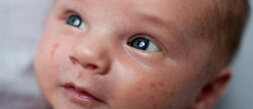
- Rash. Rash in babies appears very often. More often than not, it is just a sign of a fever. However, do not forget that chickenpox, rubella and scarlet fever also manifest as a rash. In such cases, the rash will quickly spread through the body( especially after contact with water), and in appearance it may look like burns from the nettle or watery pimples.
- Enlargement of lymph nodes. This symptom indicates that in the body of the baby there are some inflammatory processes. In this case, you should immediately consult a doctor to establish the cause.
- Increased body temperature. Almost all childhood infectious diseases increase body temperature. In some cases, it can rise slightly, and in some cases reach a critical level.
Chicken Pox: Symptoms and Treatment of
Chickenpox is most often affected by childhood. Children tolerate the disease easily, unlike adults. After the disease, the child develops a permanent immunity to the causative agent of chicken pox. The disease is transmitted by airborne droplets.
Symptoms of the disease
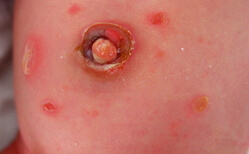
The first symptoms of the disease appear after two to three weeks after contact with a sick person. After the expiration of this time, the child's body temperature rises to 39 degrees. In addition, the baby complains of a general malaise and weakness. Initially, chicken pox is like a cold before the rash appears. The rash is specific: flat pink spots, which after a couple of hours are filled with liquid and become like water bubbles. These pimples can not be squeezed out in any case, since scars will remain in their place.
The first few days of rash are very plentiful. They can spread not only on the body, but also on the mucous membranes( genitals, mouth, nose).The rash always itches, and the child tries to comb it. But do not let him do this, because he can put the infection in the wound. Over time, the place of the rash appears crusts, which gradually disappear without a trace.
Treatment of chickenpox
A sick child should comply with bed rest at least in the first five days. Every day, you need to change the clothes and bed of the child, this will help reduce the number of new rashes. Also for the duration of the disease, avoid contact with water. It is possible to take only short-term baths with potassium permanganate, but the duration of such trays should not be more than three minutes.
Chickenpox does not have a specific treatment. Just follow the simple rules. The child should observe a sparing diet( exclude from his diet all products that cause allergies and include vegetable and dairy food).Also, let the baby drink as much as possible. With prolonged temperature, it is necessary to give an antipyretic. Do not forget that the rashes themselves need to be treated with a green or a weak solution of potassium permanganate.
Rubella: Symptoms and Treatment
The disease is transmitted by airborne droplets. Absolutely every kid can get it.
Symptoms of rubella
The incubation period is two to three weeks. The first symptom of the disease is a rise in temperature to 39 degrees and an increase in lymph nodes. Within a day, other symptoms are added to these symptoms: cough, sore throat, runny nose. On the third day there may appear photophobia, headache and lacrimation. There is also a rash on the body of red-brown color. Eruptions begin to appear on the face and scalp, gradually spreading throughout the body. After a couple of days the rashes disappear. By the way, the disease can also occur without rashes.
Treatment of rubella
This disease is treated in the same way as chickenpox: compliance with bed rest, plentiful drink and sparing diet, taking antiviral and antipyretic drugs. All drugs should be prescribed only by a doctor, taking into account the characteristics of the child's body. Treatment lasts approximately 10 days.
Pertussis
Pertussis is a bacterial disease that is transmitted by airborne droplets. The disease is very contagious, therefore, in close contact with a sick child, the baby will become 100% infected. The incubation period can last from one week to three weeks, it all depends on the individual characteristics of the child's body. The disease has three stages:
- Catarrhal stage. Lasts one or two weeks. The child has a dry persistent cough, the temperature either is absent, or rises slightly - up to 37.5 degrees. Symptoms are similar to simple SARS.Paroxysmal stage. At this stage, the cough intensifies and becomes very specific. Therefore, doctors can easily identify the disease.
- Recovery period. Completely the kid is restored in two-three months.
Mumps( mumps)
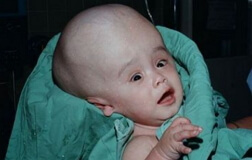
An infectious disease that occurs in an acute form. When the baby is swine, the salivary parotid glands become inflamed and swollen.
Symptoms of the disease
- worsening of general well-being;
- decreased appetite;
- increase in body temperature to 39 degrees;
- swelling in the pit behind the ear of the salivary glands. Swelling is painful and dense.
During the first week, the tumor will grow and grow. In a week the process will go down and on the tenth day the tumor will completely disappear. After that, the temperature will drop.
Treatment of the disease
Immediately after the appearance of the first symptoms, you need to call a doctor. The child should always be in bed, only then it will be possible to avoid the consequences of the disease. The baby's neck should be warm. Do not do wet and alcohol compresses. It is better to use oil compresses. Exclude from the diet of a sick child all solid food, leave only liquid. Do not forget about the abundant drink. Strictly follow all the doctor's recommendations.