Cardialgia
 Cardialgia - this is a pain in the heart, which can not be called a separate disease, tk. This is the result of various pathological processes. Complaints on cardialgia occur quite often. A person who has been diagnosed with cardialgia should not worry much, because cardialgia does not always mean a cardiac pathology. It is important to distinguish cardialgia from angina requiring urgent treatment, in which the pains are stitching, burning, aching.
Cardialgia can be of long duration and of short duration, of varying severity. They distinguish cardiac and non-cardiac origin of cardialgia. Outside cardiac cardialgia develop in combination with osteochondrosis, intercostal neuralgia after shingles, with rib diseases, gastrointestinal diseases, pulmonary pathologies, and those with harmful habits( alcohol dependence).
Cardiac origin of cardialgia may be due to atherosclerosis, ischemic heart disease. Patients suffering from depression also complain of cardialgia. Cardialgia is also common in children.
The following types of cardialgia are distinguished, depending on the causes of the onset of the disease: functional cardialgia, psychogenic cardialgia, vertebrogenic cardialgia, cardialgia of the vegetative crisis.
Causes of cardialgia
Cardiac disease causes cardiac muscle diseases. Inflammation of the heart muscle - myocarditis, which occurs as a complication of the common cold, influenza.
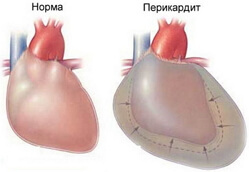
The defeat of the inner and outer shell of the heart( endocarditis, pericarditis) also often leads to the development of this disease. In this case, the pain increases in certain positions of the body( tilt forward, lying on the left side).In these cases the pain is related to the friction of the shells against each other. In this case, the pain is acute at first, then the fluid accumulates, which reduces the severity of pain, after treatment, the liquid dissolves, for a short time the pain returns, then it passes.
Damage to heart valves, fetal anomalies in the development of valves is the reason why cardialgia develops in children. This is usually detected during the newborn period. Diseases of the endocrine nature, protein deficiency, alcoholism disrupt the metabolism in the heart, which also leads to cardialgia.
Often hormonal changes during menopause in women cause cardialgia. The enlargement of the heart is painful, since the cardiac vessels are unable to provide the increasing oxygen demand of the hypertrophic heart. The same situation is obtained with cardialgia in children, when the heart grows faster than the blood vessels. More often it occurs in younger schoolchildren, during a period of rapid growth. Vegeto-vascular dystonia is the cause of cardialgia in children in adolescence.
The next group of causes is various disorders of the spine, a neurological illness. Osteochondrosis in the cervicothoracic spine, intercostal neuralgia, inflammatory processes of the pectoral muscles, the consequences of injuries, inflammatory diseases of the nerves of the shoulder joint, diseases and rib damages. The pain begins with physical exertion, after hypothermia, as a result of a long stay in uncomfortable poses, awkward movements. Provokes pain deep breath, cough, sneeze.
Scoliosis leads to a displacement of the heart, which often causes cardialgia. There are thickening of the costal cartilage( Tietze syndrome), which causes the development of the disease usually in patients after 40 years. If the cause of pain is irritation of the roots of the spinal nerves, this is vertebrogenic cardialgia.
Diseases of the digestive tract irritate the nerve endings, which causes cardialgia. These are hernia of the esophageal opening of the diaphragm, cholecystitis, inflammatory diseases and ulcers of the esophagus. The high standing of the diaphragm due to bloating, obesity, provokes the appearance of pain after eating, especially if the patient is lying down( Remkheld's syndrome).It is found that the transverse colon is located above the liver - Kilaiditi syndrome, which causes severe pain behind the sternum. In diseases of the lungs and the pleura on the left, cardialgia begins. Another reason is neurocirculatory dystonia, that is, the imbalance of the nervous system.
Symptoms of cardialgia
Painful sensations in the heart area are dependent on the position of the body, for example, they are strengthened from tilting forward, if you raise your left hand, from deep inspiration, with heavy weights, while driving a car.
The nature of pain is possible piercing, cutting, aching. Patients undergo cardialgia with mortal fear, feel lack of air, begin to panic, heartbeat intensifies, sweating appears, darkens before the eyes, a headache begins.
Patients report a decrease in body temperature, swelling of the hands, low blood pressure. It can be difficult to swallow( Barre-Liège syndrome), which is more common in elderly people with short necks. When squeezing the subclavian artery( Nuffziger syndrome) and in the presence of an additional cervical rib( Falconer-Weddel syndrome), patients complain of shoulder pain with irradiation in the palm, low pressure, chilliness, weak pulse.
If this is psychogenic cardialgia, the pain is more often observed in the apex of the heart, the pain can move. Cardialgia of a vegetative crisis is characterized by very long pains of a pressing or noisy nature, Validol and Nitroglycerin in this case does not facilitate the condition. This increases blood pressure, so you can confuse the cardialgia of the vegetative crisis with hypertensive crisis. Patients note lethargy, weakness, a sense of fear, there is a shiver in the body, dyspnoea may begin, a feeling of lack of air appears, heartbeat increases.
Sympathetic cardialgia is characterized by severe burning pain in the heart and behind the sternum. In this case, patients complain of severe soreness of the skin. In case of cardialgia associated with diseases of the gastrointestinal tract, in addition to pain in the patient's heart, nausea or vomiting, a feeling of heaviness on the left under the ribs, a stomachache, a heartburn, a sour taste in the mouth, an eructation.
In case of cardialgia associated with pneumonia and pleurisy, high body temperature, weakness, poor health, pallor, dyspnea, cough( at first dry, then wet), on one side there is stiffness of the chest.
If the causes of cardialgia are diseases of the spine, the patient is concerned about back pain, interscapular pain. When osteochondrosis, pain in the heart takes a cutting, pricking, shooting character, pain is given to the hand, numbness appears, the sensitivity of the limbs decreases, tingling appears. With intercostal neuralgia pain short-term, stitching.
With dyshormonal cardialgia, there is a feeling of heaviness, chest tightness, cutting, burning, piercing pain, which is long-lasting and short, more often at night. Often, patients do not have enough air, this is not a true shortness of breath, namely a sense of lack of air. Sometimes there is a loss of consciousness, fainting, pain accompanied by characteristic "hot flashes", excessive sweating, tingling sensations, headaches, palpitation, a feeling of cardiac arrest, spasms in the throat, dizziness. The mood in patients is reduced, irritability, emotional lability is characteristic.
Diagnosis of cardialgia
For the diagnosis of cardialgia, an anamnesis of the disease is collected: how long ago a person began to worry about pain in the heart, in what particular place pain occurs, what it is in duration, nature. It is necessary to find out whether the appearance of pain is associated with movements. Asked about the concomitant diseases of the patient, whether there is an industrial hazard, whether the chest was injured, whether the patient had recently had an acute infectious disease.
When examined, determine the color of the skin, if there are swelling, when listening - the presence of noises in the heart, stagnation in the lungs, whether the boundaries of the heart, whether there are skin rashes. Measure blood pressure and pulse.
The patient has a blood and urine test to identify the inflammation process, as well as biochemistry and immunological analysis of the blood, the level of hormones. Conduct an electrocardiogram ECG - an electrocardiographic study of the heart, it shows violations of the heart rhythm, the overload is determined. With echocardiography, the size of the heart cavities is determined, the presence of damage to the valves, and whether there is liquid in the pericardial bag. They make a chest X-ray, which makes it possible to see the presence of a tumor, the location and size of the heart, lung disease, ribs.
After the cause of the cardialgia is established, additional studies are assigned by narrow specialists. It is important in diagnosing to distinguish cardialgia from other diseases of the heart muscle and blood vessels. Unlike cardialgia, myocardial infarction causes much more severe and prolonged pain. On the electrocardiogram, the characteristic signs will be visible: the tooth Q shows the presence of necrosis. ECG monitoring, radioisotope scintigraphy, stress echocardiography and ECG samples with exercise are used to detect coronary heart disease. Also, IHD is characterized by typical pains, although, as with cardialgia, the pains are unstable, volatile.
Nitroglycerin tests are used for differential diagnosis. With angina pectoris pain occurs after 2-3 minutes after taking Nitroglycerin under the tongue, and with cardialgia, pain with Nitroglycerin is not associated. When diagnosed, cardialgia distinguishes the so-called "feeling of the heart" in patients. Thromboembolism of the pulmonary artery is distinguished from a simple cardialgia of pain not related to physical exertion, the presence of dyspnea, hemoptysis, a characteristic ECG.
Treatment of cardialgia
After the diagnosis of cardialgia is established, it is necessary to begin treatment activities. First of all, the diseases that cause cardialgia should be cured. To ease the pain, symptomatic therapy can be used: Ibuprofen, Analgin, Novocain.
Cardialgia of vegetative crisis is treated with soothing drugs - Pustyrnik, Valerian, drops Zelenin, Corvalol, Valocordin, Verapamil, Anaprilin( 40 mg 1-3 r / day), Hawthorn fruits, vitamin complexes are prescribed. It is necessary to observe the mode of work and rest, important long-term sleep, walking, healthy lifestyle, gymnastics should be done.
Psychogenic cardialgia requires working with a psychotherapist to improve the emotional and mental state of a person. It is desirable to avoid stress. With climacteric cardialgia, psychotherapy is also very important. It is necessary to explain to patients that their pain is not life threatening, while they do not need to give up work, there is no need to observe bed rest.
In cardialgia associated with puberty and premenstrual syndrome, no special treatment is prescribed. Vertebrogenic cardialgia is treated with intraosseous blockades, anti-inflammatory, analgesic drugs( Diclofenac), manual therapy, medical gymnastics.
With sympathetic cardialgia, the thermal procedures are eased by pain - mustard plasters, acupuncture. If there is an additional cervical rib, surgical treatment is used - remove the rib. If there is a lesion of the staircase, appoint Analgin, Indomethacin, it is possible to inject 2% 2 ml of Novocaine solution into the muscle or 2 ml of hydrocortisone 2 ml 2-3 times every other day, in some cases, the muscle is cut.
The prognosis of treatment success depends on the reasons for which cardialgia arose. In any case, the reasons need to be clarified as early as possible, for the timely appointment of a suitable treatment.
Prevention of cardialgia is the right way of life, in which too heavy loads, hypodynamia are excluded, that is, it is necessary to alternate work, rest, to do physical exercises-minutes for 10 minutes every 2 hours for immobile work. The duration of sleep should be 7-8 hours. It is necessary to monitor food. The diet should include vegetables, fruits, greens. It is important to learn how to react properly to stressful situations, so that there is not a strong emotional overstrain.