Impaired heart rate
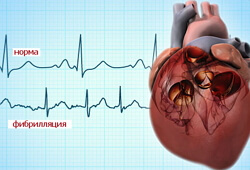
 Heart rate disturbance is a common pathology of cardiac activity, which consists in a deviation from the normal rhythm and regularity of the contractile function of the heart muscle.
The heart is a vital organ of the human body, therefore even the slightest violation of the rhythm of heart activity adversely affects the functioning of all structures.
The center of cardiac arrhythmias is located both in the myocardium and in the so-called "conducting system" of the heart, therefore all kinds of imbalance in the heart can be attributed either to disturbances of excitability or to conductivity disorders.
Causes of cardiac rhythm disorder
Heart rate and conduction disorders can be observed at any age, since this pathology belongs to the category of polyethological groups of diseases, that is, there are many corrected and non-adjustable factors that can independently or in aggregate provoke one or another rhythm disturbance.
Non-correctable provocators of irregularities and cardiac activity irregularities are:
- the elderly patient's age, which causes physiological trophic disturbances in the myocardium, which have a detrimental effect on the process of generation and transmission of an electrical impulse;
- burdened heredity for the occurrence of congenital forms of rhythm disturbance, as well as various congenital malformations of the structures of the cardiovascular system;
is an insulin-dependent form of diabetes mellitus, which is a trigger for the development of cardiac muscle disruptions, that is, this pathology itself is not the primary cause of arrhythmia, but exacerbates its course.
To a greater extent, the process of development of various forms of cardiac arrhythmias is influenced by the corrected etiopathogenetic factors, the elimination of which is the main guarantee for the successful treatment of cardiac arrhythmias.
Among these factors most often occur:
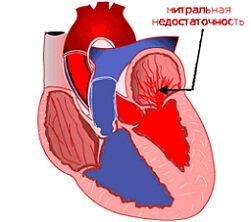
- all kinds of organic heart pathologies, accompanied by a change in the structure of the myocardium and valvular apparatus, as well as significant changes in the vascular wall of large blood vessels delivering the necessary nutrients to the heart muscle;
- diseases of the organs of the hormonal system, in particular, gross pathologies of the thyroid gland with concomitant hypo- and hyperthyroidism;
- long uncontrolled intake of certain groups of drugs that disrupt metabolic processes in the body and cause electrolyte imbalance( diuretics, anticonvulsants);
is a persistent hypertension that is not stopped by the use of antihypertensive agents( the mechanism of arrhythmia is caused by hypertrophic constrictive cardiomyopathy, which creates obstacles for the passage of an electric pulse through a thickened myocardium);
is the overweight of a patient, which in 90% of cases provokes the development of atherosclerotic disease of the coronary arteries, responsible for the nutrition of the heart muscle;
- pathologies, accompanied by pronounced electrolyte shifts, since the work of the cardiac muscle directly depends on the content of vital microelements in the body;
- cardiomyopathy of alcoholic origin in 50% of cases provokes the development of signs of atrial fibrillation;
- the systematic use of psychotropic drugs causes severe acute cardiac rhythm disturbances that eventually end in a fatal outcome.
Symptoms of heart rhythm disturbance
All types of cardiac arrhythmia can be divided into two large groups according to clinical manifestations, depending on whether the contractility of the heart is slowed or accelerated. Thus, for types of arrhythmia accompanied by a slowing down of the contraction of the cardiac muscle, the symptoms of circulatory disturbance are characteristic, and disturbances in the rhythm of the tachyarrhythmic series are accompanied by the patient's complaints about a feeling of heart failure. However, each of the arrhythmia units has its own specific symptoms, the presence of which allows one to suspect some form of disturbance of cardiac activity.
When even an absolutely healthy person who does not have pathological changes of the heart muscle is in unusual conditions( stress, excessive physical activity, high ambient temperature), there is a so-called "physiological" form of tachyarrhythmia that does not require medical intervention and passes independentlyAfter eliminating the factor that provoked it. This arrhythmia is not accompanied by gross organic damage to the heart muscle and does not cause persistent health problems.
Tachyarrhythmic forms of rhythm disturbances that occur against the background of the organic pathology of the heart are accompanied by the appearance of a bright clinical symptom complex in the form of a sensation of rapid heartbeat, a feeling of heat in the upper half of the trunk and especially the head, despite the expressed pallor and moisture of the skin. Symptom, which supports the development of severe tachyarrhythmia, is the varying degree of impairment of consciousness from short-term fainting to soporus. This form of violation of the heart requires not only an emergency diagnosis by electrocardiography, but also a systematic intake of antiarrhythmic drugs.
The opposite of tachyarrhythmia is the symptom complex due to a decreased frequency of the heart rhythm - bradyarrhythmia. Like the previous group, bradyarrhythmic forms of arrhythmia can be observed in people who do not suffer from cardiac pathology( professional athletes, elderly people) and do not cause discomfort and pronounced health disorders. Bradyarrhythmic types of cardiac blockade can be both short-term and permanent and manifested in the form of severe weakness, dizziness, short-term loss of consciousness, convulsive syndrome, and in severe cases even have a lethal outcome.
Unique for the nature of the emergence and clinical manifestations of the type of disturbance of the rhythm of cardiac activity is extrasystole. An interesting fact is that even the heart of a healthy person generates about 4% of extrasystolic contractions in relation to the total number of cardiac contractions. This frequency is not capable of significantly affecting the normal life of the heart and is not accompanied by changes in the state of human health. The emergence of group extrasytolic contractions of increased frequency causes characteristic symptoms in the form of a sensation of "fading of the heart", followed by a strong heart beat, difficulty breathing, typical cardialgia, and with the constant form of this pathology, the patient develops a characteristic angina pectoris symptom. This form of disturbance of the rhythm of cardiac activity is most often transformed into ventricular fibrillation, which in most cases has a lethal outcome.
Heart rate disturbance in children
In contrast to the adult population, which is more often disturbed by the rhythm of heart activity occurs against the background of other diseases, in the childhood period, arrhythmias are equally diagnosed both in healthy individuals with regard to the cardiovascular system and in children withCongenital forms of rhythm disturbance.
According to the world statistics in the field of pediatrics and cardiology, the percentage of episodes of rhythm disturbance in children of different age groups in the overall structure of cardiac pathology is at least 27%.Children at pubertal age are more prone to disturbances in the rhythm of cardiac activity, since in this period there are pronounced changes in the activity of all body structures at the humoral and cellular levels.
When identifying the cause of some form of cardiac dysfunction, special attention should be given to the psycho-emotional state of the child, since in many cases adequately applied methods of psychocorrection are accompanied by a complete leveling of the signs of arrhythmia.
The peculiarities of arrhythmias in patients of the children's age group is their latent course and diagnosis only in the prophylactic passage of the electrocardiographic study. Unlike adults, children with arrhythmia do not have complaints about cardiac disruptions, as well as cardiac symptoms. In this period, the symptoms of psycho-vegetative syndrome( increased irritability, sleep disorders, meteosensitivity, short-term mental disorders) come to the fore.
Arrhythmias, accompanied by non-persistent cardiac abnormalities and not having an organic origin, are prone to self-regression. More pronounced disturbances in the rhythmic activity of the heart significantly burden the patient's health, causing a persistent violation of central hemodynamics. The prognosis for the life of a child with arrhythmia is favorable in the conditions of timely medical correction.
Treatment of cardiac rhythm disorder
The basic principle of treatment of any form of arrhythmia is the correction of eating behavior, the regimen of work and rest, and the conduct of adequate etiopathogenetically based therapy with conservative treatment methods, and in case of severe disease, surgical intervention.
To the means of etiologic therapy of cardiac arrhythmias include such groups of drugs as:
- beta-adrenoblockers in thyroid diseases with thyrotoxicosis( non-ticket at a daily dose of 2.5 mg);
- sedative drugs for tachyarrhythmias of neurocirculatory genesis( Sedasen forte 1 capsule 3 times a day);
- cardiac glycosides, which are used for chronic heart failure with concomitant tachyarrhythmia( digoxin in a daily dose of 0.75 mg).
Specific antiarrhythmic drugs need a careful approach with respect to the selection of an adequate therapeutic dose followed by the systematic administration of one or more antiarrhythmic agents in a maintenance dosage. In the era of rapid development of pharmacy conditions are created for the development of new formulations of antiarrhythmic drugs and the production of a huge number of analogues of certain drugs, so the cardiologist's task is to determine the type of arrhythmia and the appointment of a drug belonging to one of the three classes.
Preparations of the first class have pronounced pro-arrhythmic properties( Etmozin, Propafenone) and the area of their use is refractory forms of arrhythmia.
Preparations of the second class are considered the most sparing for patient tolerability and are used in almost any form of cardiac arrhythmias( atenolol, bisoprolol).
Antiarrhythmic drugs of the third class are used to arrest ventricular fibrillation( Amiodarone).
Given the timely treatment with individual selection of antiarrhythmic treatment regimen, there is a favorable outcome of the disease, which consists in complete relief of attacks of cardiac arrhythmias and prevention of possible complications.
The peculiarity of all groups of antiarrhythmic drugs is that they have a positive effect only on one arrhythmia group, but they can provoke the appearance of other types of arrhythmias, and therefore the selection of an individual scheme of antiarrhythmic therapy should be performed only in a hospital cardiac profile under a constantMonitoring indicators of electrocardiography.
Surgical procedures for correction of cardiac arrhythmias are extremely rare when there is an arrhythmia caused by a rough organic pathology of the heart or arrhythmia is stable with regard to medical treatment. Minimally invasive surgical intervention, used to treat ventricular arrhythmias, is the establishment of a pacemaker, the principle of which is to provide the function of a natural pacemaker.