Male infertility and varicocele
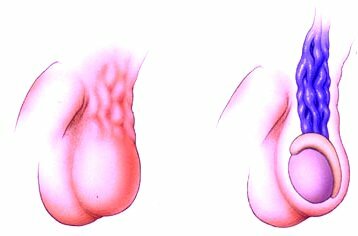
The term varicocele conceals a pathological condition characterized by the widening of varicose veins of the spermatic cord. This disease is a reproductive rather than a cosmetic problem, since it can have a pronounced negative effect on the quality of sperm. Varicocele occurs in 15-20% of men in the population and more than 40% of them show signs of spermatogenic dysfunction.
Causes of infertility in varicocele
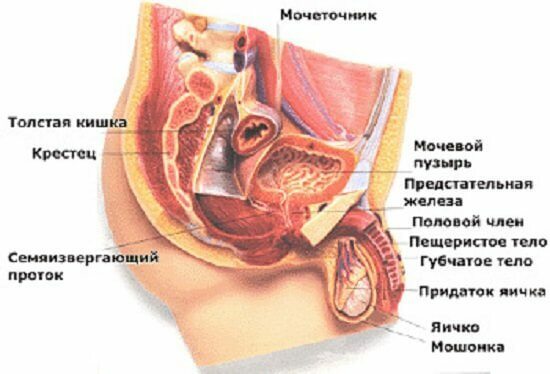
Venous blood outflow from the testis is carried out through the veins of the lobate plexus passing along the spermatic cord. After the fusion these vessels flow into the inferior vena cava and renal vein. At the same time, the vessels form an acute angle to the left, thereby creating an obstacle to the outflow of blood. That is why varicose veins of the spermatic cord are more often found on the left.
The development of infertility in varicocele is associated with the impact of several adverse factors:
- mechanical compression of the vas deferens with dilated veins;
- congestion of blood in the vessels of the spermatic cord, which promotes the development of hypoxia in testicular tissue;
- violation of venous outflow from testicular tissue;
- retrograde blood flow in the vessels of the testicles, which promotes an increase in the temperature of the appendages;
- change in the balance of sex hormones;
- decrease in testicle size;
- a violation of the integrity of the hematotestick barrier with the development of autoimmune processes.
In the case of a varicocele in a man, the function of producing and maturing spermatozoa invariably suffers. In this case, even the one-sided nature of the pathological process, causes the appearance of abnormalities in the testicles on both sides. However, there is no significant relationship between the degree of venous expansion and the severity of the deterioration in the quality of spermogram indices. The presence of varicocele does not exclude paternity, but significantly reduces the chances of it with the passage of time.
Diagnosis of infertility with varicocele
A patient with suspected varicocele examination begins by examining the veins of the spermatic cord. During palpation, the doctor can feel the veins in the scrotal area, altered by varicose veins. At later stages of the disease, pathological vessels become visible to the naked eye. The most accurate method of diagnosis is ultrasound. Color dopplerography makes it possible to identify varicocele even in the asymptomatic stage of the course.
To assess the nature of the change in spermatogenic function in patients with varicocele allows the study of the spermogram. In carrying out this analysis, the following disorders can be identified:
- aspermia( aspermatism) - complete absence of sperm;
- oligospermia - decrease in ejaculate volume;
- pyospermia - the detection of a large number of leukocytes in the ejaculate;
- hemospermia - the detection of blood in the urine;
- azoospermia - no sperm in the sperm;
- oligozoospermia - marked decrease in the number of spermatozoa in the ejaculate;
- asthenospermia( astenozoospermia) - decreased motility of spermatozoa.
Treatment of varicocele
The only radical treatment for varicocele is surgical intervention. Indications for surgery may be infertility, testicular atrophy and severe pain syndrome. Currently, there are several options for surgical treatment varicocele:
- classical operation - access to the testicle vein is carried out with the help of tissue incision. After this, the vessel is ligated in two places and its intersection between the ligatures;
- endoscopic operation - in contrast to standard surgical intervention, such operations are performed through small incisions using modern endoscopic techniques;
- microsurgical revascularization of the testicle - the goal of this surgery is to restore normal blood flow through the testicle vein. For this, the surgeon replaces the affected vessel with a healthy vein;
- sclerotherapy - the essence of this surgical intervention is the introduction of sclerosant in the varicose veins affected by the disease. As a result, the reverse flow of blood in the altered vessels ceases.
Read more: Varicocel surgery - types of interventions, their advantages and disadvantages
Timely detection and treatment of varicocele is a reliable method of preventing the development of male infertility.
Recommended for viewing: