Signs of angina and first aid
Ischemic heart disease( CHD) has been a strong leader among the most common heart diseases for decades, which can lead to complete or partial loss of ability to work and death of the patient. This term unites a whole group of acute and chronic conditions caused by insufficient blood supply to the heart muscle, which is provoked by a violation of the normal patency of the coronary vessels.
Angina( or angina pectoris, coronary disease) is one of the most frequent manifestations of IHD, and this disease is most often observed among the stronger sex. According to statistics, angina is detected in about 65 men and 35 women out of 100. And if earlier this disease was more often observed among people 55-60 years old, in recent years, young people of 30-35 years old are increasingly becoming cardiologists.
Contents of
- 1 What is angina?
- 2 Angina variants
- 3 Characteristic signs of angina
- 4 First aid
- 5 Further treatment of angina
- 5.1 Diet
- 5.2 Medical therapy
- 5.3 Surgical treatment
What is angina?
Stenocardia is a condition in which the patient periodically develops cardialgia - paroxysmal pain in the heart or behind the breastbone. Most patients describe them as "squeezing", "burning", "squeezing" or as a feeling of heaviness or discomfort in the chest. Cardialgia is caused by insufficient intake of oxygenated blood( ischemia) to the cells of the heart muscle. Such a violation of coronary blood flow is caused by narrowing or complete blockage of the coronary vessels.
In most cases, the cause of angina development is atherosclerosis of the heart vessels( see Figure 1).With this pathology, atherosclerotic plaques appear on the vascular walls and expand atherosclerotic plaques, which provoke narrowing( stenosis) of the lumen of the vessel and insufficient intake of blood enriched with oxygen to the cardiomyocytes( cardiac muscle cells).When the coronary artery is narrowed by 50-70%, the myocardium begins to experience oxygen starvation and the patient develops a stenocardic attack whose severity depends on the extent of the coronary artery constriction and the site of its localization.
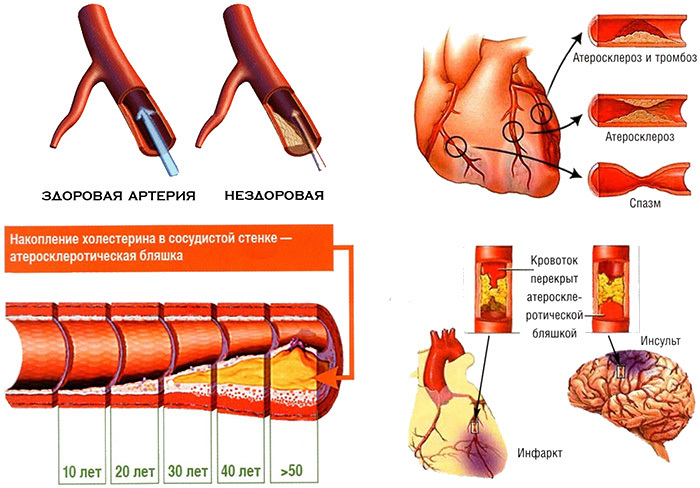
Fig.1 - Atherosclerosis as the main cause of angina pectoris in men.
In some cases, the narrowing of the coronary arteries and the development of angina are caused by other diseases that cause coronary artery disease:
- effects of syphilis or rheumatism( periarteritis, aortitis, vasculitis, endarteritis);
- allergic and infectious diseases;
- pathology of the abdominal cavity( diaphragmatic hernia, cholelithiasis, etc.).
Factors that lead to the development and progression of angina pectoris can become:
- nicotine addiction and addiction to alcohol;
- chronic intoxication;
- obesity;
- increase in blood pressure;
- frequent stress;
- physical inactivity;
- increase in the level of "harmful" cholesterol;
- improper power;
- heredity;
- age changes.
Types of angina
Depending on the factors that provoke an attack of chest pain, these types of angina distinguish:
- angina of stress - pains are provoked by psychoemotional, physical or mental stress, are eliminated independently at rest or after taking nitroglycerin;
- stenocardia of rest - pains are provoked by a sudden sudden spasm of the coronary arteries and appear when the load is normal for the patient or at rest.
According to the nature of angina pectoris, angina pectoris can be:
- stable - cardiac attacks appear with a certain frequency( every 2-3 months, a week, etc.);
- is unstable - kardialgia attacks may be the first to occur, spontaneous or progressing;
- atypical( Prinzmetal angina) - is manifested in the appearance of a series of attacks of angina pectoris that occur cyclically in the morning hours( at the same time).
When the first signs of unstable angina appear, the patient should report their appearance to their doctor or call an ambulance, because such attacks can cause myocardial infarction or heart attack.
Characteristics of angina pectoris
The most common symptom of angina pectoris is the sudden onset of pain behind the sternum or in the heart. It can appear immediately after the accelerated movement, stressful situation, physical stress, psycho-emotional overstrain( both negative and positive), inhalation of cold head wind or smoking.
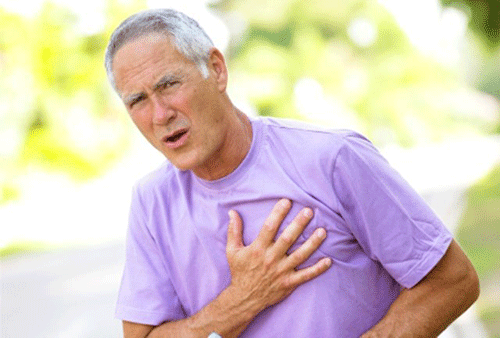
Fig.2 - Chest pain with physical or psychoemotional stress is a sure sign of angina in men.
Angina pectoris pain is compressive, can be burning, increases with an increasing provoking factor and becomes less pronounced at rest. Sensations of pain are localized in the heart or behind the breastbone and can extend to the neck, shoulder, inner surface of the left arm, scapula or lower jaw( see Figure 3).
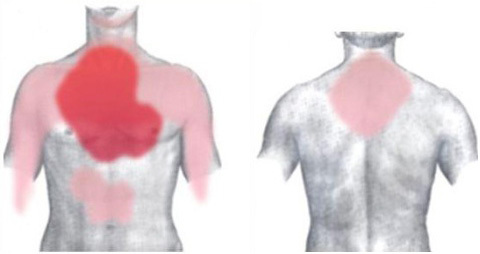
Fig.3 - Localization of pain in angina pectoris.
A typical angina pectoris is often accompanied by such characteristic features:
- sensation of lack of air;
- feeling of fear and anxiety;
- the patient groans and, due to pain, presses his hand to his chest;
- pallor;
- cooling or numbness of hands;
- rapid pulse;
- sensation of palpitations;
- increase in blood pressure.
In atypical attacks, pain may occur in the shoulder, arm, neck, shoulder blade or in the teeth, radiating to the right half of the body, epigastric region or leg. The patient has the following symptoms:
- sweating;
- tachycardia;
- sharp weakness;
- chills;
- dyspeptic phenomena: nausea, vomiting, belching, heartburn, discomfort in the intestines.
Sometimes the attack of angina proceeds asymptomatically - the patient feels only malaise and general weakness. Such cases of the development of the disease are called "mute" angina and they are more often observed in men suffering from diabetes mellitus.
The first painful attack, as a rule, lasts several minutes( from 1 to 15-20) and disappears as suddenly as it appears. The pain may disappear on its own or after taking nitroglycerin. After the end of the cardialgia attack, angina does not manifest itself and in the absence of adequate treatment can lead to the development of such complications of IHD:
- myocardial infarction;
- arrhythmia;
- cardiosclerosis;
- heart failure.
First aid
When developing a stenocardic attack, it is recommended not to panic and take such actions:
- Immediately eliminate the provoking factor - stop any physical activity and exclude the stress factor.
- Sit or take a pose for a half-sitting, because in the prone position, the pain can become stronger.
- Unbutton the clothes, restricting breathing, open the window.
- Take one tablet of nitroglycerin or another nitro-containing drug( Isoket, Nitromint, etc.) under the tongue at the lowest dosage( if the drug is taken for the first time) or at the dose recommended by the doctor. Reception nitorosoderzhashchih drugs in the presence of syncope or fainting should not be done.
- Take ½ tablets of aspirin and 20 drops of valocordin( or corvalol) for ½ cup of water.
- If there is no effect, the nitroxide preparation should be repeated after 5 minutes, but do not take more than 3 doses.
If the angina pectoris has developed in the patient for the first time, it is necessary to call an ambulance. Also, an emergency call is needed for those patients who have a pain episode lasting more than 10 minutes and cardialgia is not eliminated after taking a nitro-containing drug, or the pain in the heart is accompanied by new symptoms( became more pronounced, prolonged, started to be given in the arm, neck, etc.).).
Further treatment of angina
The patient should remember that the lack of a permanent and adequate treatment for angina can lead to the progression of IHD and its complications. Treatment of angina pectoris should be comprehensive and aimed at preventing seizures and complications of this ailment.
The treatment plan includes:
- compliance with the diet;
- rejection of bad habits;
- combating obesity;
- sufficient motor activity;
- elimination of stressful situations;
- medication;
- surgical treatment( if indicated).
Diet
Patients with IHD are recommended to follow the diet number 10C.The general rules of rational nutrition in this disease should be observed for patients throughout life:
- Correspondence of the total calorie intake in relation to energy consumption and motor activity of the patient. As a rule, physical activity in patients with angina is reduced and they should reduce the calorie content of their habitual diet.
- Substantial restriction on the use of table salt( see "How much salt does a man need").
- Exclusion of products that have a stimulating and stimulating effect on the nervous system, heart and blood vessels.
- Significant reduction in the consumption of foods containing cholesterol, digestible carbohydrates and animal fats. The degree of reduction in the consumption of such products should depend on the body weight.
- Increase the proportion of fish and vegetable proteins relative to animal proteins contained in meat and poultry.
- Introduction to the diet of a sufficient number of products rich in vitamins of group B, E, PP, P and C, lipotropic substances( lecithin, choline, methionine), dietary fiber, fatty acids, potassium, magnesium, chromium, zinc and some other trace elements.
- Achieve and maintain a normal body weight.
Compliance with diet No. 10C is aimed at:
- preventing the progression of atherosclerosis of coronary vessels, cerebral vessels and other organs;
- prevention of progression of IHD and hypertension caused by atherosclerosis;
- prevention of obesity.
In CHD, consumption of such products as:
- fatty meat types( pork, lamb, fat beef, geese, ducks, offals and lard) should be limited;
- fatty dairy products;
- meat broth;
- solid fatty cheeses;
- egg yolks;
- butter, margarine, mayonnaise;
- smoked meat;
- caviar;
- mushrooms;
- sausages;Sweet dough and confectionery;
- pasta;
- chocolate;
- strong tea, coffee and cocoa.
Dishes should be prepared without salt by boiling, steaming, quenching or baking. Salt should be added to the dishes( up to 5-6 grams per day).Meals should be taken 4-5 times a day in small portions, and dinner should be held 3-4 hours before night sleep.
It is recommended to include in the diet:
- cereals and cereals( rice and mangro should be kept to a minimum);
- vegetables, unsweetened fruits, berries and dried fruits;
- fresh juices without added sugar;
- low-fat dairy products( instead of butter in dishes it is better to add sour cream or cream);
- egg yolks( in the absence of contraindications no more than 3 pieces per week);
- refined vegetable oils( olive, linseed, corn, sunflower);
- rye bread or bread made of wheat flour of II grade( not more than 150 grams a day);
- vegetable salads and vinaigrettes with vegetable oil;
- the first dishes on low-fat broth( no more than 1 time per week), vegetable, dairy and fruit soups;
- the second dishes from lean fish, meat and poultry;
- seafood;
- low-fat soaked herring( no more than 1 time per week);
- steam omelet from proteins;
- drinks( light tea, infusion of rose hips, compotes, jelly, fruit and mousse).
Medication Therapy
For the treatment of angina, drugs are used that promote the expansion of blood vessels and improve blood flow to the myocardium. The tactics of drug therapy are determined individually depending on the clinical cases.
Table 1 - Medicinal preparations used for drug therapy of angina pectoris.
| GROUP OF DRUGS | PURPOSE |
|---|---|
| Nitrocontaining | drugs for relief of pain near |
| blockers | calcium channel to expand coronary |
| Antiaggregants | To reduce the blood viscosity and the prevention of thrombus formation |
| ACE inhibitors | used in the presence of hypertension |
| β-blockers | used atThe presence of tachycardia |
| Lipid-lowering drugs | Used for hypercholesterolemia |
| Cardiometabolic | -OPERATION In order to improve contractile function of the myocardium and reducing the number of seizures |
Drug therapy for angina may be supplemented by treatment of concomitant diseases and therapeutic physical training. Patients are recommended regular monitoring of blood pressure and dispensary observation at the cardiologist.
Surgical treatment of
In 70-80% of cases, conservative therapy allows stabilizing coronary circulation. In the absence of the effect of drug treatment, the patient may be assigned coronary angiography to make a decision about the feasibility of conducting a surgical operation.
For the stabilization of coronary blood flow in unstable angina, such surgical procedures as:
- balloon angioplasty with stenting;
- aorto-coronary bypass.
The choice of surgical treatment for angina is determined by the severity of symptoms and the degree of individual risk of complications from the cardiovascular system.
Cardiologist Petrova Yu.
Recommended for viewing: