Diseases of dementia associated with Levy bodies
Contents:
- Dementia associated with Levi bodies
- Lobosomal dementia
- Manifestations of multi-infarct dementia
- Dementia after strokes
- Dementia in Alzheimer's disease
Dementia or acquired dementia occurs against a background of a number of diseases affecting the nervous and circulatory system. Most types of dementia are progressive and do not respond to treatment. For example, dementia with Levy bodies, dementia in Alzheimer's disease, etc. However, it is possible to prevent early manifestations of pathology and support the vascular system. 
Dementia associated with Levi bodies
Tauri Levi is referred to as inclusions in the cortex and subcortical formation. Tauri Levi are formed as a result of the destruction of the cytoskeleton of neurons. The cytoskeleton maintains the normal shape of the cells. Under normal aging, Lewy bodies can be detected in small amounts. When studying the occurrence of dementia, it was found that diseases of dementia with Levy bodies are associated with a gene mutation.
Dementia with Levi bodies is a rare progressive degenerative disorder of the nervous system. Pathology is characterized by the following symptoms:
- impairment of cognitive functions of the brain;
- memory impairment and attention;
- loss of consciousness;
- frequent falls;
- visual hallucinations;
- delirium;
- Parkinsonism;
- urinary incontinence.
At an early stage, pathology is difficult to distinguish from Parkinson's or Alzheimer's disease. Characteristic signs of pathology are the disorder of behavior during sleep and the absence of signs of atrophy when examined on an MRI.In patients suffering from the disease, which is associated with Levy bodies, in most cases dementia in severe form is revealed.
Some patients suffer from persistent visual hallucinations. With the accumulation of corpuscles in the cortical substance of the brain, many patients show signs of parkinsonism. Depending on the characteristics of the body, life expectancy in the presence of dementia with Levi bodies is approximately 8 years. 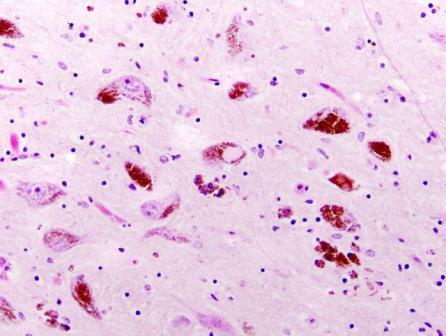
Frontal temporal dementia
Frontal temporal dementia has a number of features that allow differential diagnosis with other types of dementia. Patients are observed memory and speech impairment at the latest stages of the disease. The first manifestations of pathology are passivity, untidiness. Patients are reluctant to communicate with others, answer questions monosyllabically, act tactlessly. At the beginning of the disease, behavioral disorder is observed:
- sexual promiscuity;
- inadequate playfulness;
- gluttony without a sense of saturation.
As the pathology progresses, patients stop following themselves, neglecting hygiene. The symptoms are joined by urinary incontinence, loss of ability to control actions. Patients perform meaningless actions, can not analyze information( generalize, draw conclusions, compare, etc.).The lifespan of such patients is an average of 11 years.
Manifestations of multi-infarct dementia
Atherosclerotic lesions of vessels after several ischemic episodes develop multi-infarct dementia. The trigger mechanism is numerous cerebral infarctions as a result of embolism. In the examination of patients, cardiovascular and nervous system lesions are revealed:
- atherosclerotic plaques;
- increased reflexes;
- impairment of motor activity;
- muscle twitching;
- pareses.
With multi-infarct dementia, softening of the brain tissue occurs. Dementia develops gradually. Initially, patients complain of dizziness, memory problems, headaches, tinnitus. In the future, violation of vision and speech is added. In the initial stage of treatment, symptoms disappear. 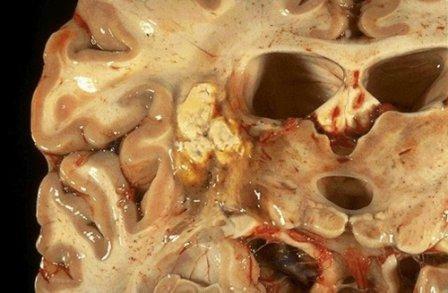
However, the disease leads to more severe cognitive impairment. There is violent laughter or crying, trembling limbs in rest, difficulty speech, pathological reflexes. In the later stages, trophic disorders in the limbs, incontinence of urine and feces, epileptic seizures, sudden fainting are noted.
Dementia after strokes
Dementia after ischemic stroke is one of the serious complications that significantly affects the quality of life of the patient. More often, pathology develops in patients with concomitant diseases of the nervous and cardiac system( epilepsy, arrhythmia, hypotension).The severity of the symptoms of dementia depends on the area of brain tissue damage. Only in a part of the patients did the signs of dementia appear with minor lesions.
Post-stroke dementia is manifested by apathy, a violation of attention. Patients cease to recognize objects and others, to perform purposeful movements, to form a speech normally. Since motor and speech disorders after strokes are the main manifestations, signs of dementia often remain in the shadows. In neurology, the manifestation of dementia in vascular lesions is seen as a reversible process. With adequate treatment, it is possible to restore the functions of the brain.
Dementia in Alzheimer's disease
Dementia of the Alzheimer's type develops in degenerative processes in the brain tissues of Alzheimer's disease. In the primary period there are protracted, untreatable, neurotic states, dementia syndromes and depression. On the face of patients, one can notice the characteristic mimicry of astonishment. Patients have obsessive ideas of defectiveness and jealousy, impaired memory, speech, motorized, purposeful activity. In the behavior note sloppy, sudden fees on the road.
In the future, the symptoms progress. Patients may forget to do the usual things( dress, wash, etc.).Leaving the house, they can not find the way back, forget their name, year of birth, can not be responsible for their actions( to predict the consequences of actions).When talking to a patient, attention is broken and similar movements. In the future, symptoms increase:
- patients do not recognize themselves;
- epileptic seizures appear;
- builds muscle tone.
In the last stage, the patients are in a vegetative coma. With such violations, there are complex reflexes( swallowing, chewing, yawning).Patients can open and close their eyes, make grasping movements, make sounds. Usually, death occurs in the vegetative state or when pneumonia is attached.
It should be noted that dementia can develop even in successful intellectual people who lead a healthy life. From this, no one is immune. Therefore, it is worth paying attention to the appearance of memory disorders, irritability, absent-mindedness. The appearance of disturbing symptoms is an occasion to turn to a psychiatrist or neurologist. It is possible that in the early stages of the disease, doctors will determine the cause of dementia and prescribe a treatment that will stop or eliminate the symptoms of pathology.
write the question in the form below: