Methods for treatment of urethral stricture in men
Urethral stricture is a pathological condition characterized by a narrowing of the urethra, and ultimately leads to a disruption of the normal outflow of urine during urination. Pathology occurs most often in men, which is associated with the peculiarities of the structure of the male urethra( it is longer and more twisted than in the female), therefore, diagnostic methods and approaches to treatment are described more often for the male audience.
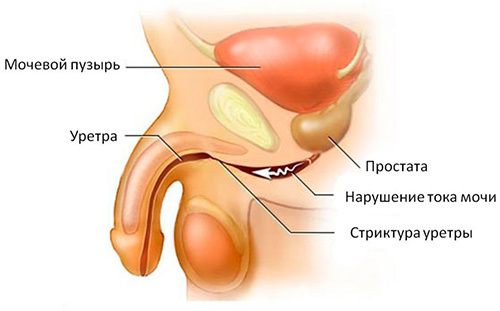
Narrowing of the urethra( urethral stricture).
Content
- 1 Causes
- 1.1 Congenital urethral stricture
- 1.2 Acquired urethral stricture
- 2 Clinical manifestations
- 3 diagnostic methods
- 4 Treatment of urethral stricture
- 4.1 Laser correction
- 4.2 Urethroplasty
- 4.3 Endoscopy
- 4.4 probing and stenting
- 4.5 moreMethods: home remedies
Causes of
The causes of this disease are congenital and acquired.
Congenital stricture of the urethra
Very rare( 1-2% of all cases described).Its cause is the genetically conditioned underdevelopment of the lower third of the urethral canal. As a rule, such a pathology is manifested at an early age, very often combined with insufficient formation of other organs and systems, and has its own specific approaches to diagnosis and treatment.
Acquired stricture of the urethra
The acquired factors in the etiology of the disease include:
-
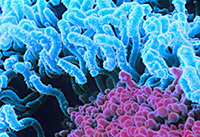
Urethral infection is associated with stricture of the urethra.
Injuries, bruises, wounds to the urogenital organs. In this case it is a matter of directly damaging the penis itself( blunt trauma, sexual excesses, foreign bodies and penile fractures), and the consequences of pelvic fractures( car accidents, falls from height, etc.).
- Acute or chronic inflammation of the urethral canal caused by a specific or nonspecific pathogenic microflora. The most common pathogens of inflammation in the urethra with the threat of constriction are gonococci, Trichomonas and chlamydia. Previously, tubercular mycobacteria were often detected, but in the past 40 years, tuberculosis of the genitourinary organs, leading to strictures, almost never occurs.
- Consequences of surgical interventions, invasive examination methods, the introduction of catheters, lithotriptors( after the removal of stones in the ICD).
In the development of this pathology, regardless of the initial causes, two major factors are important - narrowing of the urethral lumen and active concomitant inflammation. Proceeding from this, the main symptoms accompanying the stricture of the urethra appear.
Clinical manifestations of
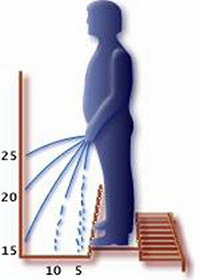
Difficult urination and weak urine flow are the main manifestations of urethral stricture.
Patients complain of difficulty urinating , right up to the inability to urinate at all. The urine stream is weak, sprinkled in all directions, which leads to a special discomfort in the patients. They have to clean up urine each time, which does not get into the toilet and even change clothes after the act of urination. Almost all patients note the leakage of urine to the underwear, which requires pads and frequent replacement of laundry.
Act of urination, usually not complete, not leading to a feeling of emptying the bladder, as a consequence - frequent repeated desires .Many note soreness and rezi with the act of urination and immediately afterwards. In the urine there may be impurities of blood and purulent inclusions. Sometimes patients have pain in the penis with erection, painful ejaculation, blood in the sperm and pain in the pelvic area.
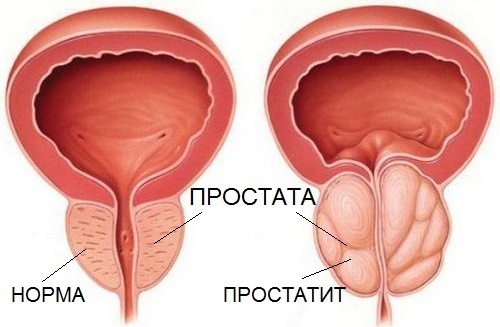
It should be noted that most of the above symptoms can occur in other diseases of the genitourinary system. For example, with prostate adenoma, acute and chronic prostatitis, etc. Very often untreated patients unsuccessfully treat prostate pathology, which relentlessly recurs due to urinary regurgitation and constant reinfection of the prostate with the pathogen it contains.
That is why it is so necessary to complete and timely examination of patients with suspected urethral stricture for the correct selection of the method of treatment.
After careful collection of anamnesis, the doctor will be able to presume a possible cause of the disease and design the necessary research methods.
Diagnostic methods
Starting with a routine general urine test, active inflammation can confirm the tub by urine cultures on the pathogen. It is also necessary to take smears from the urethra and PCR to confirm the sexual infection and choose antibacterial treatment.
- Confirm or refute the presence of stricture and the degree of its severity will help such a method of diagnosis, as uroflowmetry. It determines the flow rate of urine per unit time, the duration of urination time and compares them with the amount of urine allocated.
-
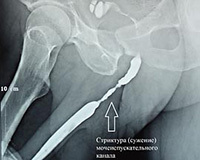
Contrast radiography makes it possible to clearly identify the narrowing of the urethra.
Ultrasound diagnosis( US ) allows to determine the degree of narrowing of the channel and its distance along the length.
- For the same, contrast radiography ( contrasting of the urinary canal with subsequent x-ray) is used.
- Sometimes additional catheters( retrograde urethrography and anterograde cystourethrography ) are sometimes used to more accurately determine the degree and extent of the constriction.
- For the visual inspection of the inner surface of the urethra urethroscopes are used. They are a thin tube with a camera on the end. They are injected into the urethra and bladder, which makes it possible to determine the degree and nature of mucosal lesions.
After the diagnosis is confirmed and the specifics of the stricture of the urethra can be selected, an adequate treatment can be selected.
Treatment of stricture of the urethra
Depending on the severity of the inflammatory syndrome and the detected activity of pathogens, an adequate antibacterial therapy is necessarily prescribed. But the narrowing of the lumen of the urethra can not completely eliminate it. In medicine, there is a fairly large selection of treatments that allows you to partially or completely remove the stricture and restore the normal course of urine through the canal.
Laser correction
The laser correction of the scar tissue of the affected urethra is widely used. In this case, the sclerized walls of the mucosa, narrowing the lumen, are burned out by the laser and after the operation they are treated with the introduction of anti-burn solutions and ointments. This allows, as a rule, to completely restore the lumen of the urethra.
However, this method of treatment after a certain period of time is fraught with relapses( up to 40-50%).This is due to the peculiarities of mucosal epithelialization processes in different patients and the difficulty in selecting and administering anti-burn ointments.
Urethroplasty
Good feedback from patients and doctors received urethroplasty. In this case, after excision of the pathologically affected area of the urethra, the donor tissue of the patient is inserted. As a rule, these are areas of the mucous membrane of the cheek, tongue or foreskin. They well get accustomed and gradually replace mucous, keeping a full lumen. The advantage of this method is that relapses occur not more often than 10%.
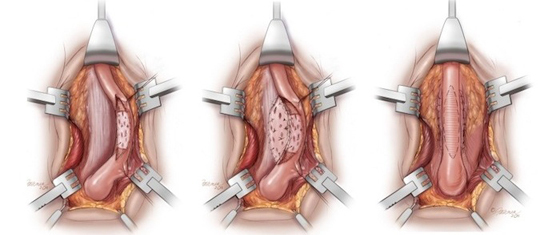
Stretch of the urethra.
Endoscopy
An endoscopic method is widely used for emergency therapy, especially when there is a threat of a complete outflow of urine. With this method, the endoscope is injected directly into the lumen of the canal and the tissues are cut. This allows for a short time to restore urination and avoid serious complications.
Buzhirovanie and stenting
Boring and stenting methods are becoming less common nowadays. In the first case, a metal tube is inserted into the urethra to widen the lumen. In the second, in the affected area of the urethra, a stent is fixed, which also prevents the site from narrowing. Both methods are very traumatic and fraught with complications.
Additional methods: home remedies
This disease, like urethral stricture, by no means allows self-medication. Patients must be observed with the appropriate specialists in order to avoid fatal consequences.
But at home in complex treatment and to maintain the process of remission, you can use herbal teas .Well-proven:
- cranberries;
- St. John's wort;
- yarrow.
Also use chamomile and elderberry.
Phytoteas from these herbs have a diuretic and anti-inflammatory effect and help patients after the operations to recover and improve their well-being.
During the rehabilitation period it is possible to add hirudotherapy( medical leeches treatment), which takes good effect on swelling, postoperative inflammation, improves blood circulation and lymph drainage.
All patients with urethral stricture should be observed with the urologist, even if they have reached a persistent period of well-being and do not feel complaints. They need to avoid hypothermia, trauma and urinary infections to prevent the resumption of the disease.
Recommended for viewing: