Hunger stomach pains: causes, treatment and prevention!
Hunger pains are throbbing, sucking, cutting or stabbing painful sensations that occur on an empty stomach (in the absence of food for 2-3 hours). This type of pain can be due to eating disorders when a person allows too long intervals between meals, but in in some cases, hunger pains are a sign of dangerous diseases of the gastrointestinal tract, for example, stomach or duodenal ulcers intestines. To determine what exactly caused the unpleasant sensations, as well as to prevent possible complications, it is necessary to consult a gastroenterologist and undergo complex diagnostics, which may include laboratory, hardware and instrumental methods (depending on the general clinical paintings).

Hungry stomach pains: causes
Content
- 1 Why can an empty stomach hurt?
- 2 Impaired motor function as a cause of hungry stomach pains
-
3 What diseases can cause hungry stomach pains?
- 3.1 Duodenal ulcer
- 3.2 Acidic gastritis
- 3.3 Zollinger-Ellison syndrome
- 4 Pain at night
-
5 Useful Tips
- 5.1 Video - Hungry stomach pains: causes
Why can an empty stomach hurt?
To understand what exactly can cause hunger pain in the stomach, it is important to have an idea about the digestive process, its stages and what happens in the stomach after getting into it food. The initial phase of digestion begins in the mouth. There food is crushed, grinded, chewed and processed by enzymes that produce exocrine salivary glands. In the mouth, the primary breakdown of polysaccharides also occurs due to the action of amylase, a digestive enzyme from the class of hydrolases. After the bolus (food bolus) is formed, food moves through the esophageal tube into the stomach. The food bolus enters the stomach through the cardiac valve (lower esophageal sphincter).

Digestion stages
In the stomach, food is processed by digestive juice, which has a complex chemical composition and contains substances necessary for the digestion of food.

Gastric juice
Table. Composition of gastric juice.
| Component | Properties and functions |
|---|---|
| Hydrochloric acid (aqueous solution of hydrogen chloride) | Provides the conversion of pepsinogen to pepsin, maintains a normal level of acidity in the digestive tract, stimulates the production of pancreatic secretions, disrupts the vital activity of pathogenic bacteria and microbes. |
| Pepsin (proteolytic enzyme) | Breaks down protein molecules. |
| Castle factor (enzyme) | It converts the inactive form of cyanocobalamin (vitamin B12) into the active fraction, which is absorbed by the body and enters the systemic circulation. |
| Bicarbonates | They neutralize hydrochloric acid at the surface of the epithelial membrane of the stomach, preventing the formation of ulcers and erosions. |
| Slime | Forms a dense gel-like layer and mixes with bicarbonates. Protects the mucous membrane from the aggressive effects of hydrogen chloride. |
During the day, the various glands and cells of the stomach produce about 1.9 liters of gastric juice, the main function of which is to digest the bolus. If food does not enter the stomach, proteolytic enzymes, hydrogen chloride and other substances that are contained in digestive fluids (chlorides, sulfates, phosphates, etc.) irritate the receptors of the mucous membranes, which provokes an attack of acute pain. Painful sensations can also be the result of the aggressive effect of hydrogen chloride on the walls of the stomach, since the prolonged absence of food in stomach reduces the secretion of mucus, which protects the inner walls of the organ from the corrosive action of hydrochloric acid and digestive enzymes.

Hungry pains
Important! For the stomach to work properly, food must enter it every 3-4 hours. Regardless of age, gastroenterologists consider fractional meals, including 5-6 meals, to be the best option. Individuals with chronic and acute diseases of the digestive system can be shown food up to 7-10 times a day (provided that the volume of one serving does not exceed 160 ml).
Impaired motor function as a cause of hungry stomach pains
So that food can move from the pyloric part of the stomach into the intestines, the walls of the organ periodically contract and "push" the bolus, which enters the proximal small intestine through the muscular valve. Wave-like contractions of the gastric walls of a certain force, ensuring the advancement of the food lump into the intestine, are called peristalsis. Unlike the esophageal tube, the motor function of the stomach is not only to propel food, but also to store it, grind it, and mix the bolus with gastric juice.

Digestion in the stomach
When there is no food in the stomach, the stomach contracts with a force of no more than 1 cm per second. After eating, the pressure in the stomach rises, and its contractions become more rapid. If the motor function is impaired, the rate of contraction during this period does not correspond to the physiological norm, which can cause hunger pains. There are two types of such pains (depending on the type of peristalsis).
Table. Hunger pains in the stomach with impaired motor function.
| Pain type | What happens to motor function? | Characteristics of pain |
|---|---|---|
 Hypotonic (hypokinetic) |
The stomach contracts at a low rate, and the strength of the muscle contractions is insufficient to push the food bolus to the pylorus separating it from the duodenum. | Pain with hypotension of the stomach is associated with the retention of food in the cavity of the organ. Painful sensations appear approximately 1.5-2.5 hours after eating (when the food lump must move into the small intestine), are of moderate or high intensity. Character - tingling, dagger-like, cutting. |
 Hypertensive (hyperkinetic) |
The stomach contracts too actively, the movements are erratic and chaotic. | The pain is spastic in nature, occurs at any time between meals, the intensity is usually high. |
Note! To assess the motor and evacuation functions of the stomach, it is necessary to undergo electrogastroenterography. This is a diagnostic method, which consists in the simultaneous fixation of the biological potentials of various parts of the organ.

Electrogastroenterography
What diseases can cause hungry stomach pains?
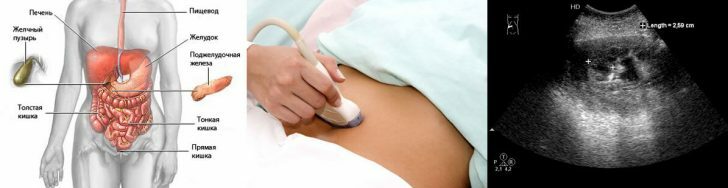
There are several abnormalities of the stomach that can cause hunger pains. Some of them have common symptoms, so self-diagnosis in the event of any pathological symptoms is unacceptable. Even an experienced specialist will not be able to make a diagnosis without hardware and laboratory examination, therefore, it is necessary to start the diagnosis with a visit to a gastroenterologist.
Duodenal ulcer
This is the most common cause of hunger pains, which occur mainly in the morning and disappear suddenly after eating any amount of food. With an intestinal ulcer, a local ulcerative defect with visible trophic changes in epithelial cells (in severe cases, an ulcer can affect the submucosa and muscle layer). The pathogenesis of the formation of such ulcerations is represented by the damaging effect of hydrochloric acid, components bile and pepsin, while the acidity of the gastrointestinal tract in most cases remains within norms.

Duodenal ulcer
Distinctive features and symptoms of an ulcer can be considered:
- seasonality (relapses of the disease occur mainly in the spring or in the autumn months);
- weight loss;
- belching with a sour taste and smell immediately after eating;
- manifestations of functional dyspepsia (nausea, vomiting).

Photo of ulcer
Treatment of the disease includes taking antacids (Rennie, Almagel), antisecretory drugs (proton pump inhibitors, m-anticholinergics, gastrin receptor blockers, H blockers2-receptors), pantothenic acid and methylmethionine sulfonium chloride (vitamin U). When Helicobacter pylori bacteria are detected in the lumen of the gastrointestinal tract, eradication therapy is indicated with the use of bismuth preparations ("De-nol", "Bismofalk"), antibiotics ("Tetracycline", "Amoxicillin", "Clarithromycin").

"De-nol"
Important! The nature of pain in peptic ulcer disease allows you to determine the approximate localization of the ulcer. Hunger pains in most cases indicate damage to the duodenum. If severe pain occurs after eating, the ulcerative process usually occurs in the stomach.

Tips for a stomach ulcer
Acidic gastritis
Gastritis is the most common stomach disease characterized by inflammation of the epithelial membrane covering the inner walls of the organ. The leading factor in the development of the inflammatory process is damage to the mucous membrane by hydrochloric acid and proteolytic enzymes, therefore, gastritis with high acidity (when the level of hydrogen chloride exceeds 0.6%) can also be considered as one of the possible causes hungry pains.

What is gastritis
Hydrochloric acid, produced in large quantities, not only irritates the nerve endings, provoking an acute or throbbing pain between meals, but also eats away at the mucous membrane, causing burning, cutting or dagger-like pain in stomach. Such pains can appear at any time, but the maximum intensity of the pain syndrome reaches when food is in the stomach is absent, and the entire volume of hydrogen chloride in its cavity interacts with gastric walls.

Hydrochloric acid formation
Other symptoms of this disease may include:
- bad breath;
- sour belching after eating;
- excruciating heartburn (painful burning sensation behind the breastbone);
- bloating and flatulence;
- the release of a large amount of intestinal gas;
- upset stool (thinning feces, constipation, change in the consistency of feces).

Types of gastritis
Treatment of acute gastritis begins with gastric lavage with a gastric tube, after which it is necessary to refrain from eating for 24 hours. In the chronic form of inflammation, proton pump inhibitors (Omez, Rabeprazole, Pantoprazole), antacids (Maalox, Gaviscon), prokinetics (Cerucal, Motilium) and H blockers are prescribed2-histamine receptors ("Famotidine", "Roxatidine"). Antibiotics are indicated for the treatment of Helicobacter pylori-associated infections.

"Motilium"
Zollinger-Ellison syndrome
This syndrome is a tumor formation that is localized in the pancreas or duodenum. More than 50% of such tumors (gastrinomas) have a malignant course, therefore, timely diagnosis is of great importance for the formation of a favorable prognosis. Despite the fact that the tumor is usually small (less than 1 cm) and is characterized by slow growth, treatment must be started as early as possible, since the main complication of pathology is the formation of peptic ulcers, prone to perforation and bleeding.

Gastrinoma
The clinical picture of Zollinger-Ellison syndrome is rather blurred. The tumor actively produces gastrin, a hormone that stimulates the activity of G-cells located in the pyloric part of the stomach and responsible for the synthesis of hydrochloric acid - therefore, the main symptoms of pathology are directly related to increased acid production. The characteristic features include:
- dull or dagger-like pain after eating;
- severe cutting pains with a prolonged period of fasting (hunger pains);
- diarrhea (is the first clinical symptom in about 40% of patients);
- bad breath;
- heartburn and sour belching.

Heartburn
In some cases, gastrinoma may present with blood inclusions in the stool, which is a sign of bleeding ulcerative defects.
Treatment includes proton pump inhibitors as well as palliative treatment with antisecretory drugs prolonged action (for example, "Octreotide", which must be injected into the muscle at a dosage of 20-30 mg 1 time month). If conservative treatment is ineffective, local resection followed by chemotherapy is used.

"Octreotide"
Important! Survival of more than 10 years with timely treatment of gastrinoma is observed in 80% of cases.
Pain at night
If a person is regularly tormented by hunger pains at night, but diseases of the stomach and duodenum are excluded, one should consult an endocrinologist. Certain hormonal disorders (such as insufficient melatonin secretion) can present with stomach pain at night. Melatonin belongs to the regulators of the circadian rhythm, therefore, increased concentration at night leads to the appearance of severe hunger and acute pain in the stomach, while in the daytime a person's appetite can completely absent.

Stomach pain at night
Signs of hormonal disorders can also include:
- excessive sweating;
- change in body weight;
- mood swings (emotional lability);
- skin rashes;
- blood pressure surges, etc.

Blood pressure surges
A hallmark of pain caused by hormonal imbalance is that it does not go away completely after eating and may reappear after 1-1.5 hours.
Useful Tips
To avoid the onset of hunger pains, it is important to follow the rules of healthy eating and eating behavior.
- It is necessary to take food every 3-4 hours.
- The interval between solid food and drink should be at least 20 minutes.
- Foods that can irritate the stomach and disrupt its motility (spices, smoked meats, fatty foods, soda) are recommended to be excluded from the diet.
- You cannot go to bed on an empty stomach: the last meal should take place 2-3 hours before bedtime. The best choice for an evening snack would be kefir with bran, cottage cheese without sugar, or a piece of boiled fish with vegetables.
- You should eat 5-6 times a day, and the volume of one serving should not exceed 180-220 g.
- You should not eat two dishes at once (soup and the second) for lunch - it is better to divide them into two meals so as not to create additional stress on the digestive tract and not to stretch the stomach.

Healthy eating rules
Hunger pains are a fairly common problem that can be the result of improper eating habits or a symptom of a serious illness. If, despite the correction of the diet, such pains persist, it is necessary to consult a doctor in order to exclude possible pathologies of the gastrointestinal tract.