Heart murmur in a child, in an adult, causes, treatment
Content
- What is a heart murmur?
- Small anatomy of the heart
- Classification
- Time of appearance during the cardiac cycle
- Duration and frequency
- Noise intensity
- Point of maximum intensity
- Transferability
- Causes of heart murmurs
- Benign or innocent noises
- Pathological murmurs
- Symptoms
- Diagnostics
- Treatment of heart murmurs
What is a heart murmur?
A heart murmur refers to the presence of additional murmur detected during auscultation of the heart (typical murmurs, which are always present, represented by two heart tones), which may be associated with a change to level:
- heart valves: tricuspid and mitral, pulmonary and aortic;
- left and right ventricular chambers;
- large vessels: aorta and pulmonary artery.
Although often the presence of murmur is not pathological, in some patients it can hide rather serious heart problems.
Heart murmurs can be broadly categorized into:
- Benign murmurs, also called innocent: usually present in healthy children.
- Pathological murmurs: in children, they are caused by congenital heart defects, and in adults, for various reasons, including malfunctioning of the valve apparatus.
A heart murmur is diagnosed by a doctor through a chest auscultation during an objective examination; then the diagnosis is completed with some instrumental studies, such as echocardiography.
- Benign murmurs have a good prognosis, require no treatment, cause no symptoms, and do not restrict physical activity.
- For malignant murmurs, the prognosis will depend on the underlying cause, its severity, and treatment options.
Small anatomy of the heart
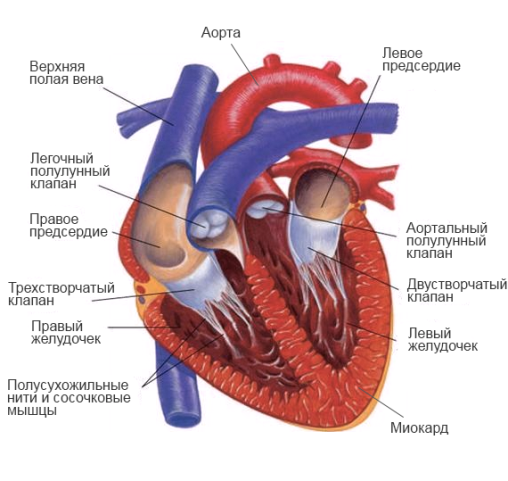
The heart is a muscular organ located in the mediastinum, in the center of the chest. The heart in the body essentially serves as a "pump" that takes care of collecting oxygenated blood from the lungs and then pumps it to the rest of the body.
The human heart is divided into four chambers:
- right and left atrium,
- right and left ventricle
and is equipped with a valve system consisting of 4 valves:
- mitral valve: between the atrium and the left ventricle,
- tricuspid valve, between the atrium and the right ventricle,
- aortic valve: between the left ventricle and the aorta,
- pulmonary valve: between the right ventricle and the pulmonary artery.
In the so-called “cardiac cycle,” deoxygenated blood from the periphery enters the right atrial level through the inferior and superior vena cava; this blood will be pumped through the right ventricle into the pulmonary artery, which will reach the lungs.
After oxygenation, blood reaches the left atrium through the pulmonary veins, and from here it is pumped from the left ventricle into the aorta, an artery that distributes oxygenated blood throughout the body through its branches.
Read also:Angina pectoris (angina pectoris): causes, symptoms and treatment, first aid
The heart valves, with their opening and closing, are responsible for the typical heartbeat sound, characterized by two tones:
- The 1st tone is generated when the mitral and tricuspid valves are closed at the beginning of systole (closure prevents blood pumped into the ventricles from entering the atria);
- The 2nd tone is generated when the pulmonary and aortic valves close at the beginning of diastole (closure prevents blood pumped into the vessels from entering the ventricles).
Systole - one of the conditions of the heart muscle during palpitations, namely the contraction of the left and right ventricles and the release of blood into the aorta from the left ventricle and into the pulmonary trunk from the right ventricle.
Classification
To distinguish benign heart murmurs from pathological ones, the characteristics of each murmur are identified by evaluating some parameters:
Time of appearance during the cardiac cycle
Based on this parameter, one can recognize:
- Systolic murmurs: they are heard during systole, then simultaneously or immediately after the 1st heart sound;
- Diastolic murmurs: they are heard during diastole, then simultaneously or immediately after the 2nd heart sound;
- Continuous murmurs: they are heard throughout the entire cardiac cycle.
Duration and frequency
The noise can be of high or low frequency (the number of sound waves per second) and continue throughout the entire cycle or only part of the cycle.
Noise intensity
Impacts are classified by intensity according to the "Levin scale", which provides 6 degrees:
- the first degree corresponds to a very weak noise, which is difficult to respond to with a stethoscope;
- at the 6th degree, the noise corresponds to a high intensity, audible even without a stethoscope.
Point of maximum intensity
Corresponds to the anatomical point, the noise is easier to hear. For example, at the level of the apex of the heart, blows of mitral origin are heard, and at the level of the 2nd intercostal space on the right - blows of the aorta.
Transferability
Indicates in which anatomical area the noise can be emitted. The murmur of mitral origin tends to be emitted in the direction of the left armpit and the aorta in the direction of the neck and downward in the direction of the sternum.
Causes of heart murmurs

The pathogenetic mechanisms by which noise is generated are different:
- partial obstruction (blockage) at the level of a valve or vessel: for example, with aortic stenosis, mitral stenosis, or coarctation of the aorta;
- a flow of blood through an abnormal valve: for example, as a result of mitral or aortic valve prolapse;
- retrograde duct through an insufficient valve: mitral regurgitation or aortic regurgitation;
- Blood flows through a dilated arterial vessel (aortic aneurysm) or a dilated ventricle (post-infarction dilatation)
- duct through an abnormal connection: for example, after right-to-left or left-to-right bypass due to atrial or ventricular defect, patency of Botallo's ductus arteriosus;
- extracardiac blood flow: may be due to anemia, high fever, pregnancy.
Read also:High pulse: reasons how to reduce the pulse at home with drugs and folk remedies
Benign or innocent noises
These auscultations are common in childhood (in newborns and infants) and may not be associated with any medical condition. They are found in high percentages, reaching up to 40% with perfectly healthy hearts. As a rule, with development, they tend to disappear and cease to be heard.
Also in adulthood, innocent sounds can be detected during pregnancy due to the increased volume of circulating blood.
Other types of innocent sounds are caused by temporary conditions such as:
- anemic condition;
- severe stress;
- fever attack.
Benign murmurs have an excellent prognosis, do not require any treatment, do not cause any symptoms, and do not restrict physical activity.
Pathological murmurs
Abnormal murmurs are associated with a specific condition and disease; the most common reasons:
- Congenital heart defect: This is typical for newborns with congenital causes; in this case, heart murmurs are present from birth and are diagnosed early. With the help of instrumental studies, it is possible to assess their severity and, possibly, plan a surgical correction to correct the defect.
-
Acquired valvular pathology: This is a common condition in adults and older adults. The valves can be altered in their anatomy and therefore in their function, for example, due to stenosis with reduced blood flow through the smallest hole or due to retrograde insufficiency of blood regulation through insufficient valve. The most common causes of valve disease are:
- heart attack;
- rheumatic disease;
- tertiary syphilis;
- bacterial, viral, or fungal endocarditis;
- amyloidosis;
- calcification of the valvular structures of the heart.
For malignant murmurs, the prognosis depends on the underlying cause, its severity, and treatment options.
Symptoms
In the case of a benign innocent murmur, there is no associated symptom since there is no underlying heart disease.
In the case of pathological murmur, on the other hand, different symptoms can occur, the degree of which depends on the severity of the underlying pathology:
- cyanosis (bluish discoloration of the skin and mucous membranes associated with a decrease in blood oxygenation);
- shortness of breath (labored breathing with a feeling of oxygen starvation);
- sweating (increased sweating);
- swelling or unexplained weight gain;
- chronic cough;
- loss of appetite and growth retardation in newborns;
- dizziness;
- fainting;
- chest pain.
Read also:Exertional angina
Diagnostics
The diagnosis can be made at different times:
- in a newborn, it can be delivered immediately after birth with pathological noise;
- in the case of benign murmurs, the diagnosis can be made during the first years of life or even sometimes go unnoticed until adulthood.
To diagnose breathing, especially in pathology, the physician should begin with a thorough medical history and a thorough physical examination.
With the help of anamnesis, the doctor assesses possible disorders, the presence of an underlying medical condition, or the use of certain medications.
Physical examination includes complete auscultation of the chest with a stethoscope: with this instrument all characteristics of the noises (duration, intensity, patency) are evaluated, and it is already possible to distinguish benign noises from pathological.
The diagnostic path ends with the help of instrumental studies, such as:
- Ultrasound of the heart;
- doppler echocardiography,
- phonocardiography.
These important diagnostic methods of examination are able to highlight the direction and speed of abnormal flow through the valve apparatus, which allows you to confirm the diagnosis.
Treatment of heart murmurs
In the case of benign innocent murmurs, no medication or surgery is required, since this is an absolutely benign condition in a perfectly healthy heart that does not show any deviations. Baby innocent noises will fade as the baby ages and will not cause any symptoms.
Anyone diagnosed with benign murmurs can do any kind of physical activity without any contraindications, this type of noise tends to even disappear during physical activity.
In the case of pathological noise, treatment is prescribed by a doctor and depends on the underlying pathology and its severity:
- With pathological noise in young children, at the base of which is a congenital heart defect, it is necessary to proceed with a corrective operation.
- In the event of a noise caused by a valve malfunction, it is possible to replace the valve with a prosthesis.
- If the operation is not necessary, you can use drug therapy, the planning of which depends on the specific pathology that led to the development of heart murmurs.