What pressure is normal for a person, table of men, women
Blood pressure is one of the most important standards for human health. Today, generally accepted norms are applied, which apply regardless of age.
A person should be aware that the coefficients can change with age.
Content
- Blood pressure what is it and what affects its performance
- Measuring indicators
- The norm and deviations of blood pressure in adults
- The reasons for the increase and decrease in blood pressure
- Symptoms of pathology
- How to lower blood pressure?
- How to increase blood pressure?
- Heart rate ratios
Blood pressure what is it and what affects its performance
Blood pressure is the coefficient of force that affects the vascular walls. Its occurrence is observed at the moment the heart pushes blood into the vessels. This ratio is systolytic pressure (high). When the heart muscle relaxes, diastolytic pressure (low).
Blood pressure is assessed using a tonometer, which can be purchased at any pharmacy. In order to correctly evaluate the coefficients, it is recommended to use the device in accordance with the established rules.
There are several factors that affect a person's blood pressure. It directly depends on:
- Odds frequency and strength of contractions, on which the movement of blood through the circulatory system depends.
- The state of the hormonal background and the efficiency of the thyroid gland.
- Stressful situations and depressive conditions, against the background of which blood vessels can narrow or expand.
- Atherosclerosis. During the course of this disease, deposits form on the walls of the vessels, which causes an additional load.
- Vascular elasticity. When they are worn out, blood flow can be obstructed.
Normal pressure in an adult is 120 to 80 mercury. This is a washed-out parameter, since the coefficients directly depend on the personal characteristics of the organism. According to the influence of certain factors, there is a range of permissible deviations. That is why it can be normal for a person the top is 101-139 and the bottom is 59-89.
If we determine the normal coefficients for the age of women, then after 40 years it will be 140/70. Despite the slight deviation in indicators, the state of health does not deteriorate. Normal blood pressure in men at this age will be considered 130/80.
Measuring indicators
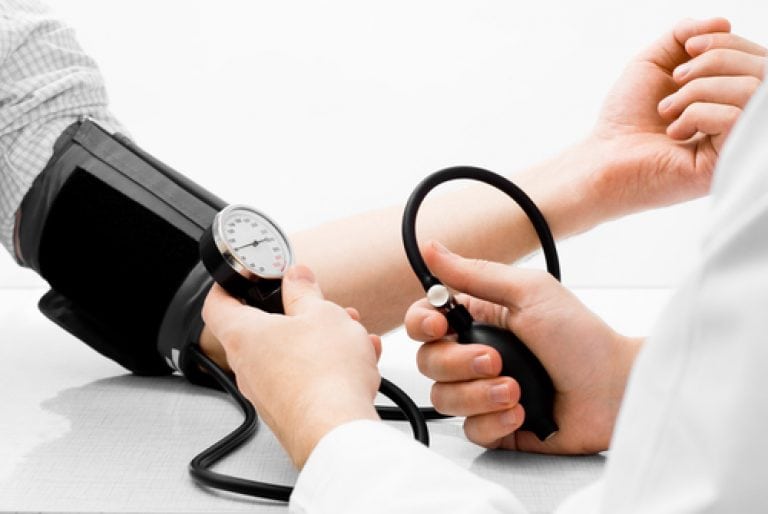
In order to determine the indicators, its definition is carried out. In order to determine the pressure in a person, it is recommended to use universal equipment - a tonometer. They come in several varieties. At home, the use of an automatic tonometer is most often carried out. With the help of this device, not only the simplicity of the procedure is ensured, but also the accuracy of the results obtained.
To determine blood pressure, certain coefficients are used - millimeters of mercury. After the determination, two numbers appear on the tonometer screen. The first one displays the upper pressure, and the second one displays the lower one. In accordance with the figures obtained and the established norms, conclusions can be drawn about the state of human health. In this case, it is recommended to take into account the individual characteristics of a person.
Read also:Heart attack: symptoms in men, women, causes, treatment
Due to the simplicity of the tonometer's design, it is possible to determine the indicators as conveniently as possible and obtain accurate coefficients.
The norm and deviations of blood pressure in adults
In adult patients, rates may differ according to age. This is due to the fact that with age, the body begins to function differently. That is why the coefficients of normal blood pressure are distributed by age. Also, normal blood pressure in a person is determined in accordance with gender. The table for men shows the following results:
| Age of men | Index |
| 21-30 years old | 122/78 |
| 31-40 years old | 125/78 |
| 41-50 years old | 128/81 |
| 51-60 years old | 134/83 |
| 61-70 years old | 141/85 |
| 71-80-91 years old | 144/82 |
This is the age norm for the stronger sex. If there are minor deviations of 5-10 millimeters of mercury, you should not worry. Small rises in pressure can be observed against the background of fatigue or stressful situations. In women, the age rate is slightly different.
| Age of women | Index |
| 21-30 years old | 116/73 |
| 31-40 years old | 120/76 |
| 41-50 years old | 127/81 |
| 51-60 years old | 137/85 |
| 61-70 years old | 144/86 |
| 71-80-91 years old | 158/86 |
The normal pressure for a man at the age of 80 is 148/81. At 90 years old, the indicator can be 146/78. According to the age of the fairer sex, these coefficients are at 80 years old - 156/84, 90 years old - 151/79.
That, what pressure in a patient, depends on age. This is due to the fact that with age, there is a course of irreversible pathological conditions, which are the reason for gradual increases in indicators.
The reasons for the increase and decrease in blood pressure
High blood pressure can occur for a variety of reasons. Most often, the pathological process is observed against the background:
- Vegetovascular dystoniaat which jumps in the coefficients are observed. In this case, vegetative symptoms are noted.
- Essential arterial hypertension, in which there is not only an increase in blood pressure, but also the development hypertensive crises.
- An isolated increase in the lower coefficients in a variety of renal pathologies (nephroptosis, renal failure).
- Increased pulse rates, which can lead to heart attack or stroke.
Hypotension (low blood pressure) is a disease in which there is a systemic decrease in coefficients. In most cases, the pathological process develops for the reasons:
- Myocardiopathy;
- Myocardial infarction;
- Cardiosclerosis;
- Deficiency of body weight;
- Prolonged fasting.
If a person has leaks anemia or vegetative dystonia, then this can lead to the occurrence of high or low blood pressure. Quite often, it is caused by insufficiency of the adrenal cortex. Hypothyroidism also causes spikes in blood pressure. It can develop if there is inflammation in the hypothalamic-pituitary system.
Blood pressure disorders can develop for various reasons. In a healthy person, the pressure should always be normal. Otherwise, one can judge the development of pathologies and inflammatory processes. When deviations appear, the patient is recommended to undergo diagnostics to determine the progressive disease.
Read also:Pericarditis, what is it, causes, symptoms and treatment in adults
Symptoms of pathology
For a person, pressure with indicators of 120/80 is considered normal. If these coefficients are violated, the occurrence of the corresponding symptoms is observed. Most patients complain of excessive fatigue even when doing their usual activities. The pathological process is accompanied by weakness and loss of strength. Soreness may occur in the region of the heart. Pathology is accompanied by the appearance tinnitus and flies before my eyes.
Patients claim that there is a feeling of a tight band around the head, which constantly squeezes it. The pain can be aching or shingles. With a constant increase in the coefficients, retinal atrophy can be diagnosed.
If the normal pressure in a person is disturbed over the years, then this causes the corresponding symptoms. In this case, the patient is recommended to take appropriate measures to stabilize the condition without fail.
How to lower blood pressure?
Increased blood pressure in the modern world is quite common. The pathological process can develop against the background of changes in the hormonal background, smoking, excessive emotional stress, alcohol intake, genetic diseases, etc.
With an increase in blood pressure, the patient is advised to refuse certain foods. In this case, it is strictly forbidden to smoke, as well as take alcoholic beverages. The consumption of animal fats is strictly prohibited. Patients are advised to take rose hips and hawthornwhich are categorized as cardiac stimulants. Due to the universal properties of plants, during the period of their application, the general blood flow is strengthened, and the full performance of the heart muscle is also ensured.
In order to normalize cardiac activity, patients are advised to take pharmacy flax seeds and valerian. These drugs are characterized by the presence of a sedative effect.
If the diet and the above means do not give positive results in stabilizing blood pressure, then the patient is advised to seek help from a doctor. Only a specialist will be able to prescribe effective medications in accordance with the individual characteristics of the patient.
Read also: How to lower blood pressure at home.
How to increase blood pressure?
If blood pressure has dropped to 90/60 ratios, then this requires appropriate measures. A pathological condition can be observed with a low hemoglobin or decreased blood sugar. It also develops against the background of malaise and severe fatigue. This symptom often appears with lack of sleep.
In case of a malfunction in the digestive system or thyroid gland, the coefficients may decrease. The pathological process is often observed with a sharp change in climate. In the fairer sex, it can be observed during menstruation or at the end of it. If a person's diet lacks nutrients, then this can lead to a decrease in blood pressure.
Read also:Impaired venous outflow of the brain
When a pathological condition appears, the patient is advised to change his diet. Meals should consist of fatty fish and meat. The use of chocolate, black tea and coffee is also recommended. The patient's diet should consist of salty hard cheeses. It is recommended to cook dishes from a variety of fatty fermented milk products. During the cooking period, it is recommended to add ginger, pepper, seasonings. Experts recommend the consumption of nuts, sweets and dried fruits.
For an urgent increase in blood pressure, the use of tablets is recommended:
- Papazola;
- Citramon;
- Gutrona.
Most experts do not recommend the use of chemicals. If a person has a persistent decrease in pressure, then he is advised to consult a doctor for examination and the appointment of adequate treatment.
Heart rate ratios
The general state of health is quite often determined by the indicators of the rhythm. Thanks to its characteristics, as well as the corresponding symptomatology, it is possible to make a preliminary diagnosis of it. For a working person, the rates normally range from 70 to 90 beats per minute. With age, there is a decrease in these coefficients. In childhood, the rhythm reaches 130 beats.
When determining the rhythm, an assessment is made not only of the beats, but also the speed of blood movement, rhythm, and the characteristics of the oscillation of the vascular walls. If, due to certain circumstances, the rhythm coefficients increase, then this is the norm. An increase in heart rate is observed against the background of a strong emotional defeat. An increase in the coefficients is diagnosed with strong physical exertion.
Normally, in children under one year old, the rhythm is 135-145 beats per minute, from 1 to 2 years - up to 110 blows, from 3 to 7 years - 90 hits, from 8 to 14 years old about 85 hits, from 15 to 60 years old - about 75 hits, from 60 to 70 years old - 65 hits, from 75 years old - more than 65 hits.
The patient must remember that in case of diseases, an increase in the coefficients can be diagnosed. This is why some people experience more than 150 beats per minute. If separate clinical indicators are used, then the diagnosis in this case cannot be made.
Pulse and blood pressure are quite important factors. But, for the diagnosis, it is recommended to evaluate other signs.
Blood pressure is a fairly important index of the body's performance. If it is within the normal range, then the person does not complain of a deterioration in well-being. With a decrease or increase in blood pressure, treatment with diet therapy and pills is recommended. If the situation does not improve, then the patient is advised to consult a doctor.