Cardioneurosis: what is it, symptoms and treatment (drugs, folk remedies)
Many people have experienced pain or discomfort in the region of the heart, in some cases accompanied by fear, severe weakness, headaches, nausea and other unpleasant symptoms. Usually, a timely visit to a cardiologist helps to find out their causes and establish a diagnosis.
However, in rare cases, physician-directed studies show only minor organic changes or their complete absence, and the cardiologist cannot make the usual diagnosis and prescribe treatment. In such cases, it is appropriate to talk about the diagnosis - cardioneurosis.
Let's take a closer look at what it is and how to cure cardioneurosis.
Content
- What is cardioneurosis?
- Causes of cardioneurosis
- Symptoms of cardioneurosis
- Diagnostics of the cardioneurosis
- Complications of cardioneurosis
- Treatment of cardioneurosis
- Drug treatment
- Non-drug treatment
- Folk remedies for therapy
- Forecast and prevention of cardioneurosis
What is cardioneurosis?
Cardioneurosis (or as it is also called heart neurosis) is psychosomatic illnessrelated to somatoform disorders. The official ICD-10 diagnosis for patients with this disease is F45.3 - somatoform dysfunction of the autonomic nervous system.
With cardioneurosis, a person's normal perception of his own cardiac activity is disrupted, which leads to the development of increased anxiety and panic attacks.
Causes of cardioneurosis
There are a large number of possible causes and prerequisites for the onset of cardioneurosis. Despite the fact that the heart contracts automatically, the human nervous system perceives and regulates cardiac activity. In the event of malfunctions in its work, especially in the vegetative part, a violation of the normal relationship between the brain and the cardiovascular system occurs.
As a result, a person may have a feeling that the heart is not working properly, with interruptions or painful sensations. The main reasons similar problems in the work of the nervous system can be:
- strong or prolonged stressful situations, mental shocks, both recent and past;
- instability of the psyche and emotional lability, individual character traits (anxiety, suspiciousness), accentuation or personality disorder;
- diseases of the endocrine system, metabolic problems, disruptions of hormonal metabolism, especially during the period of restructuring of the body (adolescence, pregnancy);
- constant physical, mental or emotional overwork, lack of sleep;
- unhealthy lifestyle - unstable work and rest regime, smoking, consumption of alcoholic beverages, narcotic or psychoactive substances;
- diseases that run for a long time, weaken the immune system and increase the general alarming background;
- cardiovascular disease myocardial infarction or stroke;
- deficiency of ferritin or serum iron in the blood.
Most often, cardiac neurosis occurs when there are several causes or provoking factors, but sometimes one is enough - for example, exposure to severe stress. The main risk groups are young people with a vulnerable mentality and elderly people with a large number of chronic diseases. Most of the patients are female, due to the peculiarities of hormonal metabolism.
The level of physical activity is also of great importance. People who prefer an active lifestyle and go in for sports, or spend a lot of time in the fresh air, are much less likely to suffer from cardioneurosis than those who lead an inactive lifestyle.
Symptoms of cardioneurosis
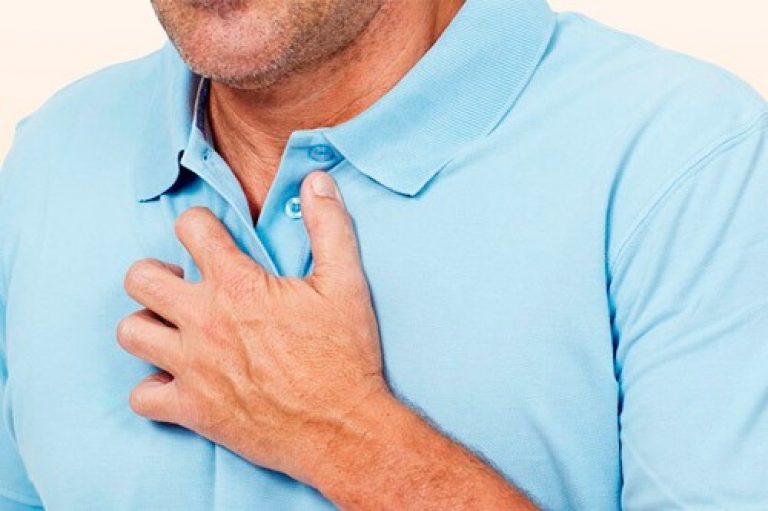
Symptoms of cardiac neurosis can appear in patients in different combinations and with different intensities. This diversity is typical for mental and psychosomatic illnesses, and the manifestations of the disorder can range from short-term mild attacks that occur sporadically, before the daily occurrence and intensification of symptoms with concomitant deployed panic attacks.
Read also:Endothelial dysfunction
Usually, cardioneurosis has a paroxysmal nature and is accompanied by combinations of the following symptoms:
- feeling pain or chest discomfort cage. The nature of the pain can be stabbing, burning, constricting, or any other. Often the pain does not have an exact localization, and can be both moderate and quite strong, but at the same time it does not interfere with the patient's movements;
- subjective feeling increased heartbeat, or, conversely, short-term cardiac arrest (extrasystoles);
- general weakness, a condition characterized by patients as pre-fainting, although there is no real danger of loss of consciousness;
- pain in the temples, psychogenic dizziness, unsteadiness and gait disturbances;
- trembling in the body, numbness of the limbs, increased sweating;
- redness or pallor skin, a feeling of heat, dry mouth;
- acceleration of heart rate, increased blood pressure;
- dyspnea, shallow, labored or rapid breathing, feeling short of breath;
- anxiety, fear of death, illness, insanity, or judgment from others. Most often - panic fear of dying from a heart attack, stroke, or respiratory arrest
- with medium and severe course during seizures, derealization and depersonalization are possible.
As a rule, the patient begins to constantly "listen" to the emerging symptoms of heart neurosis, and such attention to them only provokes an increase in cardioneurosis. In addition to the symptoms that are observed immediately at the time of attacks of cardioneurosis, patients often have sleep disturbances and increased anxiety.
The attack itself develops according to the same principle as in anxiety-phobic disorders. First, a person notices a real or apparent violation of the heart, for example, of an arrhythmic nature. This violation causes a feeling of fear and an emphasis on the work of the cardiovascular system, and then two options are possible. Either the patient becomes distracted over time, switches his attention to something else and calms down, or anxious symptoms increase, growth accelerates, turns into an avalanche, and the attack ends with a panic attack.
The first panic attacks are difficult for the patient, and in the future he begins to expect new PAs, thereby unconsciously increasing his own alarming background and provoking their appearance. A vicious circle arises, and only adequate treatment helps to break out of it.
Symptoms of cardiac neurosis are in many ways similar to those of diseases of the cardiovascular system, but concomitant organic pathology is absent, therefore, after the necessary examination, a competent cardiologist will refer the patient to another specialist - a psychiatrist, a psychotherapist or a neurologist. Sometimes cardioneurosis develops against the background of the presence of real cardiovascular diseases, which requires the joint work of two or more doctors in the management of the patient.
Diagnostics of the cardioneurosis

Cardioneurosis is the so-called diagnosis of exclusion - before making it, it is required to confirm the absence of organic cardiac pathologies. Therefore, it is necessary to carry out the amount of research prescribed by the cardiologist.
It usually includes electrocardiography, ultrasound, 24-hour Holter monitoring, complete blood count, chest X-ray. If necessary, after reviewing the results, the doctor prescribes an additional examination.
It is important to note that signs of cardioneurosis can also occur with other diseases, for example, with anxiety-phobic disorders with panic attacks, therefore differential diagnostics. Precise data on the prevalence of the disorder are lacking because it is not always done correct, and patients are often mistakenly treated for other cardiac, mental, or neurological diseases.
Differential diagnosis of cardioneurosis is carried out in relation to diseases with similar symptoms: ischemic heart disease, myocarditis, myocardial infarction, aortic aneurysm, pleurisy. Differentiation is carried out with other pathologies in which pain sensations can radiate to the region of the heart: hepatic or intestinal colic, acute pancreatitis, reflux esophagitis. Particular attention is paid to the exclusion of rheumatic lesions of the heart, valvular system.
Read also:Endocarditis
Unlike organic heart diseases, with a neurosis of the heart, a person cannot accurately indicate the place of localization of pain. Pain can also change, and taking nitroglycerin does not help relieve pain, unless there is a possible placebo effect. However, benzodiazepine tranquilizers (phenazepam, diazepam, alprazolam, and others) help to quickly and effectively stop the attack.
From a heart attack or pain when angina pectoris cardioneurosis can also be distinguished by increased patient mobility. With true cardialgia, patients usually do not make unnecessary movements and even limit contact with other people due to acute pain syndrome.
The diagnosis "cardioneurosis" is made if the following conditions are met:
- according to the research results, there are no pathological changes in the cardiovascular system. There may be minimal rhythm disturbances not associated with diseases of the heart or blood vessels (tachycardia of the heart, bradycardia, single extrasystoles);
- there is no other reason for chest pain. (intercostal neuralgia, diseases of the lungs, esophagus, stomach ulcer, kyphosis/scoliosis with pain syndrome, etc.);
- there is a connection between symptomatology and nervous overstrain, increased anxiety of the patient, characteristic neurotic experiences;
- attacks recur for at least three months.
The cardiologist does not deal with the symptoms and treatment of neurosis of the heart. Its task is to exclude organic cardiovascular pathologies and refer the patient to a specialized specialist - a psychiatrist, psychotherapist or neurologist.
Complications of cardioneurosis
Since cardioneurosis is a psychosomatic disease, the likelihood of complications of a physical nature is low. (although with long-term chronic neurosis of the heart, the risk of hypertension increases, and high blood pressure negatively affects the state of blood vessels) The psyche suffers much more often.
If cardioneurosis is left untreated, anxiety-phobic disorder with avoidant behavior, hypochondriacal disorder, or depressive disorder will almost certainly develop over time.
Without treatment for the underlying disease, mental and social disorders can progress, and cases of spontaneous recovery are rare. More often, additional anxiety and depressive symptoms join, many patients develop agoraphobia (fear of open space).
Treatment of cardioneurosis
Due to the large variability of the symptoms of cardiac neurosis and their different severity, the selection of the most effective treatment is not an easy task. The following approaches are used in the treatment of cardiac neurosis:
Drug treatment

For the treatment of cardiac neurosis, almost the same set of medicines is used as for the treatment of anxiety-phobic disorders. The first-line drugs of choice are antidepressants from the group of selective serotonin reuptake inhibitors. (escitalopram, sertraline, paroxetine and others)
Read also:Varicose veins of the lower extremities: symptoms and treatment
The effect of treating heart neurosis from such drugs appears only at 2-6 weeks of therapy, and at the beginning of therapy, a so-called paradoxical reaction is possible - an increase in anxiety symptoms. Therefore, to cover up the side effects of antidepressants are prescribed for occasional use. benzodiazepine or atypical tranquilizers.
With the course of benzodiazepine use, there is a risk of dependence, and usually psychiatrists or psychotherapists recommend take such pills "as needed" to relieve panic attacks in the first weeks of taking SSRIs (the most common drugs: fluoxetine, paroxetine, sertraline, fluvoxamine, citalopram, escitalopram).
In severe cases, the therapy regimen can be supplemented with antipsychotics or other anti-anxiety drugs, for example, pregabalinantidepressants of other groups (IOZSiN, tricyclic)
Non-drug treatment

With cardioneurosis, psychotherapy is recommended in all cases without exception.
From the point of view of evidence-based medicine, the most effective combination of cognitive-behavioral psychotherapy with drug treatment and lifestyle changes.
Important reduce patient anxiety, explain to him the essence of the symptoms, the absence of danger to life, help to form a position of active participation in the treatment process.
With the help of cognitive behavioral therapy, the patient learns to track his automatic thoughts and suppress the mental catastrophization of the situation, masters self-help methods with an approaching panic attack. Other methods are also possible, for example, gestalt therapy.
For the successful treatment of a neurosis of the heart, the patient should not focus on disturbing moments and not limit himself, but try to lead a fulfilling life. Therefore, the recommendations of doctors because how to treat cardioneurosis include not only psychotherapy and pills, but also balanced diet, stable sleep and wakefulness, long walks, moderate physical activity (in the absence of contraindications).
Folk remedies for therapy
If the disorder is mild, instead of using psychotropic drugs in addition to psychotherapy possible treatment with folk remedies, such as tinctures with a sedative effect (valerian, motherwort).
Important: tinctures containing ethanol are incompatible with antidepressants, antipsychotics and tranquilizers. Psychotropic drugs are available by prescription and have contraindications and should only be used as directed by a physician.
Forecast and prevention of cardioneurosis
There is no danger to the patient's life (if there is no history of heart attack or stroke), therefore, if appropriate therapy is carried out, the prognosis is favorable. However, pronounced and varied vegetative symptoms interfere with a normal life and often lead to self-restraint.
Prevention, as well as treatment of heart neurosis, includes a healthy lifestyle, quality rest, refusal from alcoholic beverages, smoking, drug use and psychoactive substances.
It's important to stick to proper nutrition, if possible, avoid excessive physical, mental and emotional stress, strong or prolonged stressful situations.
Cardioneurosis is prone to recurrence, and after long periods of well-being on the background of drug withdrawal and psychotherapy, attacks may return. In this case, it is recommended to re-visit a psychotherapist or psychiatrist to prescribe an additional medication course and possible correction of the scheme.